Opinion: Why the Next Global Auto Giants Won’t Be Western
As traditional legacy automakers scramble to keep pace with the electric transition, the global automotive balance of power is shifting.
Does the future of the automotive industry belong to emerging tech-driven challengers from the east or the established giants of Detroit, Wolfsburg or Paris?

For over a century, the global automotive industry has been defined by a familiar axis of power: Germany for flawless engineering, Japan for reliability and efficiency, and the United States for scale, style, and cultural influence. Together, these markets didn’t just build cars — they built the game plan for what a car company is.
That game plan is now being rewritten.
Across Europe, Southeast Asia, and increasingly Latin America, Chinese automotive brands are not just entering the market — they are reshaping it. Working with UD Trucks (a leading Japanese Truck manufacturer) across the world, I found the Chinese truck brands still lagging behind in terms of technology and performance, but this could quickly change.
What once looked like a wave of fast followers seems to have evolved into something far more consequential: a cohort of companies designing, building, and scaling a fundamentally different kind of automotive business.
The question is no longer whether Chinese automakers can compete globally. It’s whether global automakers can compete on Chinese terms.
Asking myself how — my initial thoughts considered whether or not it was something to do with them being ruthlessly consistent in the branding? Was it because they have learned from every European, US, and Japanese car manufacturer — to produce better quality and a better price? Was it anything to do with them acquiring European car brands like Volvo and MG?

Moving beyond the obvious explanations
It’s tempting to explain this rise through familiar lenses: sharper pricing, improved quality, or even more disciplined branding. How the Koreans introduced their brands offering ten year warrantees. But these interpretations only scratch the surface.
Chinese brands are not winning because they are more consistent brand builders — in fact, many are still evolving their identities across different global markets. Nor are they simply imitators of Western or Japanese excellence. And while their ability to deliver high-quality vehicles at competitive prices is undeniable, that is an outcome — not the root cause.
To understand what’s really happening, we need to look deeper — at the structural advantages that underpin this shift.
Built for a different era
The most significant distinction between Chinese automakers and their Western counterparts is not geography — it’s starting point.
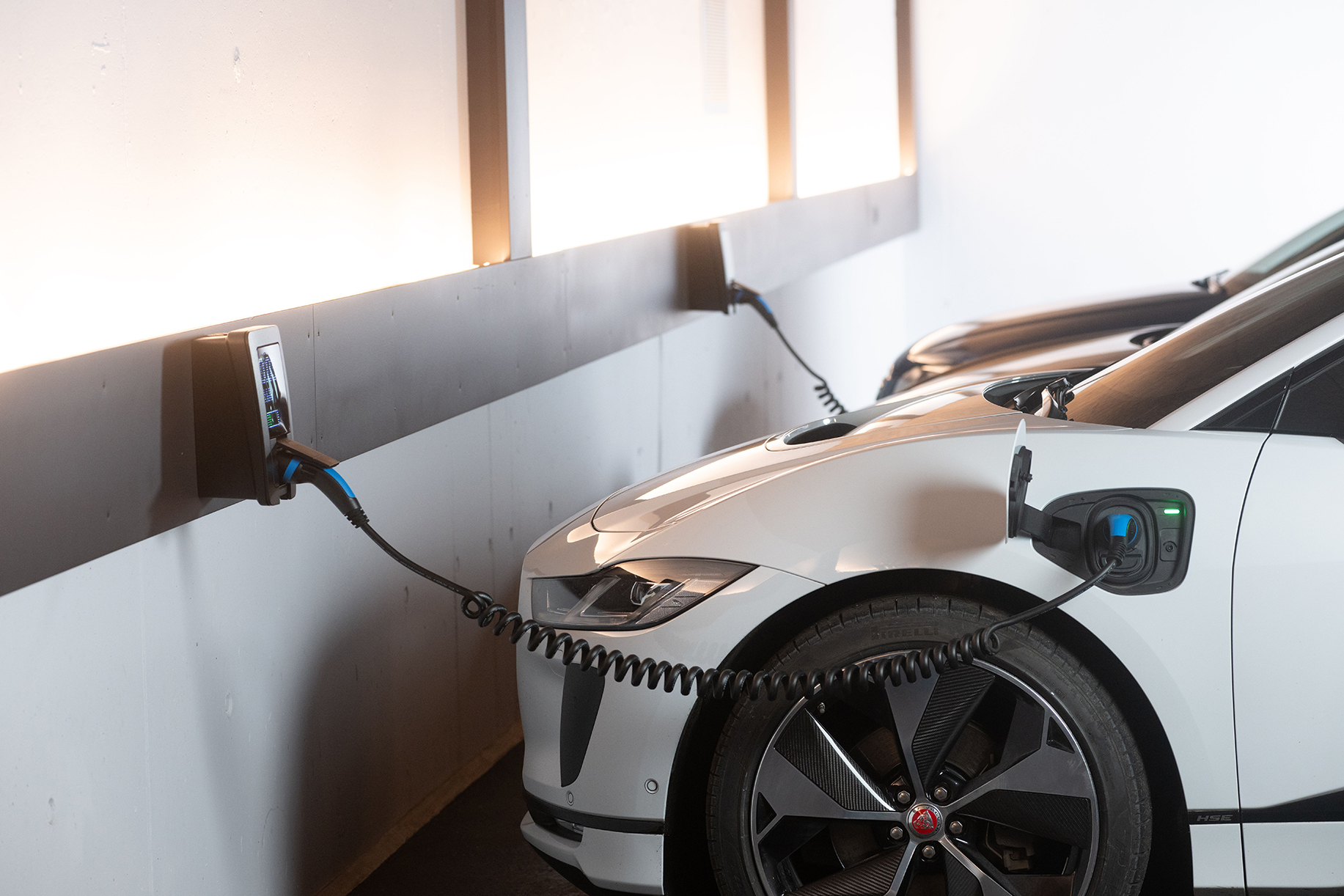
While legacy OEMs are navigating the complex transition from internal combustion engines to electric vehicles, many Chinese manufacturers were either born into the EV era or pivoted early enough to avoid the burden of legacy systems. This matters.
I was working with Toyota in Malaysia at a time when they had a major recall on their EVs — this high-profile EV recall about two years ago (mid-2022) centered on its first mass-market electric model, the bZ4X (and its Subaru twin, the Solterra). The issue was serious enough that Toyota actually advised owners “not to drive the vehicle at all.”
Western automakers are balancing two competing realities: protecting profitable ICE portfolios while investing in an electric future. Chinese automakers, by contrast, are free to build around batteries, software, and electronics from the ground up. Their vehicles are not adaptations — they are native to the new paradigm.
Working with ComfortDelGro last year, I learned that the Chinese approach to running taxis 24/7 (well, near-continuous) was to simply swap out batteries, an innovation that is unmatched anywhere else in the world. Companies like NIO and Aulton have built large-scale swapping networks, and some taxi fleets are designed specifically around this model.
The result is a fundamentally different product philosophy: one where software experience, battery performance, and digital integration are not features, but foundations.

A system, not just a set of companies
Another critical, and often underplayed, factor is the ecosystem in which these brands operate. China’s rise in automotive is not just the story of individual companies outperforming competitors. It is the outcome of a deeply interconnected industrial system: battery production, raw material processing, infrastructure development, and manufacturing capacity all working in concert.
This system-level advantage enables:
- Greater control over supply chains
- Faster scaling of new technologies
- Sustained cost efficiencies
It also creates resilience, allowing Chinese automakers to move with confidence in a volatile global landscape.
For Western competitors, this presents a structural challenge. Competing with a company is one thing. Competing with an ecosystem is another entirely.

Speed as a strategic advantage
If there is a single capability that defines the new automotive leaders, it is speed.
Chinese automakers operate on dramatically compressed timelines:
- Shorter product development cycles
- Faster design iteration
- Continuous software updates
They behave less like traditional manufacturers and more like technology companies, responsive, iterative, and relentlessly focused on improvement.
This agility extends beyond engineering into brand and market strategy. Positioning, product mix, and customer experience can be adapted quickly across regions, allowing brands to learn and evolve in real time.
In contrast, many legacy OEMs remain constrained by longer planning cycles, more complex organizational structures, and entrenched operating models.
Speed, in this context, is not just an operational advantage — it is a strategic one.
Learning, then leapfrogging
It would be wrong to suggest that Chinese automakers developed in isolation. Over the past two decades, they have studied, and in many cases partnered with, leading Western and Japanese manufacturers.
They have absorbed best practices in engineering, safety, and design. They have attracted global talent from some of the most respected automotive brands in the world. And in select cases, they have acquired established marques such as Volvo and MG to accelerate credibility and capability.
But the critical shift is this: they are no longer catching up.
They are synthesizing what they have learned with new capabilities, particularly in electrification and software, to leapfrog legacy models. The result is not imitation, but reinvention.
The Western blind spot
For much of the past decade, Western automakers have underestimated the pace and depth of this transformation.
Part of this is structural. Legacy business models, built around internal combustion engines and dealership networks, are difficult to unwind. Organizational inertia, margin dependencies, and regulatory complexity all slow the ability to pivot.
But part of it is perceptual.
Chinese brands have long been viewed through the lens of cost rather than capability, as value players rather than innovation leaders. That perception is becoming increasingly outdated.
Today’s leading Chinese automakers are not just competitive on price. They are competitive, and often superior, on the dimensions that are defining the future of mobility.

Barriers will slow, not stop, the shift
There is no doubt that geopolitical dynamics will shape how this story unfolds.
Tariffs, trade barriers, and regulatory scrutiny, particularly in the United States, will create friction. Market entry will not be uniform, and adoption will vary by region.
But these measures are, at best, delaying mechanisms.
In Europe, Chinese brands are already gaining traction. In Southeast Asia and other emerging markets, they are rapidly becoming dominant. Over time, the gravitational pull of better technology, compelling value, and faster innovation cycles will be difficult to resist, even in more protected markets.
From challengers to standard-setters
What we are witnessing is not simply the rise of new competitors. It is the emergence of a new operating model for the automotive industry.
One that is:
- Electrification-first
- Software-defined
- Ecosystem-enabled
- Speed-driven
Chinese automakers are not just participating in this shift — they are shaping it.
And as they expand globally, they are setting new expectations for what a car is, how it is built, and how it is experienced. The implication is clear.
The next generation of global auto giants will not be defined by the legacy centers of the industry. They will be defined by those who are best aligned to its future. Increasingly, that points East.
Words by Colin Anderson.
This article was written by Colin Anderson and a version of this article was first seen on Linkedin.
For more automobile reads, click here.