Why Have There Been Two World Cup Trophies?
An analysis of the history of why there are two World Cup trophies and their current evolution and relevance.
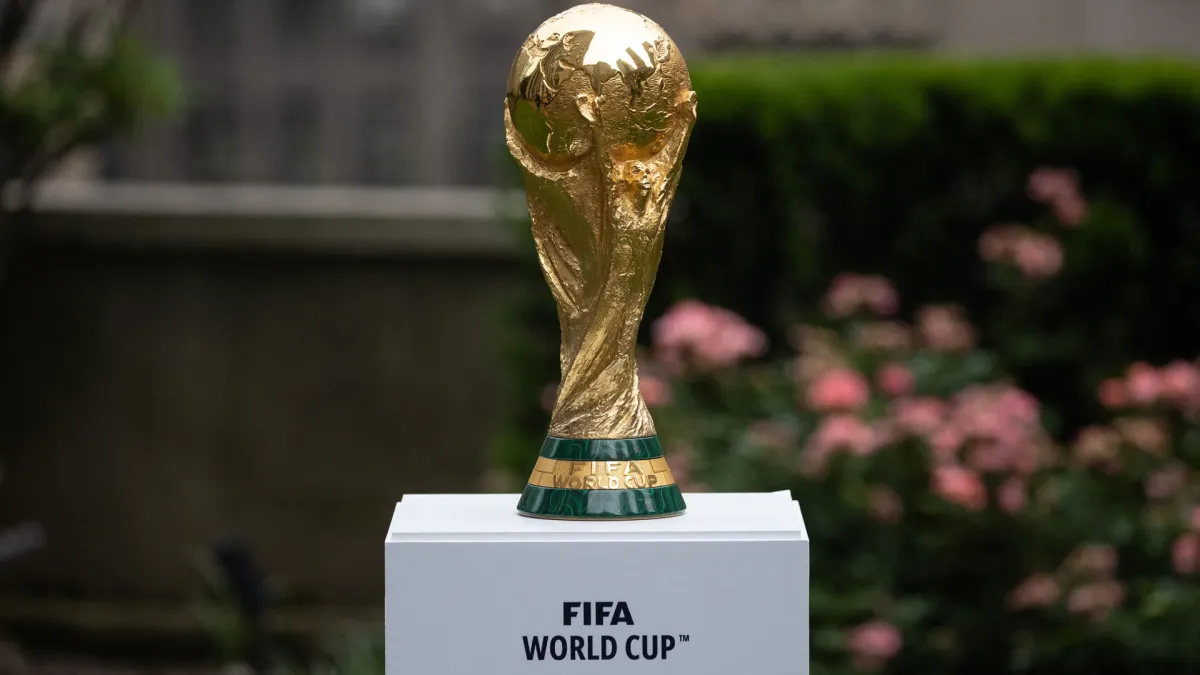
Football’s most coveted prize has worn two faces across almost a century. Far from being a simple redesign, LUXUO analyses why the two World Cup trophies existed and what the design change revealed about the tournament’s evolution from an ambitious international competition into a global and cultural institution.
Every four years, the same ritual unfolds. The final whistle blows, exhausted players embrace and amid a shower of gold confetti, a captain reaches for the FIFA World Cup Trophy before lifting it towards the sky. It is one of sport’s most recognisable images, replayed countless times across television screens and social media feeds around the world. At the centre of this familiar celebration lies the FIFA World Cup Trophy, a symbol of sporting excellence attached to football’s greatest prize.
Unlike the Stanley Cup or the Wimbledon trophies — which have remained largely unchanged throughout their histories — the FIFA World Cup has been represented by two official icons. The elegant Jules Rimet Trophy — first presented in 1930 — symbolised a young tournament founded on ideals of international friendship and sporting diplomacy. Its successor — the sculptural FIFA World Cup Trophy introduced in 1974 — reflects a competition that had grown into a global cultural phenomenon. The change was never driven by fashion or the desire for a more contemporary design. Instead, it marked football’s own transformation — from an ambitious international championship into the world’s most influential sporting event — shaped by visionary leadership, historic triumphs and extraordinary moments that have become part of football folklore.
More importantly, the existence of two World Cup trophies reveals that football’s greatest symbol has evolved alongside the game itself. The Jules Rimet Trophy belonged to a tournament still finding its place in the world, while its successor reflects a competition that has become a global cultural institution. Together, they demonstrate that enduring icons preserve their relevance not by remaining unchanged, but by adapting to the times while honouring the legacy that came before.
Two Trophies, Two Eras
Few sporting competitions have undergone a transformation as profound as the FIFA World Cup. When the inaugural tournament was staged in Uruguay in 1930, international air travel remained a luxury, radio was the principal means of following events abroad and only 13 nations took part. The competition was less a global spectacle than an ambitious experiment inspired by the belief that football could bring countries together through peaceful competition.
Nearly a century later, the tournament has become one of the world’s most watched events, attracting audiences measured in billions while exerting economic, political and cultural influence far beyond the boundaries of sport. The 2026 edition — jointly hosted by Canada, Mexico and the United States — will feature 48 nations, making it the largest World Cup in history.
The evolution of the competition is reflected in the trophies that have come to symbolise it. The Jules Rimet Trophy belongs to an era defined by optimism, diplomacy and the birth of international football, whereas today’s FIFA World Cup Trophy represents a confident global game whose influence extends well beyond the pitch. Understanding why there have been two trophies therefore means understanding how football itself has changed over the past century.
The Jules Rimet Vision
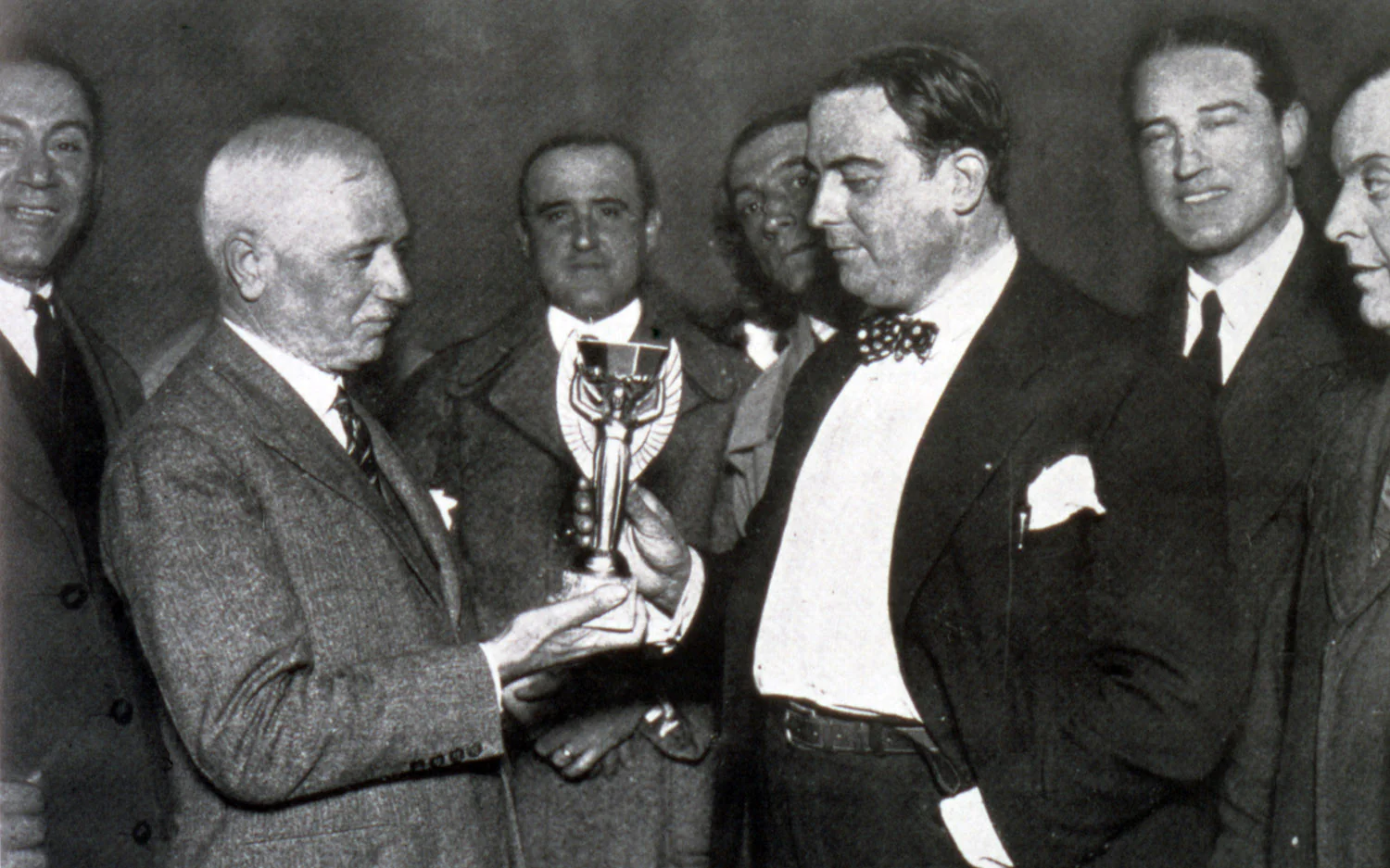
Long before the World Cup became football’s greatest event, it existed only as the conviction of one man. Jules Rimet believed football possessed a rare ability to unite nations through competition rather than conflict, an idea that eventually gave birth to the FIFA World Cup. Serving as president of FIFA from 1921 to 1954, Rimet championed an international championship independent of the Olympic Games at a time when Europe was still recovering from the devastation of the First World War. His vision was remarkably simple: if nations could compete fiercely on the football pitch, perhaps they would find fewer reasons to confront one another elsewhere.
That vision became reality in 1930 when Uruguay staged the inaugural FIFA World Cup, an occasion commemorated by a trophy unlike any sporting prize that had preceded it. Designed by French sculptor Abel Lafleur, the statuette depicted Nike — the Greek goddess of victory — delicately supporting an octagonal cup above her head. Standing just 35 centimetres tall and crafted from gold-plated sterling silver on a base of blue lapis lazuli, the trophy possessed an understated elegance that owed more to classical sculpture than sporting spectacle.
Compared with today’s dynamic FIFA World Cup Trophy, the Jules Rimet Trophy appears almost restrained — yet that restraint reflected the values of its time. Football had not become a global entertainment industry; it remained closely associated with ideals of sportsmanship, diplomacy and international goodwill. Its graceful proportions and decorative simplicity echoed the artistic sensibilities of the early twentieth century, creating an object intended to inspire admiration rather than overwhelm with grandeur. As successive tournaments elevated football’s international profile, the modest statuette gradually acquired an influence far greater than its size ever suggested.
When the Trophy Became Bigger Than Football
The true measure of an icon lies not in its appearance but in the stories it accumulates and few sporting objects have acquired a richer mythology than the Jules Rimet Trophy. During the Second World War, fears that occupying forces might seize football’s greatest prize prompted Italian football official Ottorino Barassi to remove it from a bank vault in Rome and hide it inside an ordinary shoebox beneath his bed, where one of the world’s most valuable sporting treasures remained concealed throughout the war. The episode has since entered football folklore, yet it also revealed how fragile the tournament’s greatest symbol remained during its formative years.
Its most famous adventure unfolded two decades later. In March 1966, only months before England hosted the World Cup, the Jules Rimet Trophy disappeared from a public exhibition at Westminster Central Hall in London. The theft quickly became international news, with detectives pursuing countless leads as newspapers questioned security arrangements and public anxiety mounted over the fate of football’s most treasured possession.
The breakthrough came in the most unlikely fashion imaginable. A mixed-breed dog named Pickles — while out for a walk with owner David Corbett in South London — sniffed beneath a hedge and uncovered a parcel wrapped in newspaper. Hidden inside was the missing trophy. For a few extraordinary days, Britain’s most celebrated footballing hero had four legs and a wagging tail. Newspapers revelled in the unlikely story, television programmes clamoured for appearances and Pickles became an international celebrity after succeeding where Scotland Yard had failed.
Behind the charm of the story, however, lay a more significant reality. Barely three decades after the inaugural World Cup, the Jules Rimet Trophy had become one of the most recognisable objects in international sport. Its fame brought prestige, but it also exposed the vulnerability that accompanies every great cultural icon. Ironically, its defining moment would arrive not through another theft or dramatic rescue, but on the football pitch in Mexico during the summer of 1970, where one of the greatest teams ever assembled would unknowingly bring the Jules Rimet Trophy’s remarkable journey to its conclusion.
Brazil’s Third Star Changed Everything
#OnThisDay in 1970, Pelé made history as the first player to win three FIFA World Cups! 🇧🇷🏆
— FIFA (@FIFAcom) June 21, 2024
Brazil’s 4-1 triumph over Italy in the final was played at the Estadio Azteca in Mexico City, with Pelé scoring the opening goal. pic.twitter.com/QwDvrVu0xY
The defining moment in the story of the World Cup trophy arrived in Mexico in 1970, when Brazil defeated Italy 4-1 to win an unprecedented third World Cup title. Led by Pelé, the side is still regarded as one of football’s finest and as Pelé was carried from the pitch on the shoulders of his teammates, few inside the Azteca Stadium could have realised that the victory had achieved more than sporting immortality. It also marked the end of the Jules Rimet Trophy’s extraordinary journey.
Under FIFA’s rules at the time, any nation claiming three World Cup titles would receive permanent possession of the trophy. Brazil therefore became its final custodian, closing more than four decades in which the elegant statuette travelled from champion to champion, as the tournament grew from an ambitious international experiment into the world’s most celebrated sporting event.
For FIFA, Brazil’s victory created an unexpected turning point. With the Jules Rimet Trophy now permanently awarded under the competition’s long-standing rules, the organisation faced the task of creating a successor for future tournaments. The timing proved remarkably fitting. Football had outgrown its origins as a competition played mainly in Europe and South America, becoming a genuinely global event brought into homes via television and celebrated across every continent. The World Cup no longer needed simply another trophy; it required a symbol capable of expressing the confidence, ambition and international reach of the modern game.
A New Symbol for a Global Game
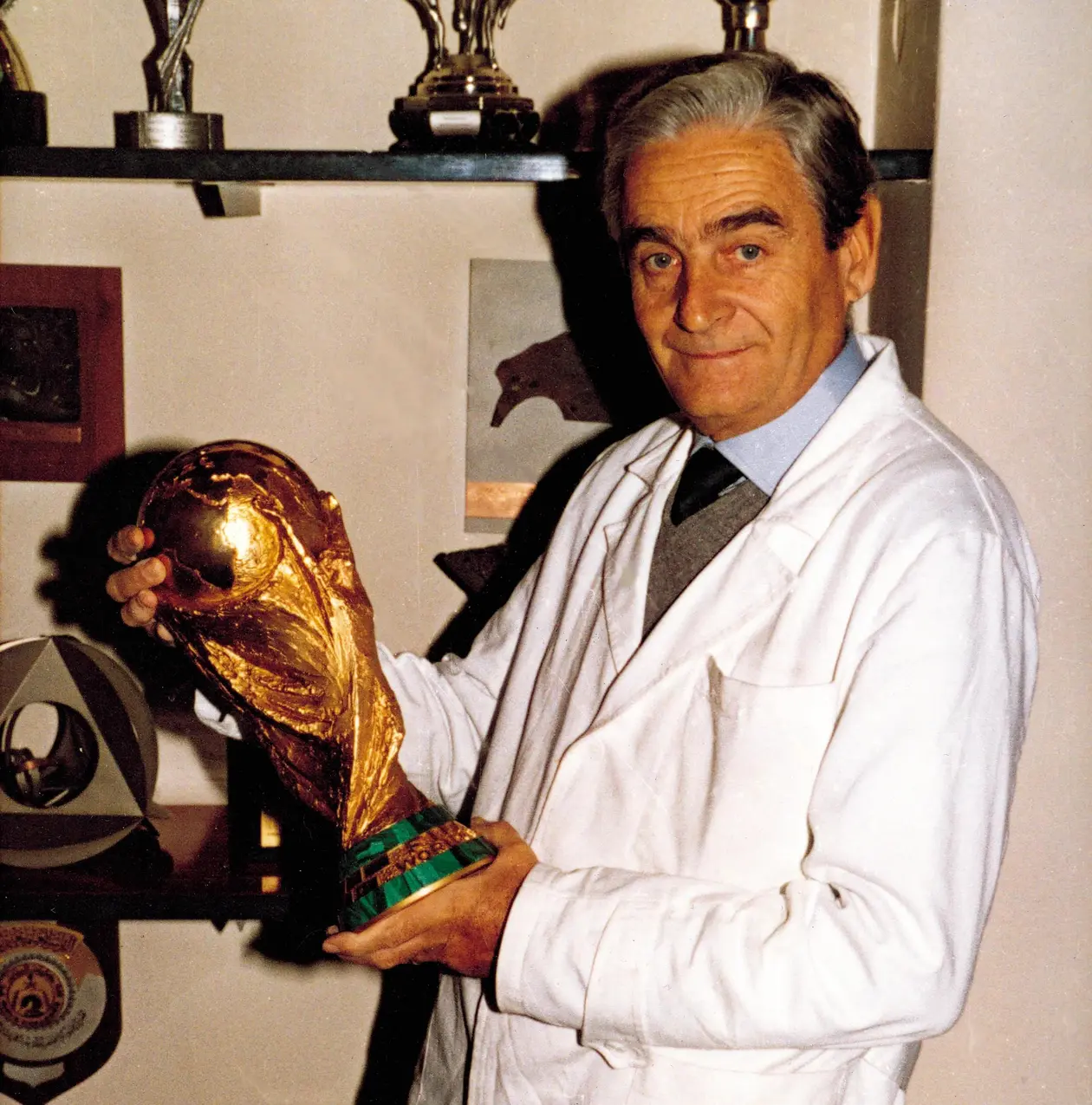
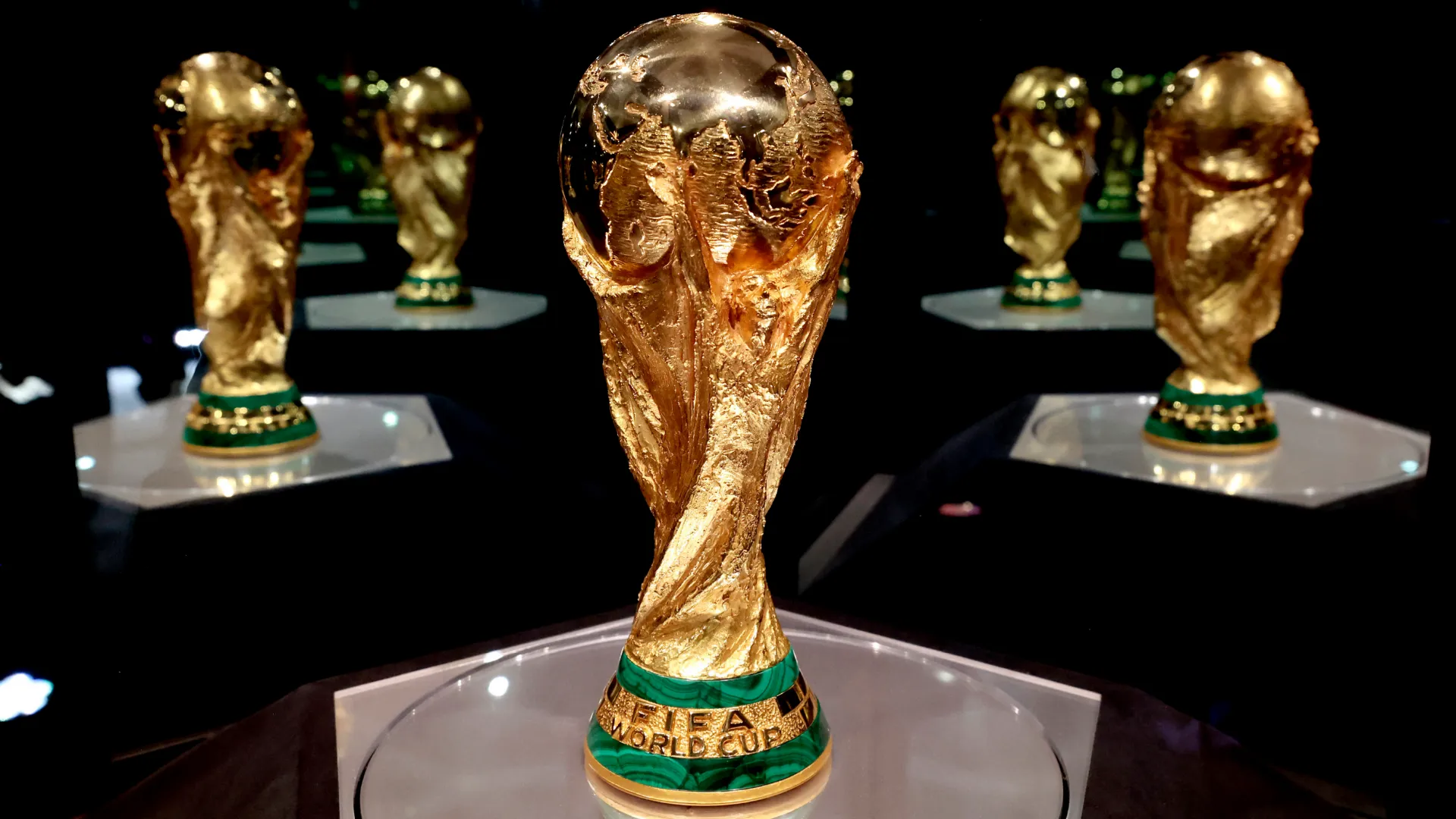
The responsibility fell to Italian sculptor Silvio Gazzaniga, whose winning design remains one of the most recognisable objects in world sport. Unlike the restrained elegance of the Jules Rimet Trophy, Gazzaniga imagined victory as movement rather than ceremony. Two athletes rise from the earth, the globe held aloft, creating a sculpture that feels energetic, optimistic and unmistakably modern.
The contrast between the two trophies is as revealing as the objects themselves. Abel Lafleur’s original design reflected the classical ideals of the early twentieth century, when international sport was rooted in diplomacy and sporting tradition. Gazzaniga’s interpretation belonged to a more interconnected world, one shaped by satellite television, expanding audiences and football’s growing emotional and commercial influence.
That balance between artistry and symbolism helps explain why the FIFA World Cup Trophy has remained virtually untouched since 1974. Its success lies not merely in the quality of its craftsmanship, but in its ability to capture a universal moment of triumph. Like a timeless building or an iconic piece of industrial design, it has endured because its meaning remains as relevant today as when it was first unveiled.
From Ownership to Stewardship
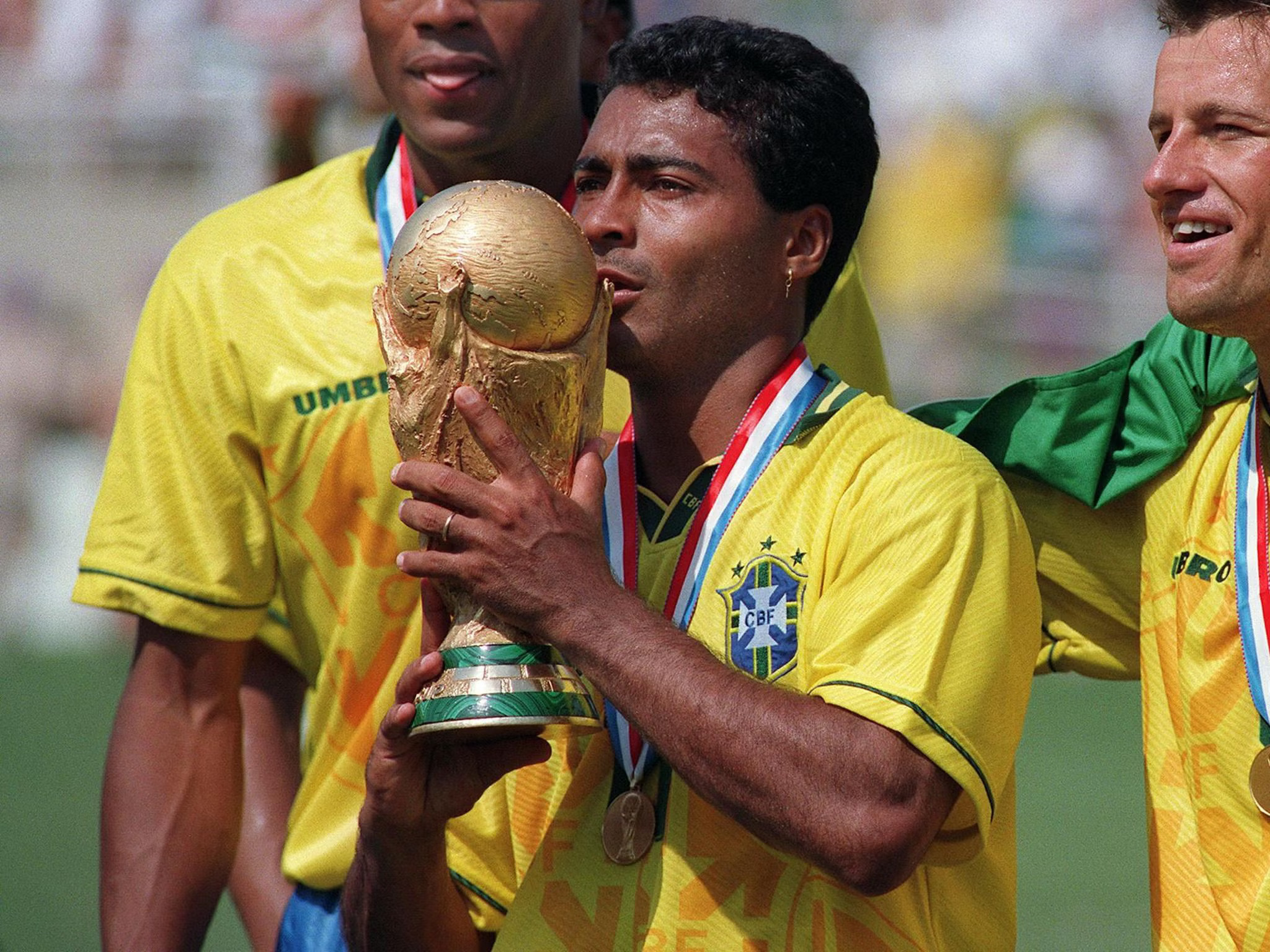
History, however, has a habit of repeating its warnings. After Brazil received permanent ownership in 1970, the trophy was displayed at the headquarters of the Brazilian Football Confederation in Rio de Janeiro. In 1983 it was stolen and despite extensive investigations, it has never been recovered. Most historians believe it was melted down, bringing an abrupt and irreversible end to one of football’s most treasured artefacts.
The disappearance was more than the loss of a valuable object. It was the loss of a tangible link to the earliest decades of the World Cup, a reminder that history can vanish far more easily than it is created. Today’s champions therefore lift the original trophy only during the presentation ceremony before it returns to FIFA’s care, while each winning nation receives an officially authorised replica. The arrangement may disappoint collectors, but it ensures that football’s most recognisable prize can continue to be shared with future generations rather than risk suffering the same fate as its predecessor.
Two Trophies, One Legacy
Viewed together, the Jules Rimet Trophy and the FIFA World Cup Trophy represent far more than two chapters in football history. They chart the remarkable transformation of the tournament itself, from a visionary competition conceived to bring nations together into a global cultural event that can captivate billions.
One belongs to football’s formative years, when optimism, diplomacy and international cooperation shaped its identity. The other emerged when football had become a shared global language, capable of uniting supporters across cultures, generations and continents. Neither triumph diminishes the other. Instead, each captures the spirit of the era that created it. Every generation remembers a different World Cup. Some recall grainy black-and-white broadcasts and the graceful figure of Nike atop the Jules Rimet Trophy. Others picture the sculpted globe raised by modern champions beneath showers of gold confetti. Both images belong to the same competition, yet each tells a different chapter in football’s remarkable story.
As the countdown to the 2026 FIFA World Cup continues, the familiar image of the golden trophy will once again dominate television screens and stadium ceremonies around the world. When the winning captain eventually raises it above a sea of flashing cameras, most attention will naturally focus on the players. Yet the trophy itself carries almost a century of ambition, artistry, resilience and reinvention, making it one of the few sporting symbols whose history rivals the competition it represents.
The existence of two World Cup trophies is ultimately a reminder that the world’s greatest icons are not preserved by resisting change. Like celebrated buildings, treasured timepieces and enduring works of art, they remain relevant because they evolve while honouring the legacy that first gave them meaning. The Jules Rimet Trophy tells the story of football’s hopeful beginnings; its successor continues to accompany a tournament that has become one of the world’s defining cultural events. Together, they demonstrate that lasting symbols do more than commemorate history; instead, they carry it forward.
For more on the latest in luxury watch reads, click here.