Micro Trends Are Killing Ambitions and Increasing Mindless Consumerism
Micro trends have democratised ambition in a culture obsessed with staying relevant, leaving little room to build anything that lasts.
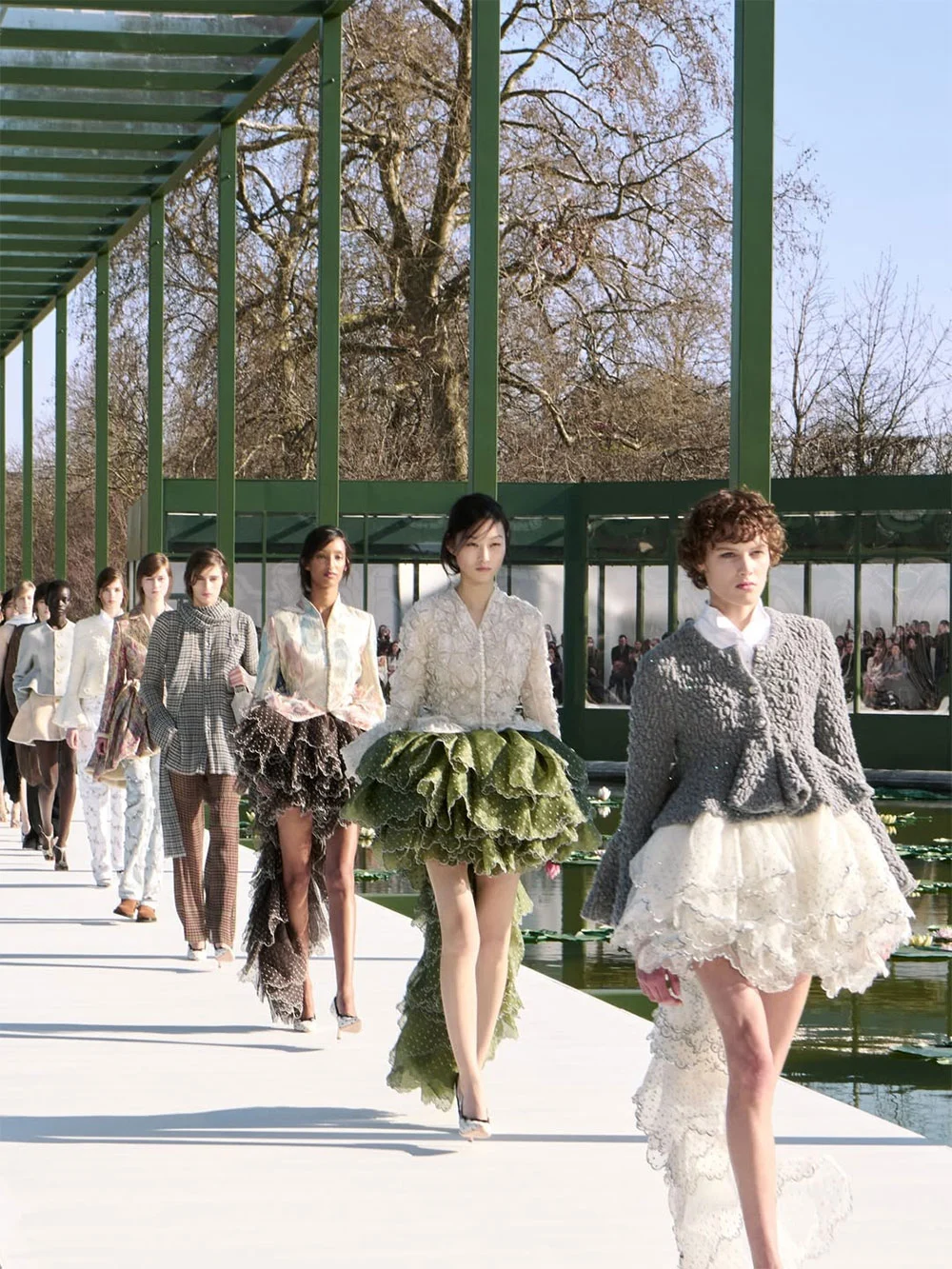
Ambition was once measured in years and was meant to build something substantial enough to outlive its founder – a fashion house with a recognisable language, a restaurant that became an institution, a craft perfected over a lifetime. Success was rarely immediate, and neither was recognition. Today, ambition operates on an entirely different timeline. It can mean becoming the brand everyone is talking about this week, creating the product that sells out overnight, or turning a single idea into a viral moment before the algorithm moves on.
The rise of micro trends has fundamentally squeezed dry the meaning of relevance. Aesthetic cores such as office siren and bloke-core can emerge, peak and fade within months, while beauty products, food concepts and fashion pieces can become omnipresent almost overnight. Social media platforms such as TikTok and Instagram have made this acceleration visible, turning cultural relevance into something that can be tracked almost in real time through views, likes, shares and sales — according to Salesforce, 53% of shoppers discover products through social platforms, increasing from 46% in 2023 and the figure rising to 78% among Gen Z.
That shift has also made ambition appear more accessible, and people no longer need the backing of a major publisher, retailer, or conglomerate to put an idea in front of an audience. A designer can post a collection online and reach thousands of potential customers, a beauty founder can build a following around a single product, and a cafe can become a widespread “must-go” destination because one consumer captures the best angle of their signature viral dish.
How Micro Trends Build Ambition
While micro trends face plenty of criticism, their ability to create opportunities should not be dismissed. The same speed that encourages consumerism has also lowered the barrier to entry for emerging businesses and creatives. Social media can transform a young designer, beauty founder or restaurant into a new craze without years of conventional advertising or institutional support.
For independent designers, social media can function as both showroom and marketing department. A single look, styling video or behind-the-scenes clip can drive attention towards a collection almost instantly. Beauty operates similarly, with a product moving from obscurity to repeated recommendations across social feeds, generating demand before a traditional campaign has even launched.
Food and hospitality have become equally dependent on this cycle. A restaurant no longer has to build its reputation slowly through word of mouth; a distinctive, visually appealing dish can turn an unknown establishment into a destination almost overnight. The same applies to cafés and pop-ups, where the experience is designed not only for consumers but for the cameras that could potentially bring thousands more through the door.
This has created a new culture of experimentation. Micro trends allow businesses to test ideas quickly, respond to consumer behaviour and understand what resonates without committing to a concept for years. Pop-ups are potentially the clearest example — across fashion, beauty and food, brands can build around a particular viral moment without turning it into a permanent proposition.
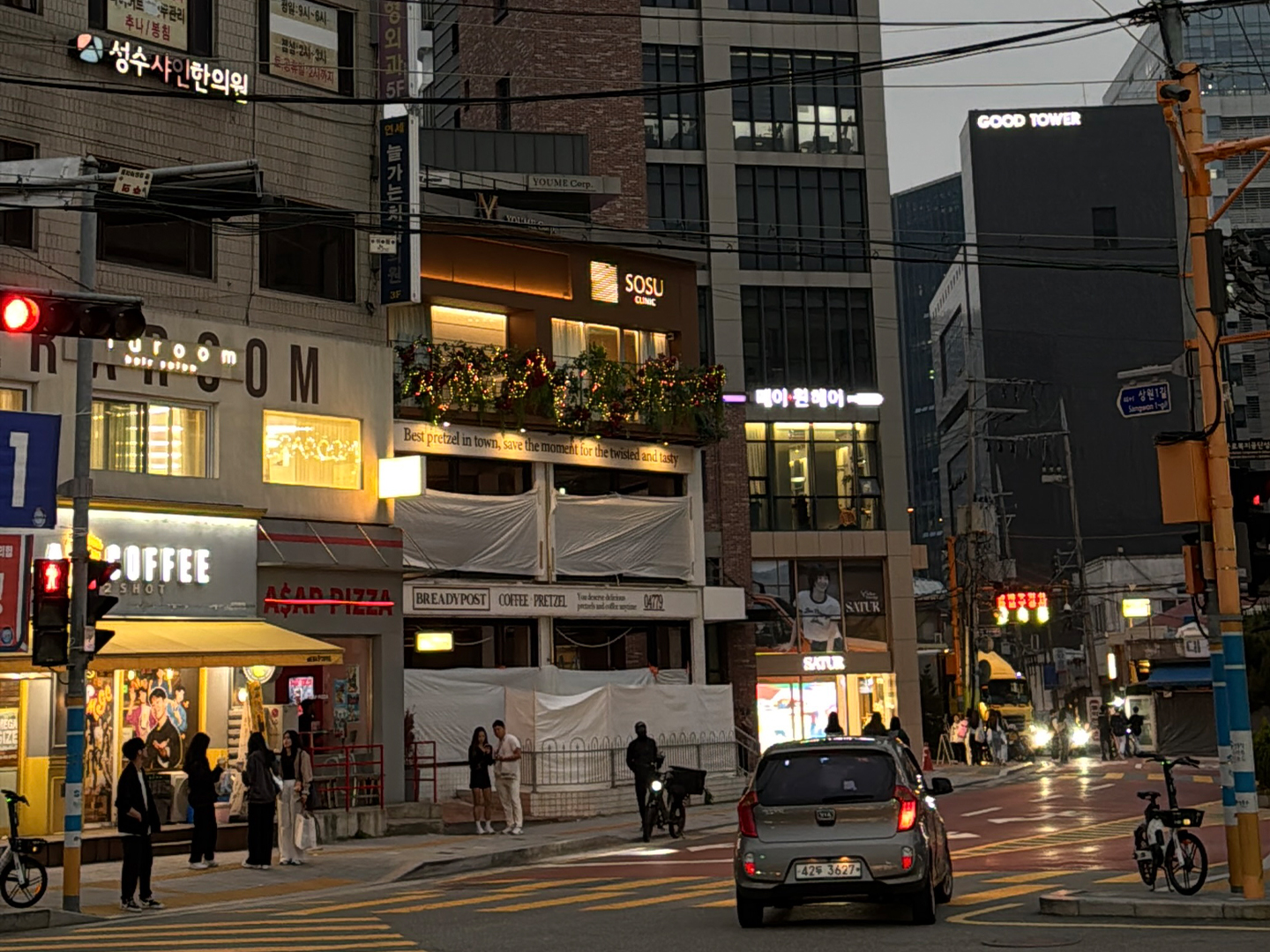
Seongsu in Seoul, South Korea, is a prime example of this acceleration. Once an industrial neighbourhood, it has developed into a constantly shifting landscape of cafés, concept stores, exhibitions, pop-ups and brand activations, responding rapidly to what consumers want to see, photograph and experience.
Even the more controversial sides of trend culture, from beauty dupes to fast fashion, reflect this accessibility. They allow consumers to participate in aesthetics and viral moments at a more affordable price, while the ability to identify demand and produce accordingly has itself become a form of commercial ambition.
But here lies the contradiction – micro trends can give people more opportunities to become ambitious while simultaneously changing what they need to be ambitious about. Instead of asking how to build something that lasts, the competition becomes how quickly an idea can capture attention before another replaces it and when speed becomes the measure of success, originality can become a much riskier investment.
But Are Micro Trends Shrinking Ambition?


The same algorithm that can propel an unknown business into the spotlight can also reward familiarity over originality. When a particular visual language, product or format performs well, there is little incentive for the next brand to take a completely different direction. It becomes safer to replicate what has already been proven to work than to think innovatively.
This is where micro trends begin to flatten across industries. When brands adopt the same packaging, colour palettes, silhouettes and campaign formats, it becomes increasingly difficult to distinguish one from another. Restaurants and cafés similarly race to produce their own version of whichever dish or ingredient has become the latest viral obsession —take Matcha and Pistachio for example, from what felt like a special novelty item on the menu has now become an item every cafe seems to carry.
The irony is that everyone is trying to stand out by participating in the same trends.
More significantly, imitation is no longer necessarily viewed as a failure of creativity. In an environment where relevance can disappear within weeks, copying what already works can be a rational business decision.
Why spend months developing an unfamiliar concept when an existing aesthetic already has an audience? Why take the risk when the algorithm has already shown what consumers want?
This creates a cycle in which businesses invest in immediate attention, constantly adjusting their products, visual identities and marketing to whatever consumers are responding to at the moment. Long-term brand building becomes harder to justify because a distinctive identity requires repetition, consistency and patience. When trends change every few weeks, consistency can begin to feel like falling behind.
Therefore, the pressure to remain relevant can discourage the very thing that creates distinction. Perhaps this is also where micro trends begin to contribute to mindless consumerism. When consumers are constantly introduced to something new, the incentive is not necessarily to buy because they genuinely need or value it, but because they want to remain part of the moment — this leads to the question of whether the constant demand for newness is now leaving businesses with less reason to make something that deserve to last and if even industries built on longevity are responding to the same cycle, it also raises an important question for the luxury market.
Is Luxury Truly An Exception?

At first glance, luxury should be the exception. The qualities associated with luxury such as heritage, craftsmanship, scarcity and longevity challenges a culture built on constant newness. A luxury handbag, watch or piece of jewellery is not supposed to derive its value from being relevant for three weeks. Its appeal lies in remaining desirable long after the moment surrounding its launch has disappeared.
That said, luxury does not exist outside the attention economy. Social media has reshaped how luxury brands create desire, with fashion houses increasingly operating within the same environment of celebrity moments, viral campaigns and limited releases. Luxury has become adept at manufacturing moments designed for immediate relevance, where a collaboration, pop-up or limited-edition product can generate enormous attention precisely because it feels temporary and difficult to obtain.
This creates an interesting contradiction around scarcity. Traditional luxury scarcity is rooted in things that genuinely take time— craftsmanship, rare materials, limited production or specialised expertise. Contemporary scarcity, however, can be manufactured through timing. A product may only be available for a limited period, a collection released in restricted quantities or an experience exists for only a few weeks, creating urgency because consumers fear missing the moment.
The difference is subtle but significant. One suggests, “this is difficult to make”; the other suggests, “this is difficult to get because it is relevant now.”
Even luxury aesthetics can become micro trends themselves. Quiet luxury, for example, initially represented a rejection of overt branding and seasonal hype, yet its visual language was quickly absorbed into the same trend cycle it appeared to resist. Once an aesthetic becomes identifiable, it becomes reproducible and therefore capable of becoming a trend.
The bigger question lies in whether luxury markets can continue to use the speed of social media to generate attention without allowing that speed to determine what is considered valuable. Because this is not only a question for luxury, but for every industry trying to define what ambition means in an economy built around constant relevance.
What Does Ambition Look Like Now?

For businesses and creatives, that pressure is increasingly reflected in what they choose to pursue. Going viral, generating engagement, participating in cultural moments and growing as quickly as possible have all become markers of success. None of these are inherently meaningless. For a young business owner or independent creative, being discovered can be transformative
— providing the audience, revenue or momentum needed to develop into something much larger.
But the problem occurs when the moment becomes the end destination.
Long-term ambition poses different questions:
- Can a brand develop a signature that people recognise without seeing its logo or name?
- Can a designer create work that remains relevant after an aesthetic has disappeared?
- Can a restaurant become somewhere people return to because of its quality rather than because everyone on TikTok or Instagram has been there?
- Can a product remain desirable when there is no longer an algorithm reminding consumers that they want it?

Trends can be a discovery mechanism. They can introduce consumers to a designer, direct them towards a new restaurant or give an emerging business the visibility it needs to grow. However, once that consumer arrives, there needs to be something beyond the trend compelling them to stay.
The era of micro trends is therefore not necessarily about rejecting trends altogether, but understanding how to use them without becoming dependent on them. The strongest brands may be those that can participate in trends without becoming indistinguishable from those that can respond quickly while still building something with the patience to endure.
This could define the next generation of successful brands – using trends as a doorway rather than an identity. Are micro trends killing ambition? Not necessarily. They have made it more accessible but have also shortened the timeframe in which it is expected to prove itself.
Perhaps the most fundamental form of ambition is no longer becoming impossible to ignore but becoming impossible to replace once the trend is gone.
For more on the latest in business reads, click here.