Chinese Luxury Shoppers: The Shift from Japan to Malaysia
Geopolitical tensions, experiential retail, eased visa rules and Xiaohongshu recommendations have rerouted luxury spending.

Chinese tourists are no longer treating Japan as their default destination for luxury spending. A shift toward experiential retail, amplified on Xiaohongshu (also known as RedNote) and sharpened by the breakdown in China-Japan relations in late 2025, has redirected demand to Malaysia and, to a lesser degree, South Korea.
A clear trigger set the realignment in motion. In November 2025, Prime Minister Sanae Takaichi told parliament that a Chinese attack on Taiwan could justify a Japanese military response, and Beijing answered with a travel advisory urging citizens to avoid the country. Chinese airlines cut flights and major travel agencies canceled group tours, choking off one of Japan’s most lucrative inbound markets at its source.
Geopolitics only accelerated forces already in motion. The price gap that once made Japan a bargain for luxury goods and duty-free beauty narrowed as the yen’s advantage faded, while new visa-free rules across Southeast Asia and a wave of recommendations on Xiaohongshu pointed Chinese shoppers elsewhere.
How badly has Japan’s Chinese tourism fallen?
Japan felt the effect within weeks. Arrivals from mainland China fell about 55 percent year-over-year in the first quarter of 2026, even as total inbound numbers edged up 1.4 percent to 10.68 million on the strength of South Korean and Taiwanese visitors. The decline did not erase Japan’s volume problem so much as spread it across other nationalities.

Why are Chinese shoppers choosing experiences over products?
Moqian Sun of China marketing agency The Harvest traces the shift to overlapping pressures rather than any single cause.
“The shift of high-end Chinese consumer spending across borders stems chiefly from a confluence of factors that include short-term swings driven by geopolitical sentiment, the collapse of arbitrage opportunities tied to price gaps in Japan, plus new visa-free entry rules across Southeast Asia, widespread product recommendations on Xiaohongshu, and ongoing localized improvements to retail and commercial amenities,” Sun said.
Hard luxury and duty-free beauty — the goods Japan’s pricing once favored — are the most exposed categories.
“Spending on physical luxury goods like leather bags, watches, fine jewelry, and duty-free beauty products is shrinking and shifting from Japan to Southeast Asia while experiential consumption takes off, with beauty products suffering the steepest drop as price advantages disappear. Meanwhile, experiential offerings like upscale spa treatments, bespoke jewelry consultations, and personal services keep grabbing a larger share of spending in Singapore and Malaysia,” Sun added.
Andrea Ng, insights director for APAC at Canvas8, frames the change as a redefinition of luxury itself — from owning a product to living an experience. She cites activations such as Louis Vuitton’s ship-shaped “The Louis” in Shanghai and Prada’s Wong Kar Wai-designed space at Rong Zhai as the kind of draw now pulling shoppers in.
Bluebell Group’s 2025 consumer research found 96 percent of mainland Chinese consumers say experiential value now outweighs product ownership in how they define luxury. “Hence, what feels scarce today is a memorable experience surrounding it,” Ng said.
That pull is also bringing spending home. Bain & Company estimated 65 percent of Chinese luxury purchases occurred within mainland China in 2025, a renewed wave of repatriation as overseas price advantages eroded.
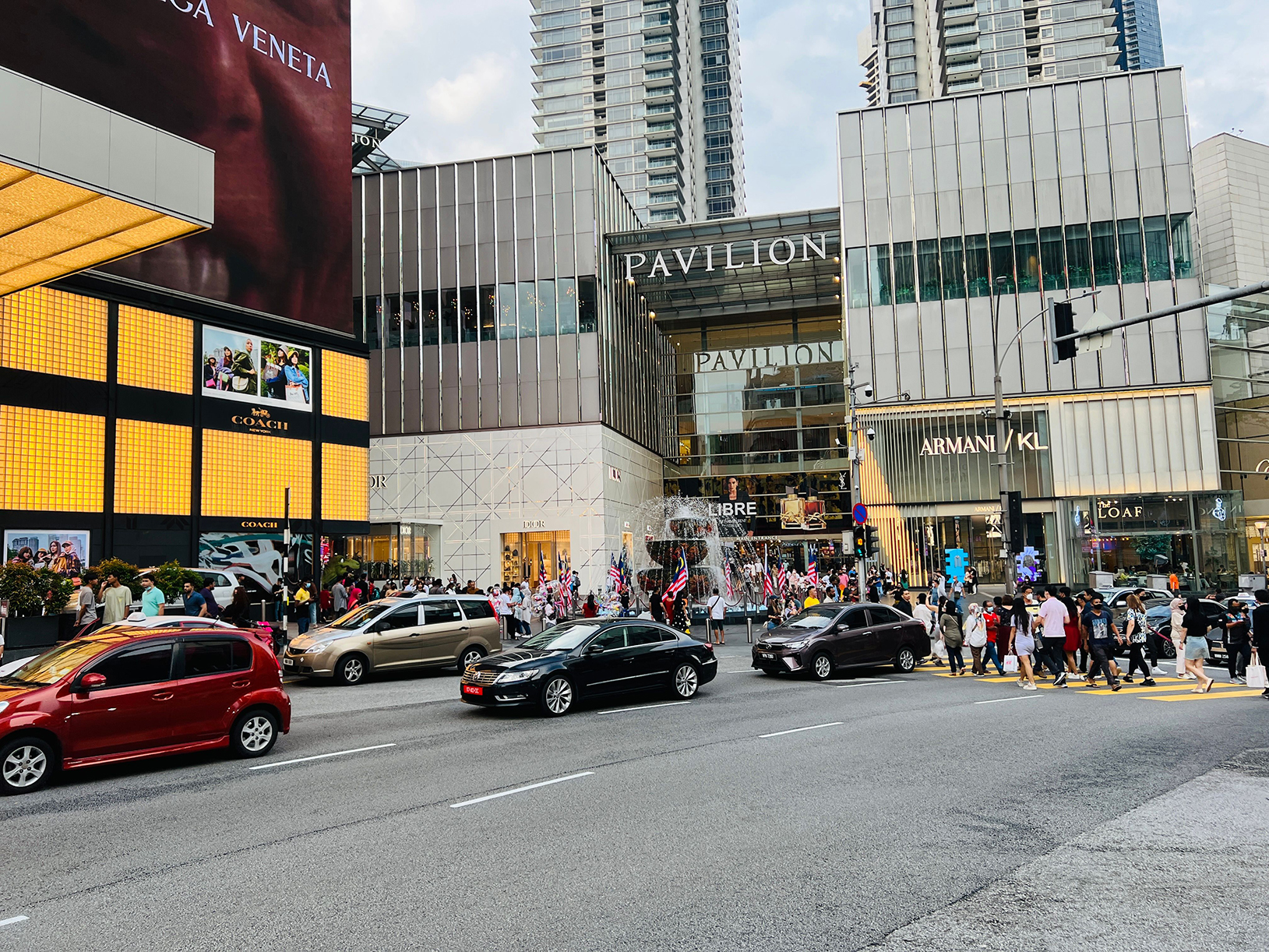
What turns Malaysia’s malls into more than shopping destinations?
Malaysia has been the chief beneficiary among outbound destinations. The country logged 10.65 million arrivals in the first quarter of 2026, with Chinese visitors rising 25 percent YoY to 1.4 million — the single biggest driver of its tourism growth that quarter.
Centers such as KLCC and Pavilion sell more than brands. They knit luxury retail, dining, entertainment, local designers and cultural programming into one space, closer to a lifestyle ecosystem than a mall. One KLCC evening recast shopping as a discovery event, with color consultations at Chopard and calligraphy workshops at Qeelin.
Brands without a local-language presence at KLCC or Pavilion risk losing ground inside their own stores.
South Korea is the secondary winner. Sun said younger travelers now fly there for beauty products, while affluent spenders head to Singapore and Hong Kong, where limited-edition merchandise keeps luxury stores busy. Seoul is on track for 6 million to 7 million Chinese visitors in 2026, by Yanolja Research’s projection. Official figures show Q1 Chinese arrivals up 29 percent and February up 48 percent.

How is Xiaohongshu steering shoppers toward Malaysia?
Underpinning the redistribution is Xiaohongshu. Searches for Malaysia on the platform rose about 180 percent YoY, and Tourism Malaysia signed a collaboration with the platform in May 2025 to court Chinese travelers ahead of Visit Malaysia 2026.
Why are luxury malls becoming property sales channels?
For a growing number of Chinese visitors, the trip is now part shopping, part property hunt. Sun said Malaysia’s malls double as a soft entry to its real estate market.
“Visiting malls such as KLCC and Pavilion lets buyers scout properties before formal inspections. Malaysian real estate developers regularly partner with luxury mall brands to host exclusive VIP dinners, tapping into those brands’ wealthy customer bases to drive property sales. Luxury shopping precincts have thus evolved into an indirect channel for acquiring property buyers, where developers close real estate deals through shopping trips instead of traditional property marketing,” Sun said.
Official figures bear out the interest. Tourism Minister Tiong King Sing told parliament that 744 participants in the My Second Home (MM2H) program bought homes in Malaysia between 2023 and 2025, with another 2,637 negotiating, according to the South China Morning Post. Mainland Chinese buyers led with 304 completed purchases, ahead of Taiwan’s 91 and Singapore’s 63.
Prime Kuala Lumpur real estate averages about $240 per square foot, a fraction of other Asian hubs, with access to private healthcare and branch campuses of Australian and British universities, including Monash, Curtin and Newcastle University Medicine. The mix makes the country a single destination for investment and longer-term relocation.
“Luxury shopping precincts turned property acquisition channels have raised the entire shopping experience. Widespread Chinese-speaking staff, seamless mobile payments, and bespoke mall privileges for Chinese shoppers have lifted visitor ratings for premium retail in the country, with only a tiny fraction of tourists harboring mild geopolitical concerns that barely affect their spending,” Sun said.
Will Japan win back Chinese luxury shoppers?
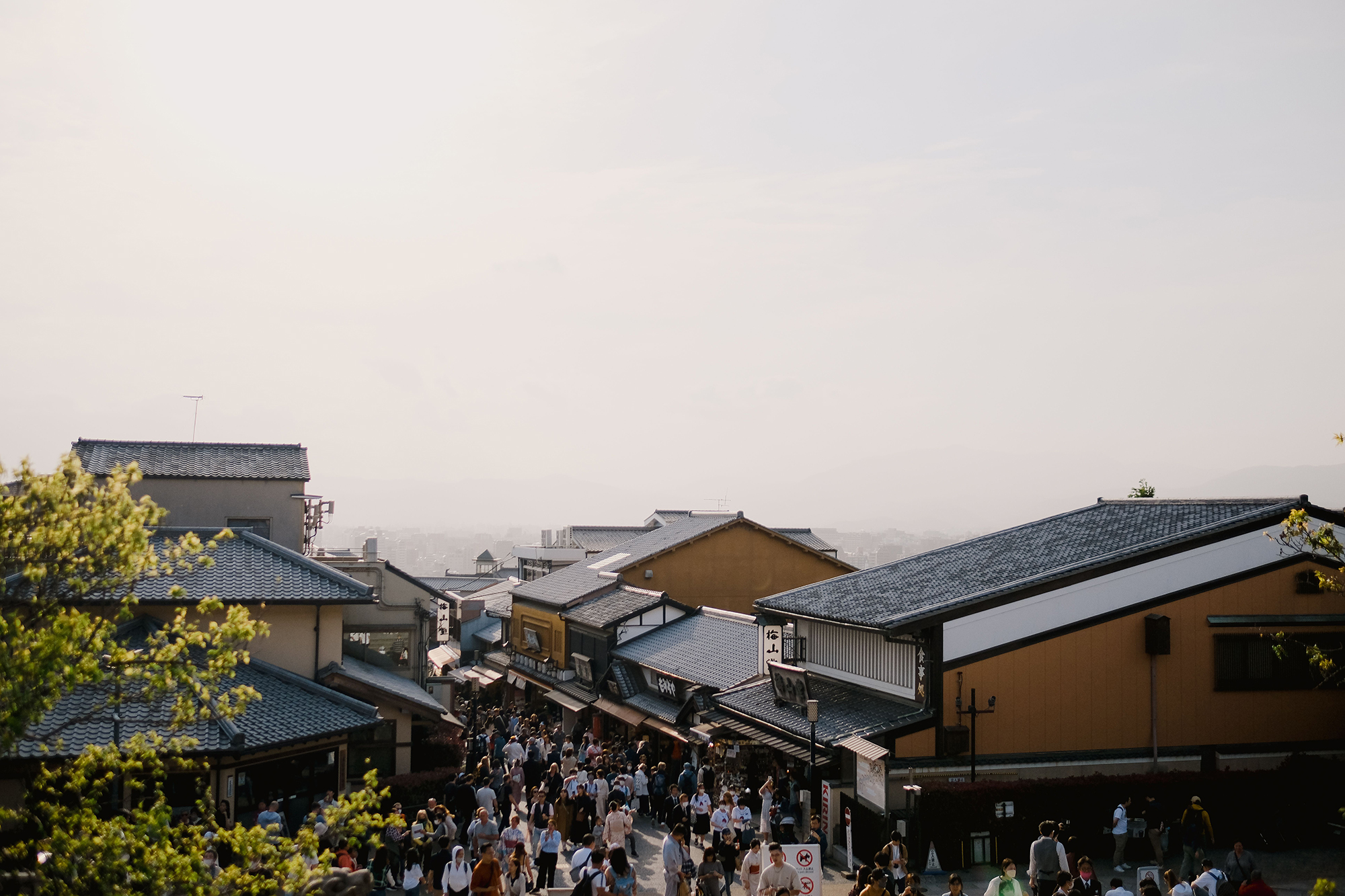
Tokyo still draws visitors for scenery, food and culture, and Japan’s overall numbers remain near record highs. But beneath the polished image lie strains that could make this loss stick.
Markus Winter, founder and co-CEO of cultural insights agency Yuzu Kyodai, said the weak yen helps inbound travelers but prices hotels beyond locals’ reach, puts overseas travel out of reach, drives down passport ownership and leaves Japan with a shrinking economy and an aging society.
“It feels strange to hear nonstop praise for Japan’s perfection while your own lifestyle erodes. You feel guilty complaining when outsiders only see the good side. Japan is a normal country, not just its celebrated features like cleanliness and futuristic cities,” Winter said.
He argues that Japan marketed itself into an overtourism crisis, promoting the same handful of destinations — Mount Fuji, Kyoto, Harajuku — for decades until crowding overwhelmed them, with little revenue shared with local communities. Kyoto now plans a two-tier bus fare charging non-residents more than locals, a direct answer to resident complaints.
Authorities are responding. Japan Tourism Agency chief Shigeki Murata said the government would roll out “strategic promotions to attract visitors from more countries and regions,” pressing toward a 2030 goal of 60 million inbound visitors even as airfares climb.
Outbound Chinese luxury spending no longer defaults to Japan. As price gaps close and shopping becomes something to experience rather than simply acquire, Malaysia and South Korea are taking what Japan is losing — and redrawing the map of Asia’s duty-free luxury trade.
This article was written by Belinda Yohana and a version of this article was first seen on Jing Daily.
For more on the latest in finance and business reads, click here.