World Cup 2026 History Points to a Familiar Shortlist
With informed insights, LUXUO delves into the discernable data to determine which nation could end up winning the 2026 World Cup.
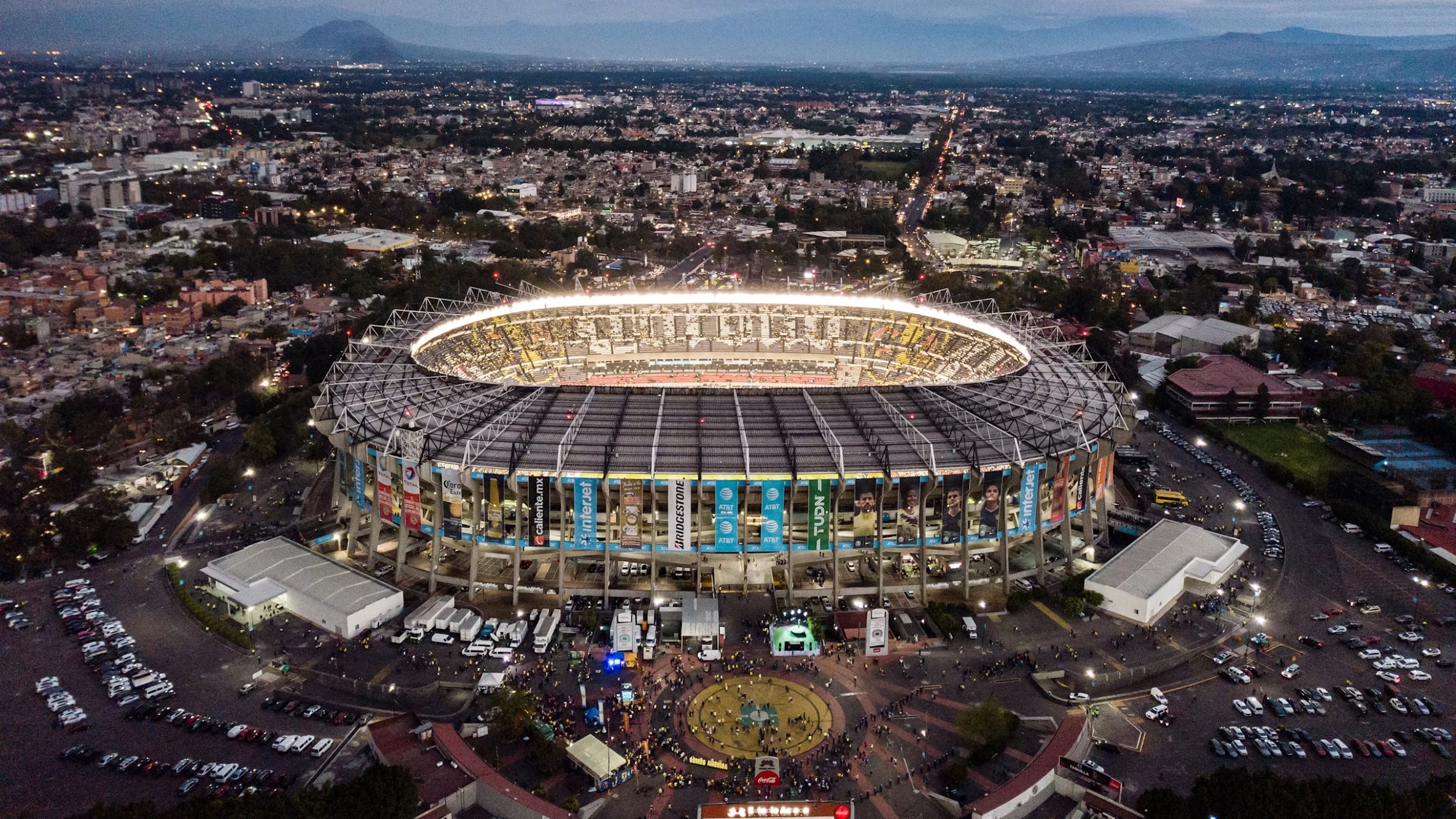
The countdown to the crowning of a winner at the World Cup rarely begins with the opening match. Long before a ball is kicked, conversations gather momentum in cafés, offices and living rooms across the globe. Predictions are exchanged, favourites debated and dark horses identified. Every tournament arrives with a sense of possibility, yet history suggests the list of genuine contenders is often smaller than it first appears. The 2026 FIFA World Cup may be approaching its centenary, but it remains a surprisingly limited dataset. Since the inaugural tournament in 1930, only 22 men’s World Cups have been played. Two editions were cancelled during the Second World War and the tournament takes place only once every four years. Compared with annual sporting competitions, the sample size is remarkably small.
That scarcity gives historical trends unusual weight. Over almost a century of competition, winning teams have shared several common characteristics. Past performance cannot predict the future with certainty, but it can provide a useful framework for assessing the expanded 48-team field heading to the United States, Canada and Mexico in 2026.
The simplest route would be to focus exclusively on previous winners. Only eight nations have ever lifted the trophy. Italy, a four-time champion, failed to qualify for the 2026 tournament. Uruguay, winner of the first World Cup and again in 1950, enters as a long shot despite a proud footballing tradition. The remaining former champions — Argentina, Brazil, England, France, Germany and Spain — all sit among the leading favourites according to bookmakers and predictive models.
The Game Has Become More Competitive

Yet the modern game has become increasingly competitive. Morocco’s run to the semi-finals in Qatar challenged long-held assumptions about the hierarchy of international football. Several emerging nations have strengthened youth development pathways and invested heavily in infrastructure. The possibility of a first-time winner remains one of the tournament’s most intriguing storylines.
History, however, remains difficult to ignore. The first major trend concerns geography. Every World Cup winner has come from either Europe or South America. The pattern extends beyond champions. Only 13 nations have reached a World Cup final, with 10 representing Europe and 3 representing South America. Semi-final appearances from outside those two continents have been exceptionally rare. Since 1930, only the United States, South Korea and Morocco have progressed that far.
Morocco remains the most compelling exception to the rule. Since reaching the semi-finals in 2022, the Atlas Lions have continued to build momentum. A title at the 2025 FIFA Under-20 World Cup, a bronze medal at the 2024 Olympic Games and strong performances at the youth level suggest a national programme moving in the right direction. Yet even with that progress, lifting football’s biggest trophy would require a breakthrough unprecedented in the competition’s history.
The expanded tournament format could create more opportunities for emerging nations, but historical evidence continues to favour football’s traditional powerhouses.
Look at Elo Ratings
A second filter comes from Elo ratings (a statistical ranking system originally developed for chess that assesses team strength based on match results and opponents’ quality). Unlike FIFA’s world rankings, which were introduced only in 1992, Elo ratings can be applied retrospectively across football history, making them one of the most useful tools for comparing teams across different eras.
📈 STONGEST GROUP at the 2026 FIFA World Cup based on average Elo rating of nations in it:
— Football Rankings (@FootRankings) April 1, 2026
🔸 Group I (1870): 🇫🇷 🇳🇴 🇸🇳 🇮🇶
📉 WEAKEST GROUP at the 2026 FIFA World Cup based on average Elo rating of nations in it:
🔸 Group B (1681): 🇨🇭 🇨🇦 🇧🇦 🇶🇦 pic.twitter.com/NvQqsV8dlY
The numbers reveal another consistent pattern.
No nation entering a World Cup outside the top 17 Elo rankings has ever won the tournament. In reality, the threshold may be even stricter. Uruguay’s victory in 1950 remains the only championship won by a team ranked lower than fifteenth before the tournament began. 15 of the 22 World Cup winners entered their tournaments ranked in the top four.
The implication is significant. Football frequently produces surprise results over 90 minutes, but World Cups are rarely won by genuine outsiders. Sustaining success across seven matches against elite opposition requires a level of consistency that underdogs have historically struggled to maintain.
Applying that benchmark immediately removes several ambitious challengers. Paraguay, Austria, Scotland, Czechia, Sweden and Bosnia and Herzegovina all fall outside the traditional winning range. Host nations Canada, Mexico and the United States also sit beyond the historical threshold despite enjoying home advantage.
Host Nations Usually Win
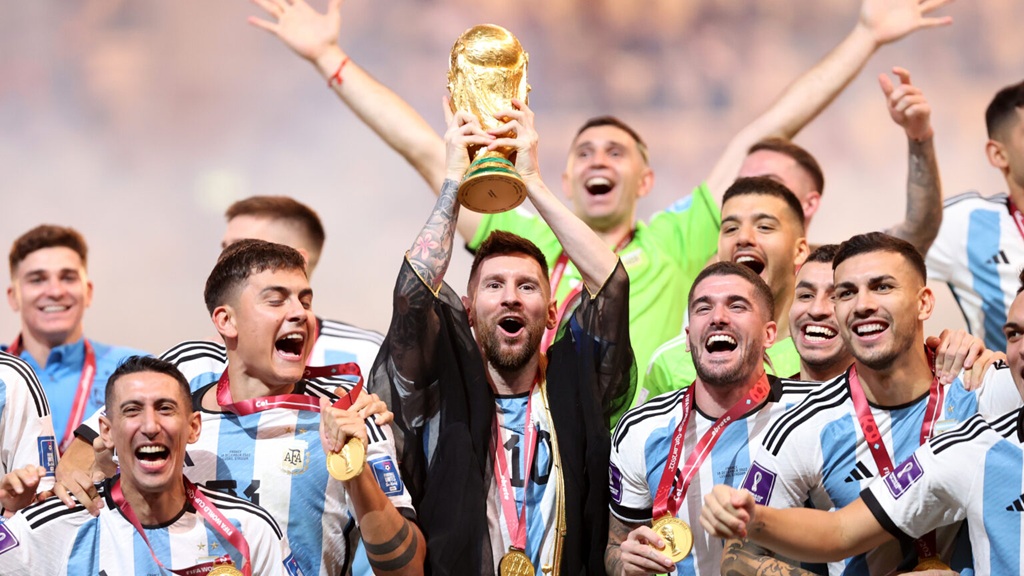
Hosts have historically performed well. Six host nations have won the World Cup, and four secured their first title on home soil. None, however, entered the tournament as a surprise contender. Geography may provide an edge, but elite quality remains a prerequisite.
However, individual excellence offers another revealing clue. Among European champions, every World Cup-winning nation has produced multiple Ballon d’Or winners. The award, first presented in 1956, remains football’s highest individual honour and serves as a useful indicator of sustained elite talent production.
France leads this category with six different Ballon d’Or winners. Germany and Italy have produced five each. England has four, while Spain, Portugal and the Netherlands have each produced three.
The pattern reflects a broader truth. Nations capable of producing the world’s best players over multiple generations tend to possess the depth, infrastructure and footballing culture necessary to compete at the highest level.
The Process of Elimination
This trend eliminates several respected European sides. Belgium’s highly regarded golden generation failed to convert talent into major international silverware. Croatia’s achievements, including a runner-up finish in 2018 and a third-place finish in 2022, remain remarkable but do not align with the historical profile of previous champions. Norway continues to emerge as an exciting prospect, powered by one of the strongest groups of attacking talent in Europe, yet the nation lacks the track record associated with World Cup winners. Attention then shifts from players to the technical area.
One of the tournament’s most fascinating historical quirks concerns managerial nationality. No team has ever won a World Cup under a foreign-born manager. The statistic may be partly self-reinforcing. Football’s strongest nations have traditionally developed elite coaches alongside elite players, while national federations have often preferred domestic appointments. Correlation does not necessarily prove causation. Even so, the record remains intact after almost a century.
The trend creates complications for several leading contenders. Brazil enters the tournament under Italian manager Carlo Ancelotti, one of the most accomplished coaches in football history. England is led by German manager Thomas Tuchel, while Portugal continues under Spanish manager Roberto Martínez. Uruguay, Colombia and Ecuador are also managed by foreign-born coaches. At some point, the pattern is likely to end. Modern football is more international than ever before, and coaching expertise increasingly transcends borders. Yet historical evidence remains a powerful consideration when narrowing the field.
The Final Five
After applying these filters, only five nations remain: Argentina, France, Germany, the Netherlands and Spain. None represents a surprise. Argentina enters as defending champion, carrying the confidence and experience that accompany recent success. France continues to possess one of the deepest talent pools in world football, supported by a development system that consistently produces elite players.
Germany’s presence reflects a remarkable ability to reinvent itself across generations. Four World Cup titles have arrived under different tactical philosophies and in different footballing eras, reinforcing the country’s reputation as one of the sport’s most resilient tournament teams.
Spain has emerged as the consensus favourite among many analysts, bookmakers and predictive models. Recent international success, technical consistency and a squad blending established leaders with exceptional young talent have strengthened confidence in another deep run.
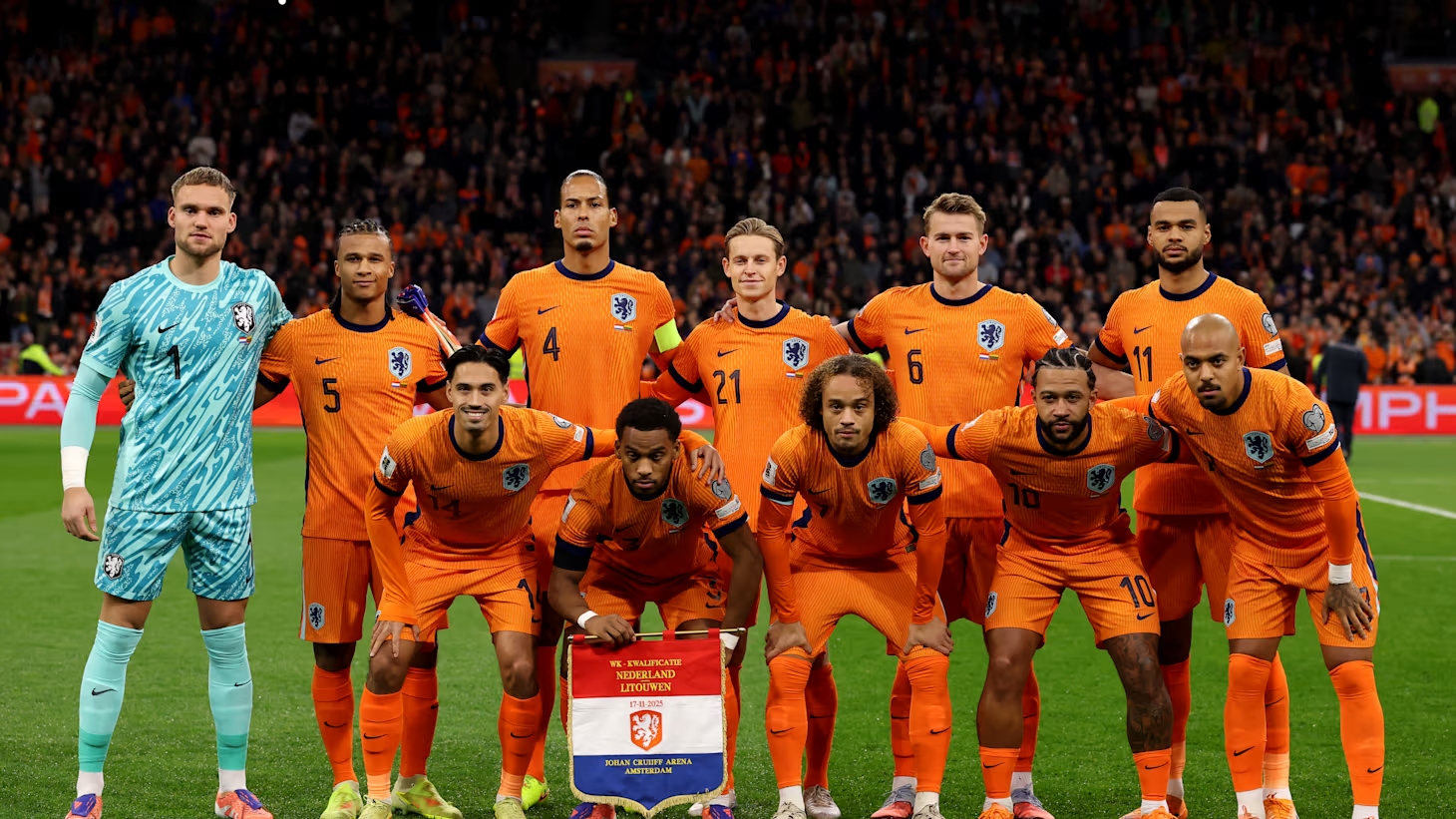
Then there is the Netherlands. No nation has experienced more heartbreak without winning the World Cup. Defeats in the finals of 1974, 1978 and 2010 remain defining moments in football history. Yet Dutch football continues to produce technically gifted players, influential coaches and a clear footballing identity. Among countries still pursuing a first title, few possess a stronger claim.
Of course, the World Cup has never been decided solely by trends, rankings or historical precedents. A tournament that unfolds over four weeks inevitably produces moments beyond prediction: a decisive save, an unexpected breakthrough star, or a single goal that alters football history.
Historical Shortlist
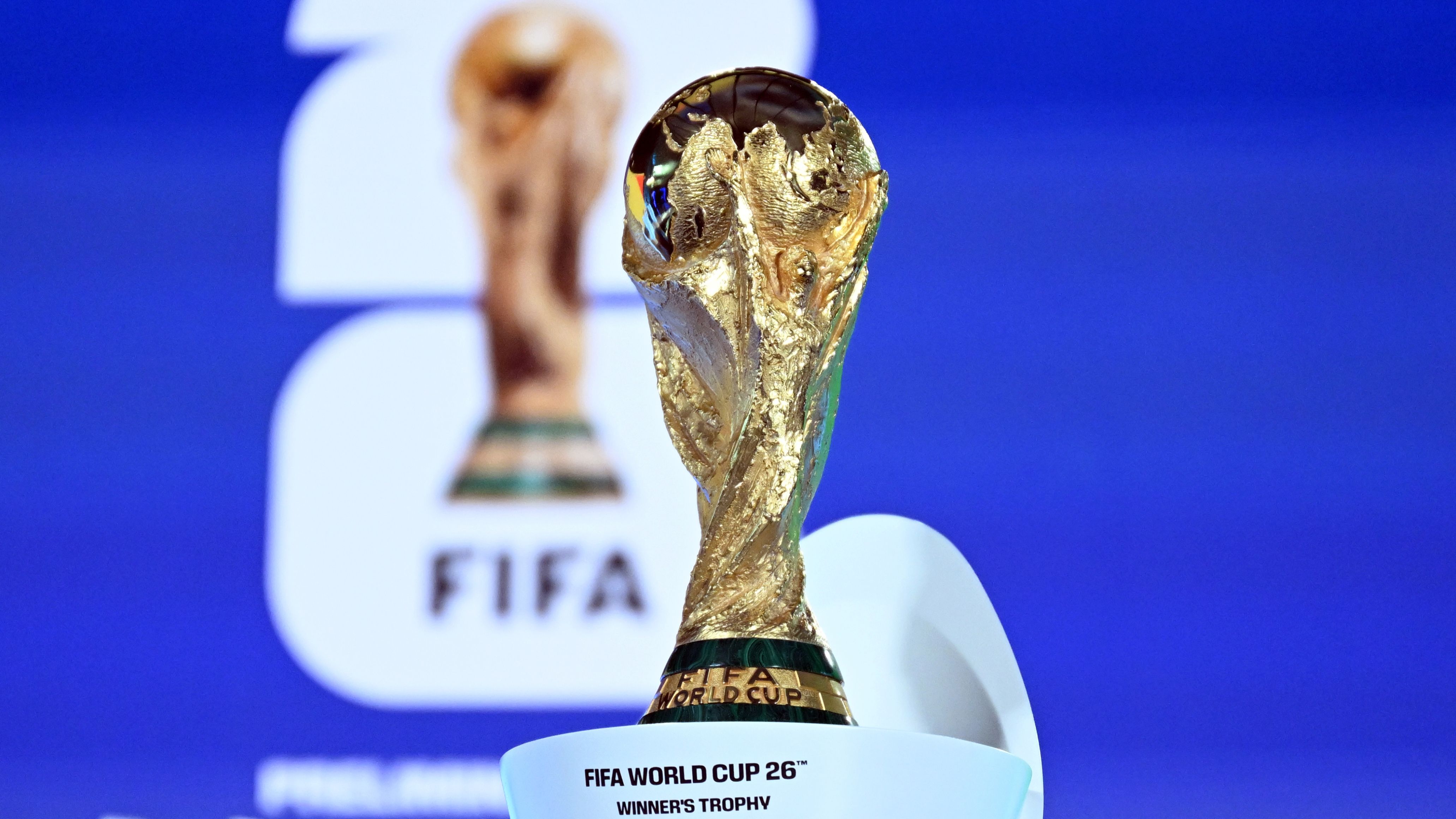
History points towards a familiar shortlist heading into 2026. Spain and France sit at the front of the queue. Argentina seeks to defend a title. Germany continues another cycle of renewal. The Netherlands pursues a long-awaited breakthrough. The names may feel familiar, but that is precisely the point. Nearly a century of World Cup history suggests that football’s biggest prize rarely strays far from its established centres of power.
Yet anticipation persists because certainty remains impossible. Every tournament begins with data, trends and forecasts. Every tournament ends with a story. The nation that lifts the trophy in North America next summer will add another chapter to football’s most enduring narrative — whether history repeats itself or takes an unexpected turn.
For more culture reads, click here.