Discretion Travels Badly: The Quiet Risk In A Mobile Luxury Business
Discretion is fundamental to luxury. But when business travels, protecting it becomes a technological problem.

A house selling at the top of the market is selling discretion as much as craft. The client list, the bespoke commission still under discussion, the provenance file, the collector who would rather not be known as the buyer: this information is the relationship, and the relationship is the business. Yet almost none of it stays in one building.
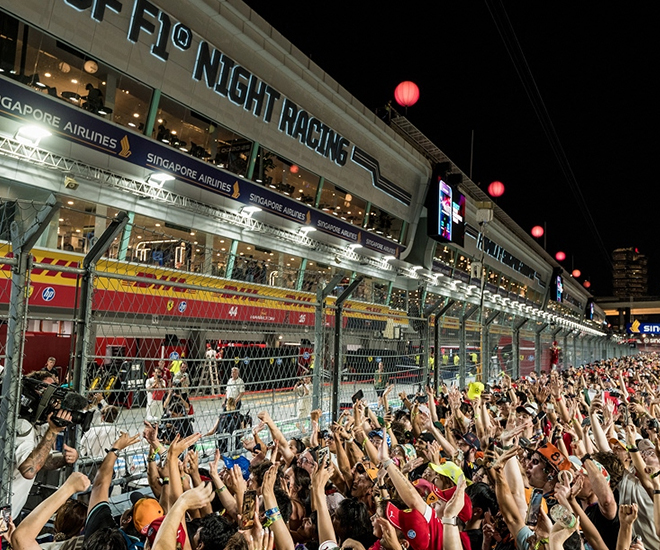
The work happens in motion. Trunk shows, art fairs, salon appointments in hotel suites, yacht and watch shows, a brand director answering a client from an airport lounge between flights. Every one of those settings puts a company device on a network the company does not own, configure or monitor, usually one shared with several hundred strangers.
A gap between risk and perception
The exposure is not theoretical, and the figures are uncomfortable. A survey of 1,000 travellers published by Forbes Advisor found that 41% had had information compromised while using public Wi-Fi. Among those incidents, 56% occurred on hotel networks and 52% at airports, the two places business travel concentrates. Only 17% of respondents said they felt unsafe using these networks at all.
That last number is an interesting one. The behaviour continues because nothing visibly goes wrong at the time. A compromised session does not announce itself; it surfaces months later as a client inquiry nobody can explain, or an approach to a collector from a party who should not have known what they knew. For a house whose reputation rests on confidentiality, the damage is not measured in the value of the file.
The sector has had a reminder. A run of disclosed customer-data incidents across luxury retail through 2025 made clear that high-value client records are a target in their own right, independent of payment data, precisely because of who those clients are.
What a mobile operation can reasonably do
The practical baseline is to stop treating the venue network as a trusted one. A business vpn deployed across company laptops and phones encrypts traffic before it reaches the hotel or fairground connection, so what passes over that network is unreadable to anyone else sitting on it. Configured centrally, it works without the sales director having to remember anything, which is the only way a travel policy survives contact with a show week.

Two decisions matter as much as the tooling. The first is scope: who actually needs the full client database on a device that leaves the building, and whether a view limited to the appointments of that week would serve. The second is departure hygiene, meaning accounts closed when staff and freelancers move on, which in an industry built on seasonal teams and consultants is easily overlooked.
None of this appears in the brand book. It belongs to the same discipline as everything else a house does to build something that lasts: the client trusted you with more than a purchase, and keeping that trust is now partly an infrastructure question.
For more on the latest in business reads, click here.