The Iconic Runway Shows Fashion Cannot Forget
From provocation to performance, ten iconic runway shows that reshaped fashion long after the lights went down.
Fashion has never lacked spectacle. Runways have been flooded, converted into supermarkets, crossed by trains and staged against some of the world’s most recognisable landmarks. Yet spectacle alone rarely guarantees permanence.
Perhaps, a clarification is required. An icon earns its status through endurance, influence and cultural memory; something can be iconic — immediately recognisable or extraordinarily memorable — without becoming an Icon itself. Fashion week produces countless images that dominate conversation for a season. Far fewer continue to shape how designers, consumers and the industry understand fashion decades later.
The shows that endure tend to do something tangible. They challenge accepted notions of taste, redirect the trajectory of a maison, change the relationship between clothing and performance, or create an image powerful enough to become part of fashion history.
Alexander McQueen Spring/Summer 1999: When Creation Became Performance
Few runway images encapsulate Alexander McQueen as completely as the finale of Spring/Summer 1999, No. 13.
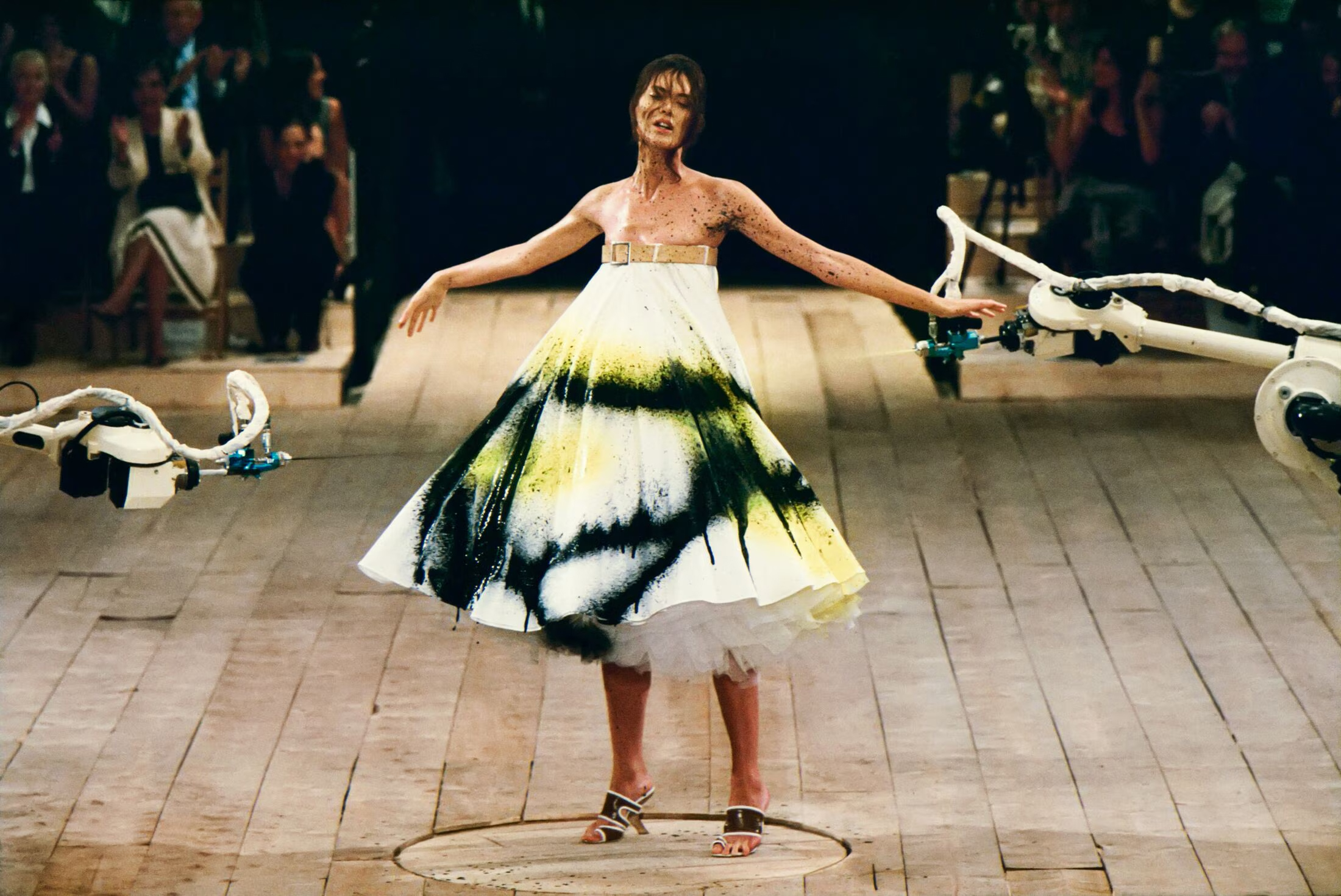
Shalom Harlow stepped onto a rotating platform wearing a white cotton-muslin dress as two industrial robots sprayed the garment with black and yellow paint. The Metropolitan Museum of Art records that the sequence was inspired by an installation by Rebecca Horn and notes how the machines transformed the dress while Harlow rotated between them. The garment later formed part of the museum’s landmark Alexander McQueen: Savage Beauty exhibition.
The moment endured because technology was not simply scenery. The garment itself changed before the audience, collapsing the boundaries between designer, machine, model and performance.
The potential technological novelty instead captured something fundamental about McQueen: beauty rarely existed without tension.
Christian Dior Fall 2000 Couture: When History Became Subversive
John Galliano’s Fall/Winter 2000–2001 Haute Couture collection for Christian Dior approached historical fashion with considerably less reverence.
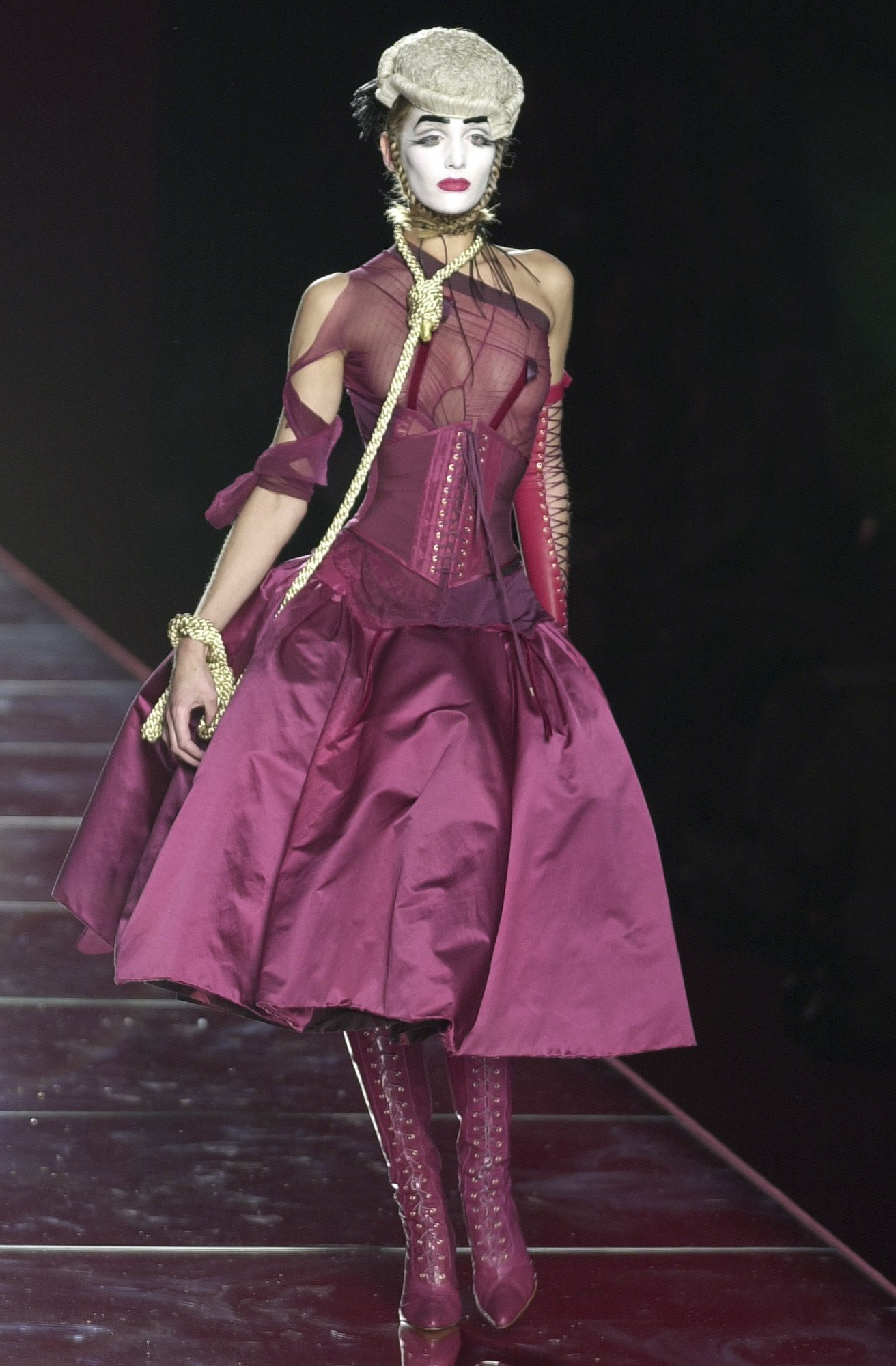
The Château de Versailles identifies the collection with Marie Antoinette, documenting Galliano’s use of rigid petticoats, corsetry, ruffles and other characteristics of eighteenth-century court dress. Yet these references were pushed through Galliano’s theatrical and provocative visual language rather than treated as straightforward historical reconstruction.
The Metropolitan Museum of Art’s collection also preserves Galliano’s work for Dior from the same couture season, reinforcing the technical sophistication underlying his more confrontational imagery.
That tension explains the collection’s endurance. Galliano demonstrated that couture craftsmanship could preserve extraordinary technique while challenging the decorum traditionally associated with it.
Prada Spring/Summer 1996: When “Ugly” Became Sophisticated
Miuccia Prada needed neither machinery nor extravagant scenery to challenge fashion. She did it through taste.
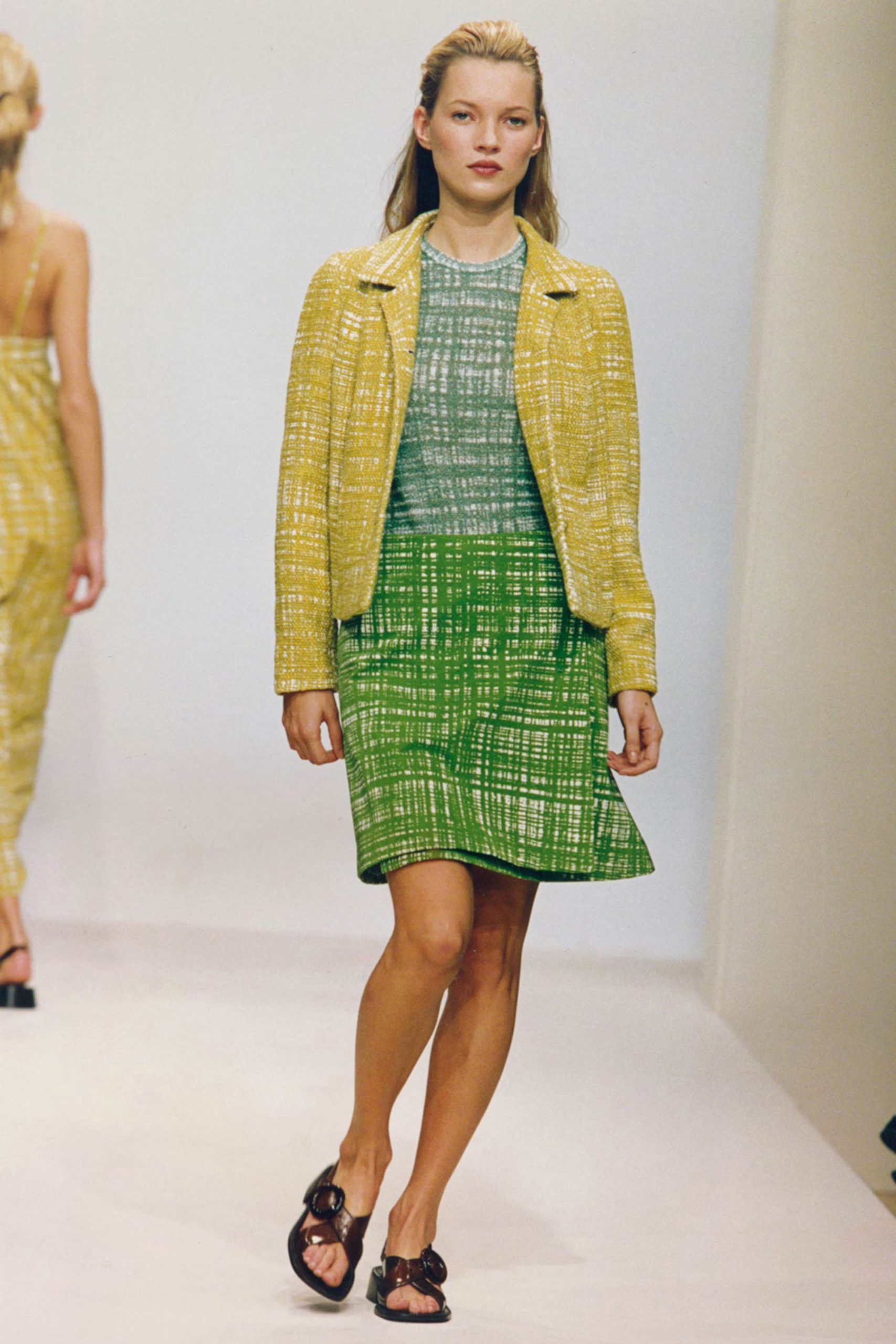
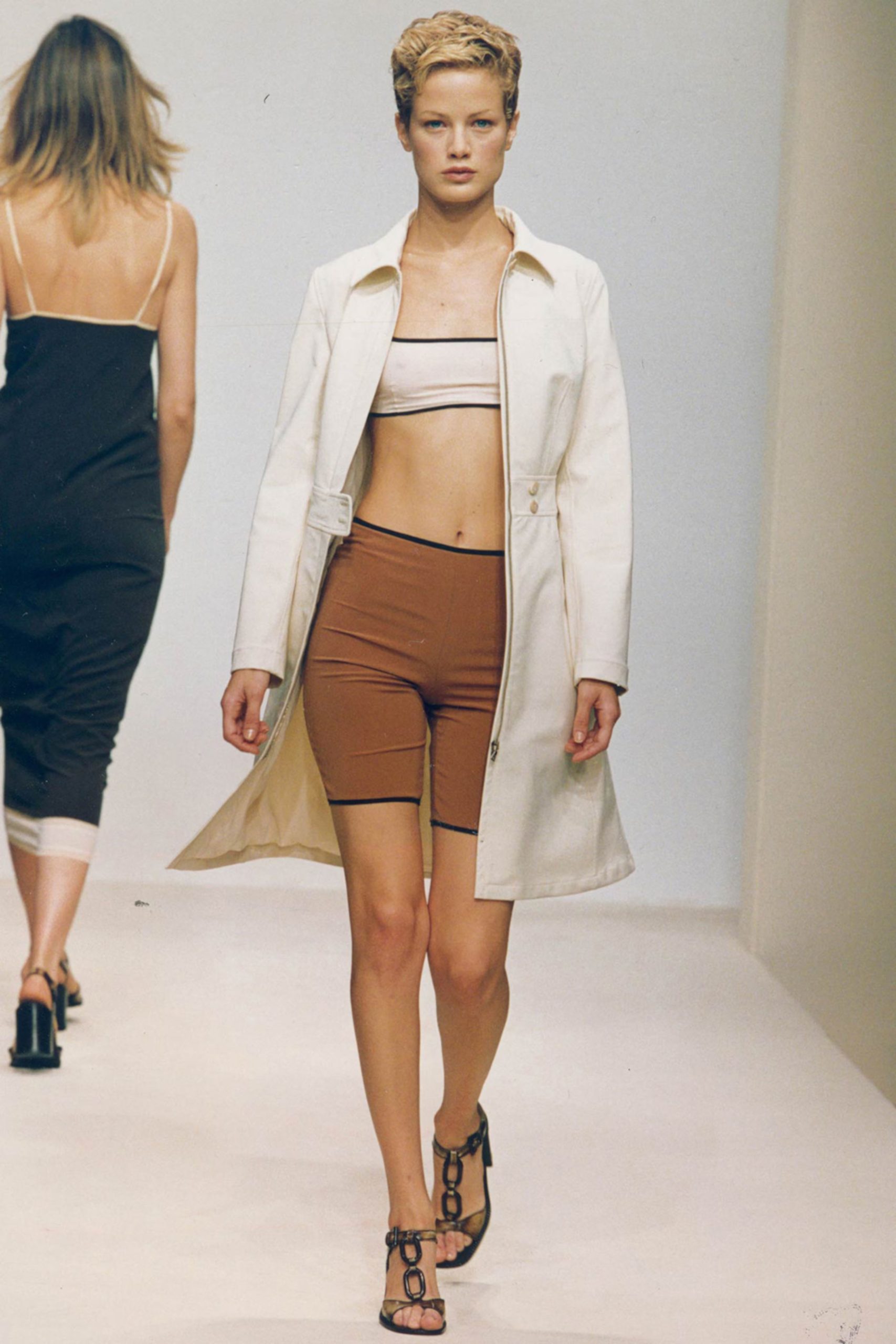
Images courtesy of Prada.
Spring/Summer 1996 brought jarring combinations of rust, mustard and green together with deliberately banal prints at a moment when overt glamour and sexuality dominated much of luxury fashion. Prada’s own retrospective material identifies the collection as one of the earliest expressions of its “ugly chic” approach.
The Metropolitan Museum of Art later devoted part of Schiaparelli and Prada: Impossible Conversations to “Ugly Chic”, examining Prada’s practice of subverting conventional ideas of beauty and glamour through colour, textiles and the tension between good and bad taste.
The collection’s influence therefore extended beyond any single print or silhouette. Prada demonstrated that luxury could acquire cultural authority by questioning beauty rather than simply confirming it.
Gucci Fall 1995: The Collection That Recast a Maison
Tom Ford’s Fall 1995 Gucci collection demonstrated how quickly a creative vision could change perceptions of an established luxury house.
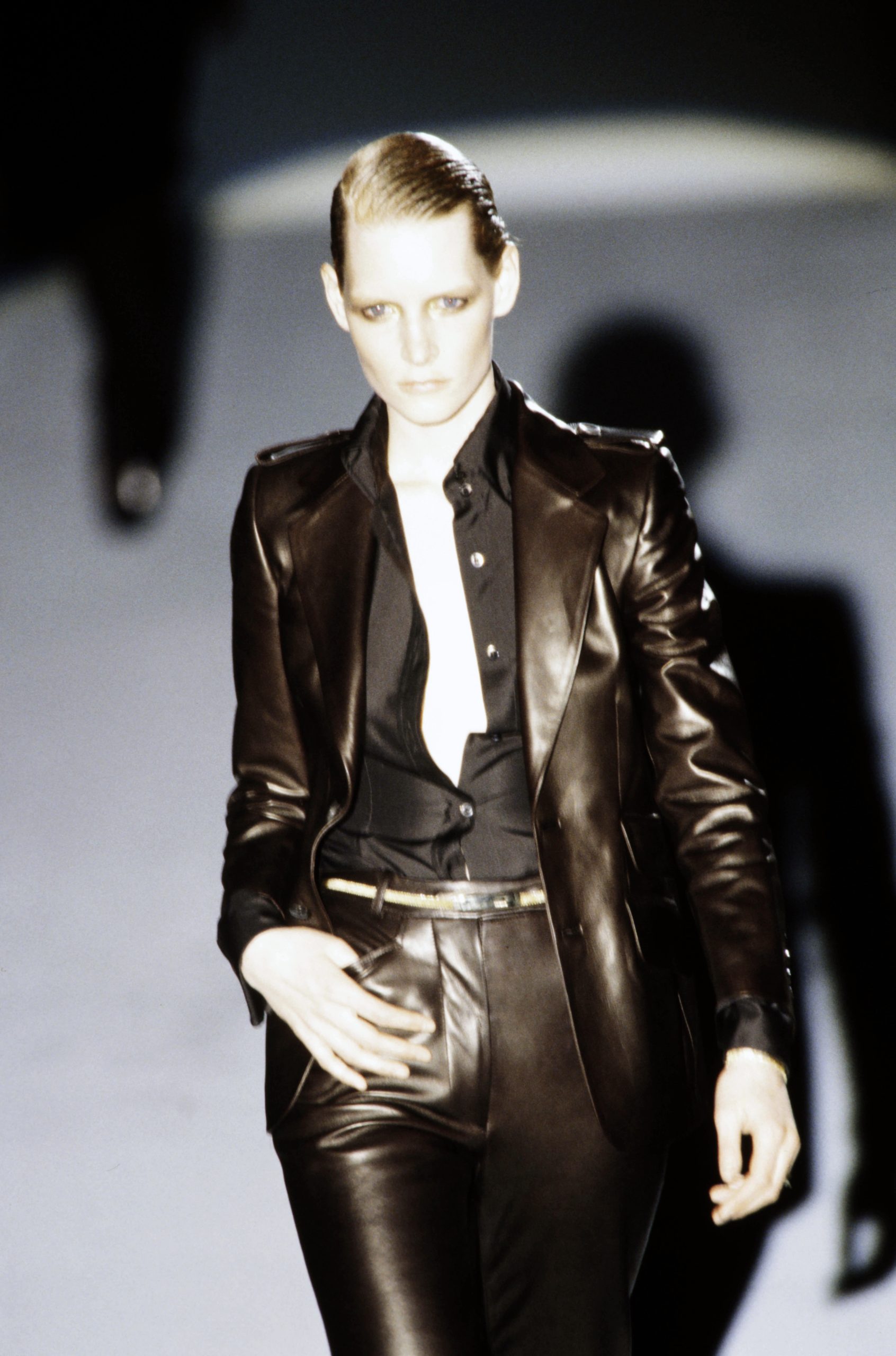
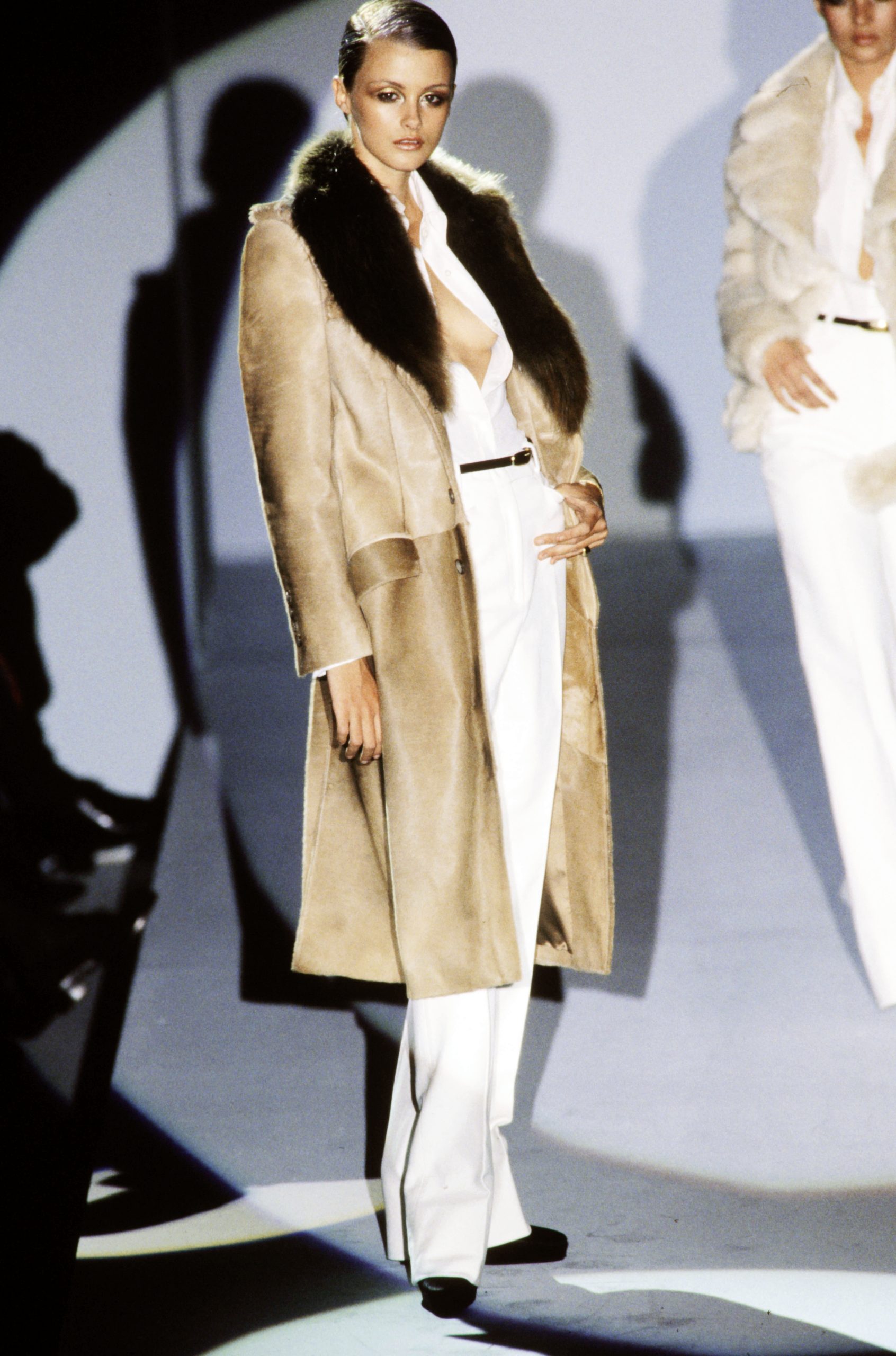
Images courtesy of Giovanni Giammoni, Penske Media & Getty Images.
Contemporary reporting described low-slung trousers, satin shirts, vivid colour and a deliberately sensual interpretation of 1970s glamour. The collection provided a dramatic counterpoint to the grunge and minimalism that had dominated much of the decade.
The broader transformation is well documented. Kering records Ford’s 1994 appointment as Gucci’s first Creative Director as the beginning of a new era for the house, while The Metropolitan Museum of Art credits his creative vision with establishing a new image for Gucci and strengthening its position within luxury fashion.
Gucci already possessed considerable heritage. Ford gave that heritage a new attitude — polished, sensual and culturally immediate.
Louis Vuitton Fall 2012: The Art of Travel Becomes Theatre
Marc Jacobs approached runway spectacle through the very foundation of Louis Vuitton.
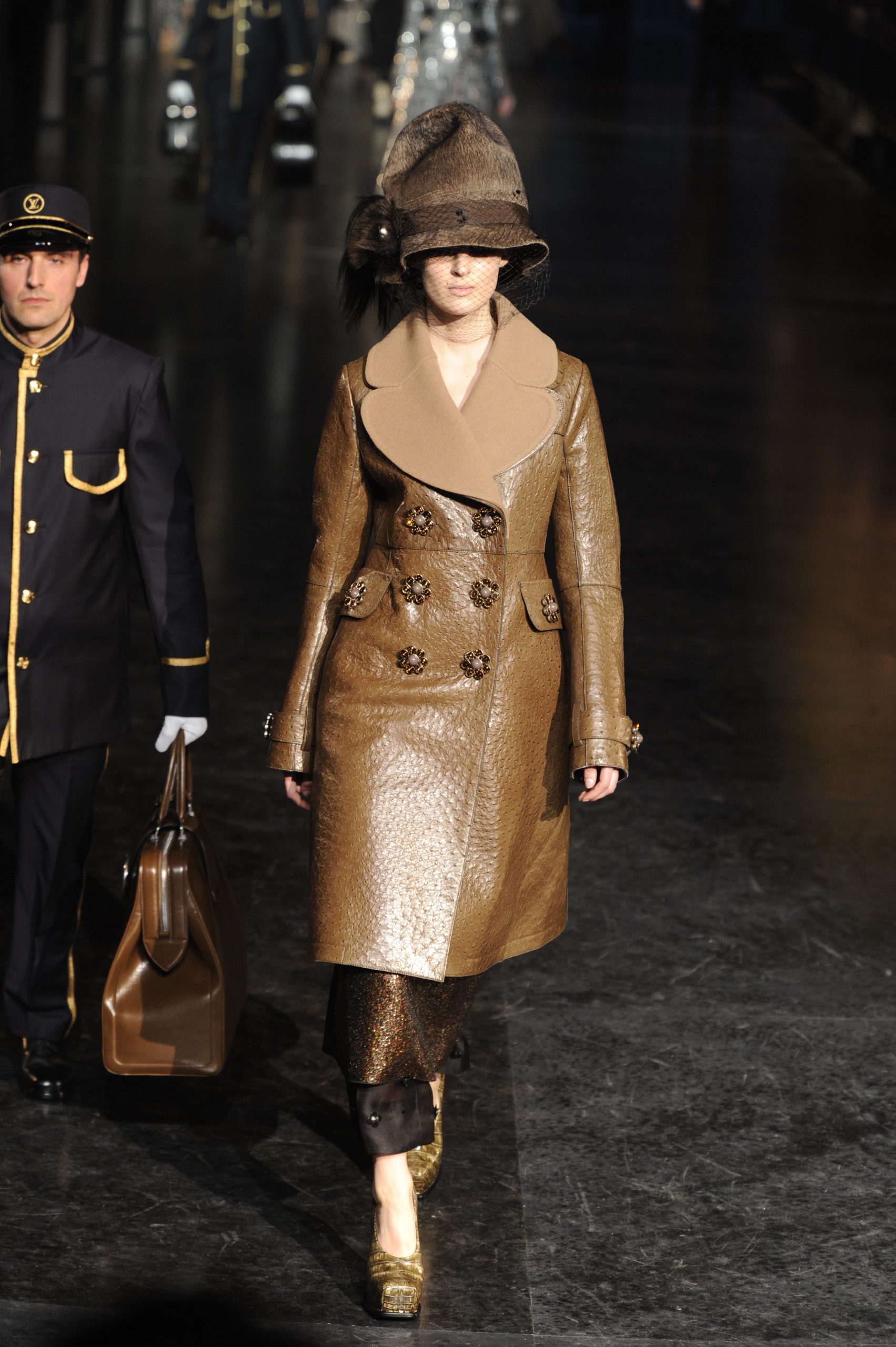
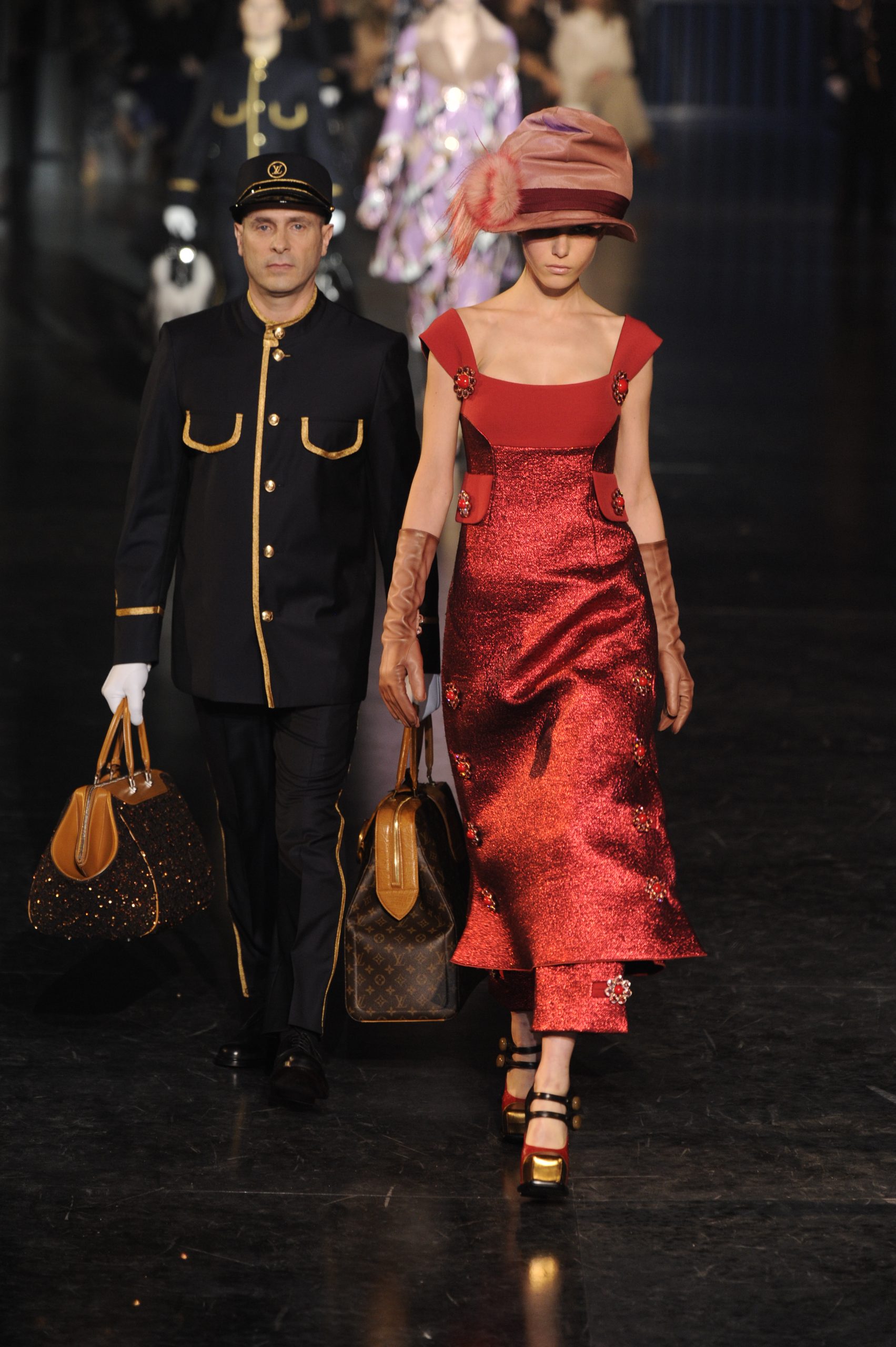
Images courtesy of Giovanni Giannoni & Getty Images.
For Fall 2012, the Cour Carrée of the Louvre was transformed into a railway station as a full-scale blue train arrived through a cloud of steam. Models emerged accompanied by uniformed porters carrying Louis Vuitton luggage, explicitly evoking the golden age of rail travel. Contemporary reporting documented the train, luggage and station-like production in detail.
Its relevance extended beyond the set. Louis Vuitton began in 1854 as a trunk-maker, with the maison’s development closely connected to the changing needs of modern travel. Its flat-topped trunks were designed to be practical, stackable travelling objects before becoming symbols of luxury.
The 2012 show succeeded because the spectacle amplified an authentic house identity. The train did not manufacture a heritage story; it made the Art of Travel physical.
When the Runway Became Bigger Than the Clothes
Other shows expanded the possibilities further.
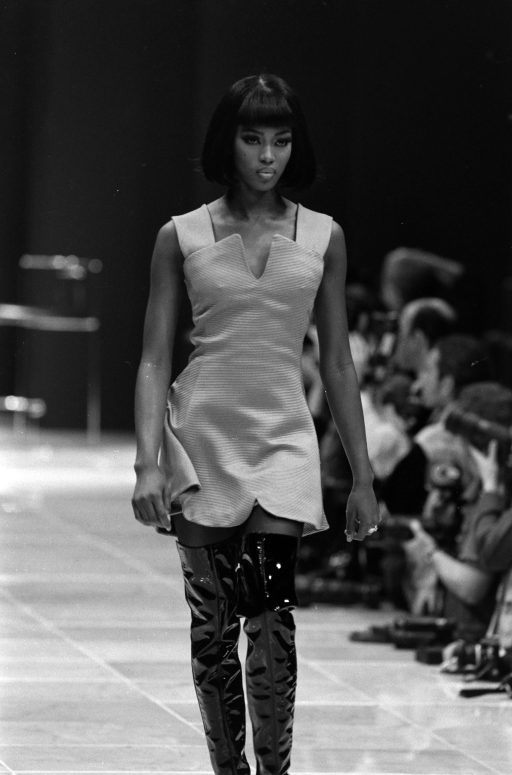
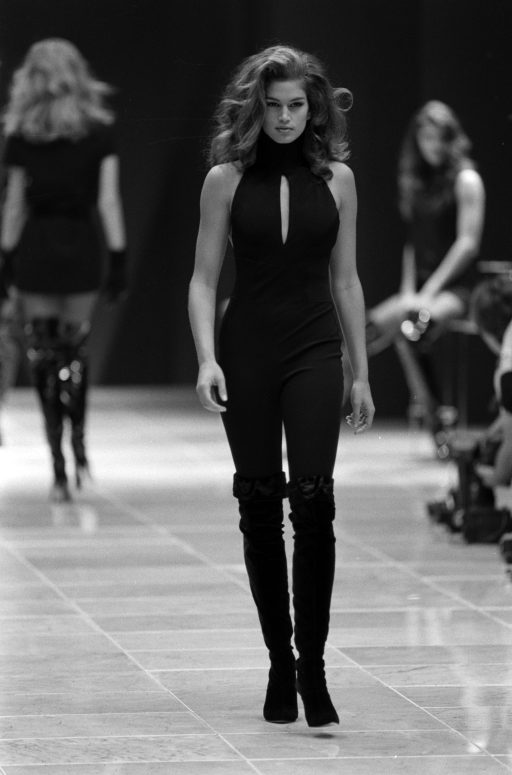
Image courtesy of Emanuele Sardella, WWD, Penske Media & Getty Images.
Versace Fall 1991 helped crystallise the supermodel era when Linda Evangelista, Cindy Crawford, Naomi Campbell and Christy Turlington walked together to George Michael’s Freedom! ’90. Central Saint Martins identifies the moment as part of Versace’s broader role in bringing celebrity, models, music and fashion together on the runway.
Images courtesy of Dominique Charriau, WireImage, Francois Durand & Getty Images.
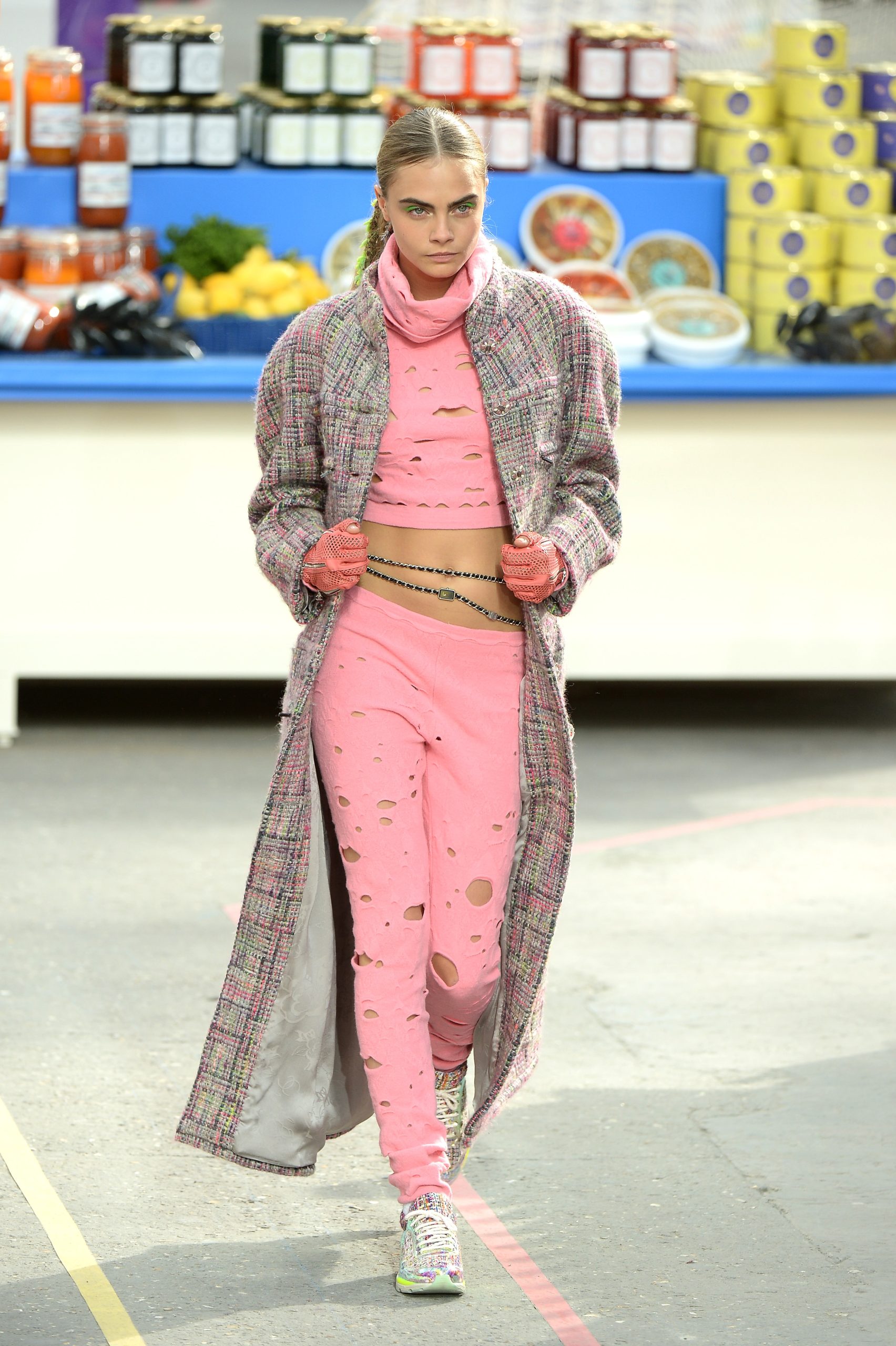
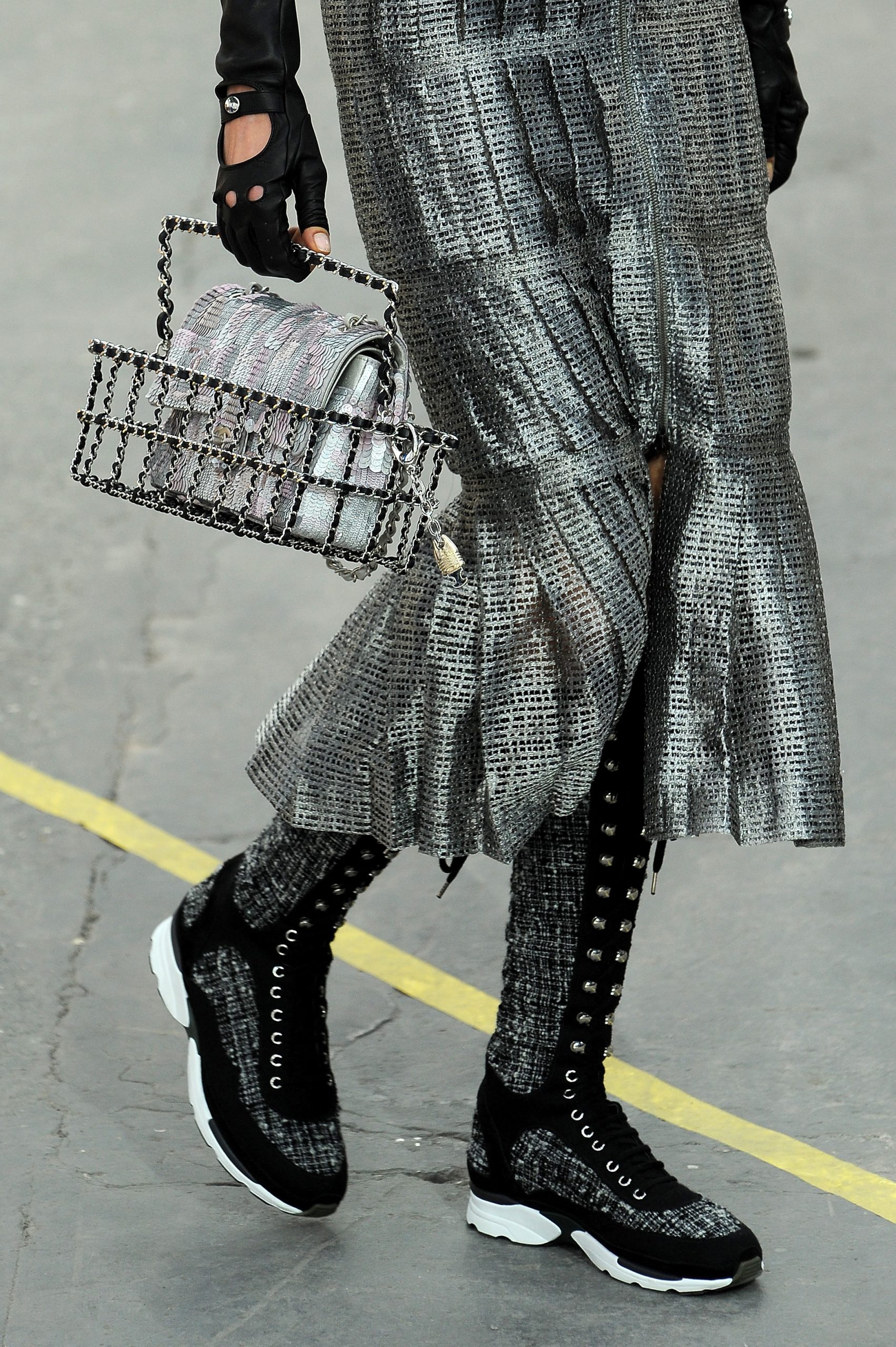
For Chanel Fall 2014, Karl Lagerfeld transformed Paris’s Grand Palais into the “Chanel Shopping Center”, filling a fabricated supermarket with house-branded versions of everyday products. Reuters described Lagerfeld’s concept as a luxury reinterpretation of ordinary consumer life.
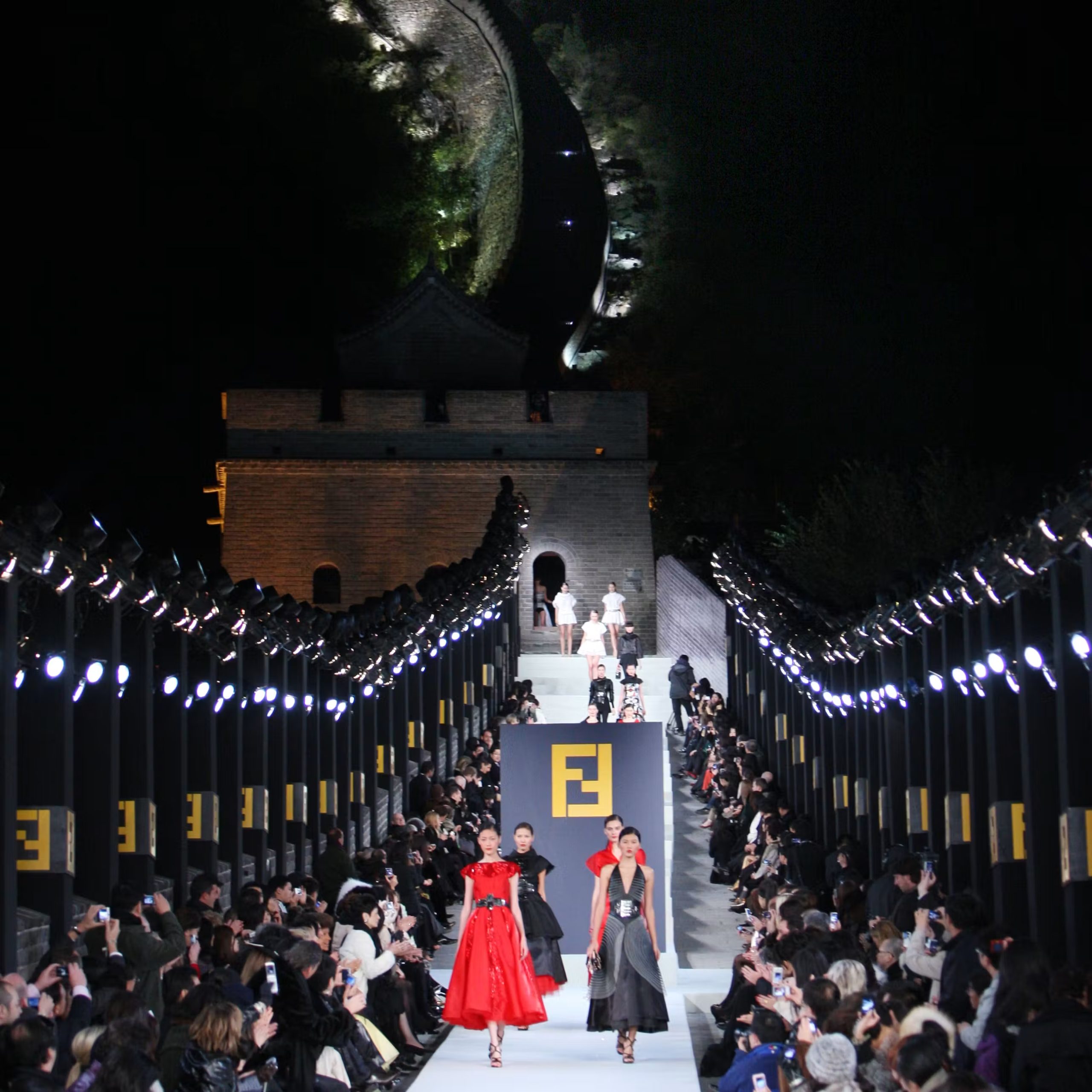
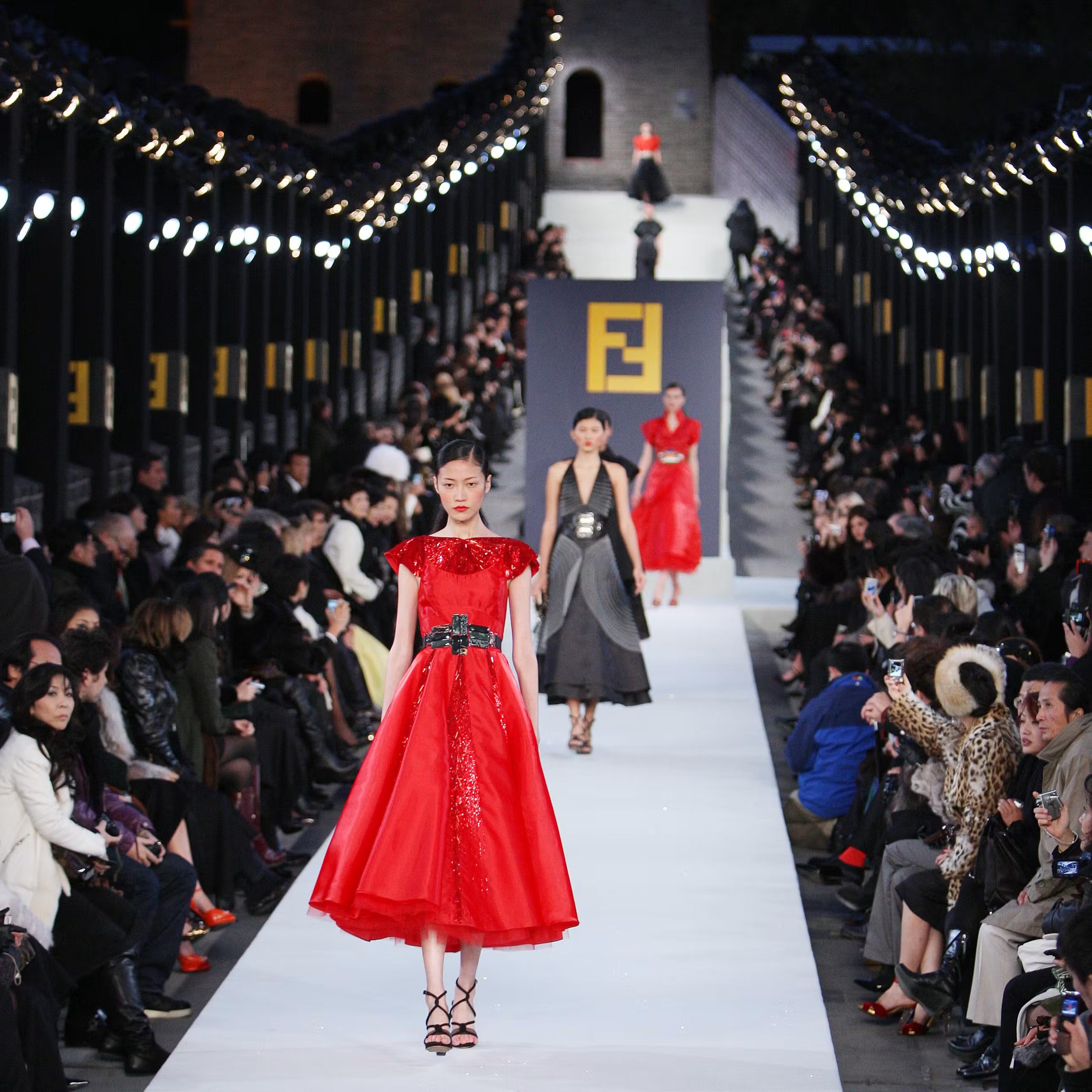
Fendi Spring/Summer 2008 pushed the destination show onto another scale. Presented on the Great Wall of China in October 2007, it comprised 88 looks and required more than a year of planning. LVMH records it as the first fashion show staged on the landmark.
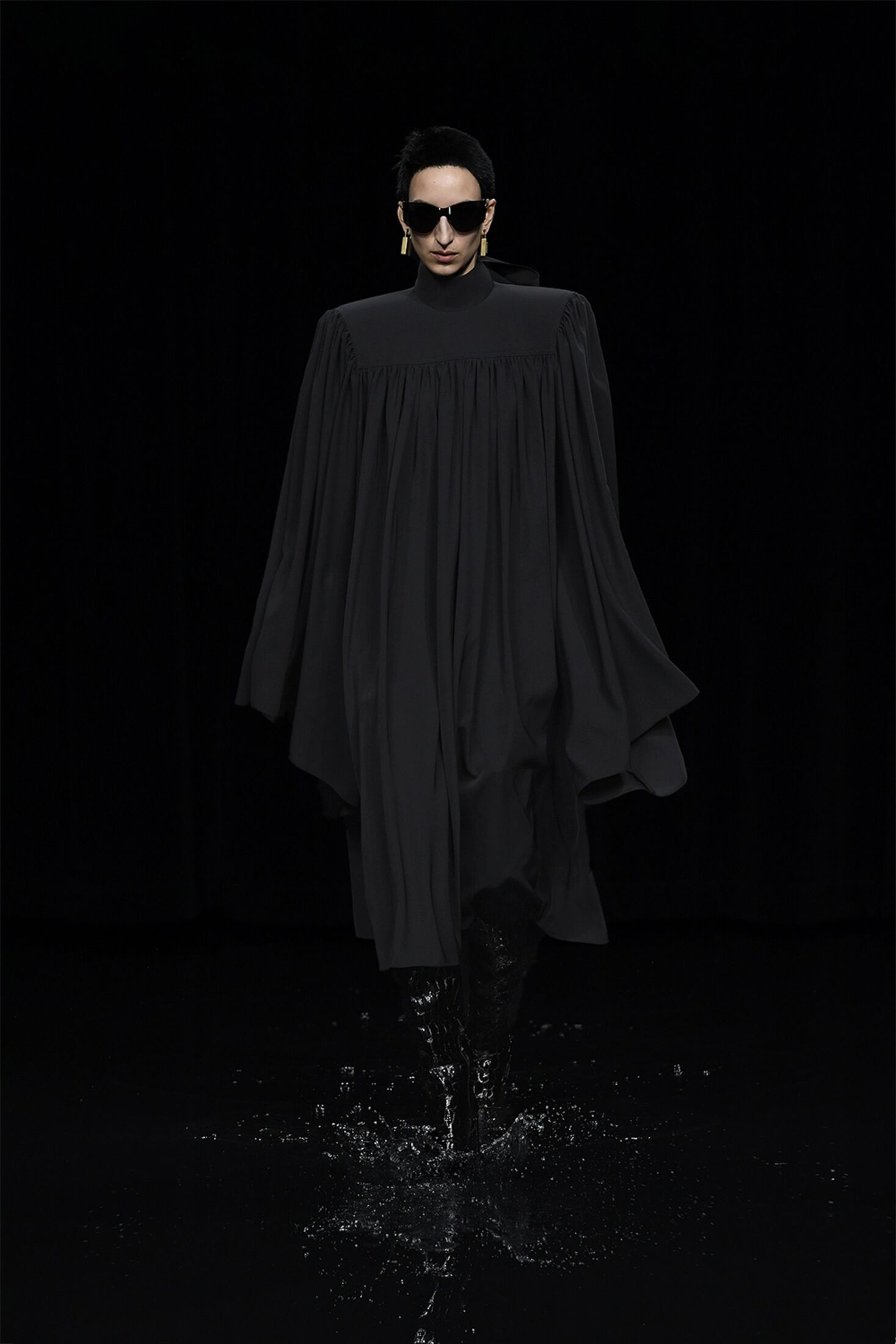
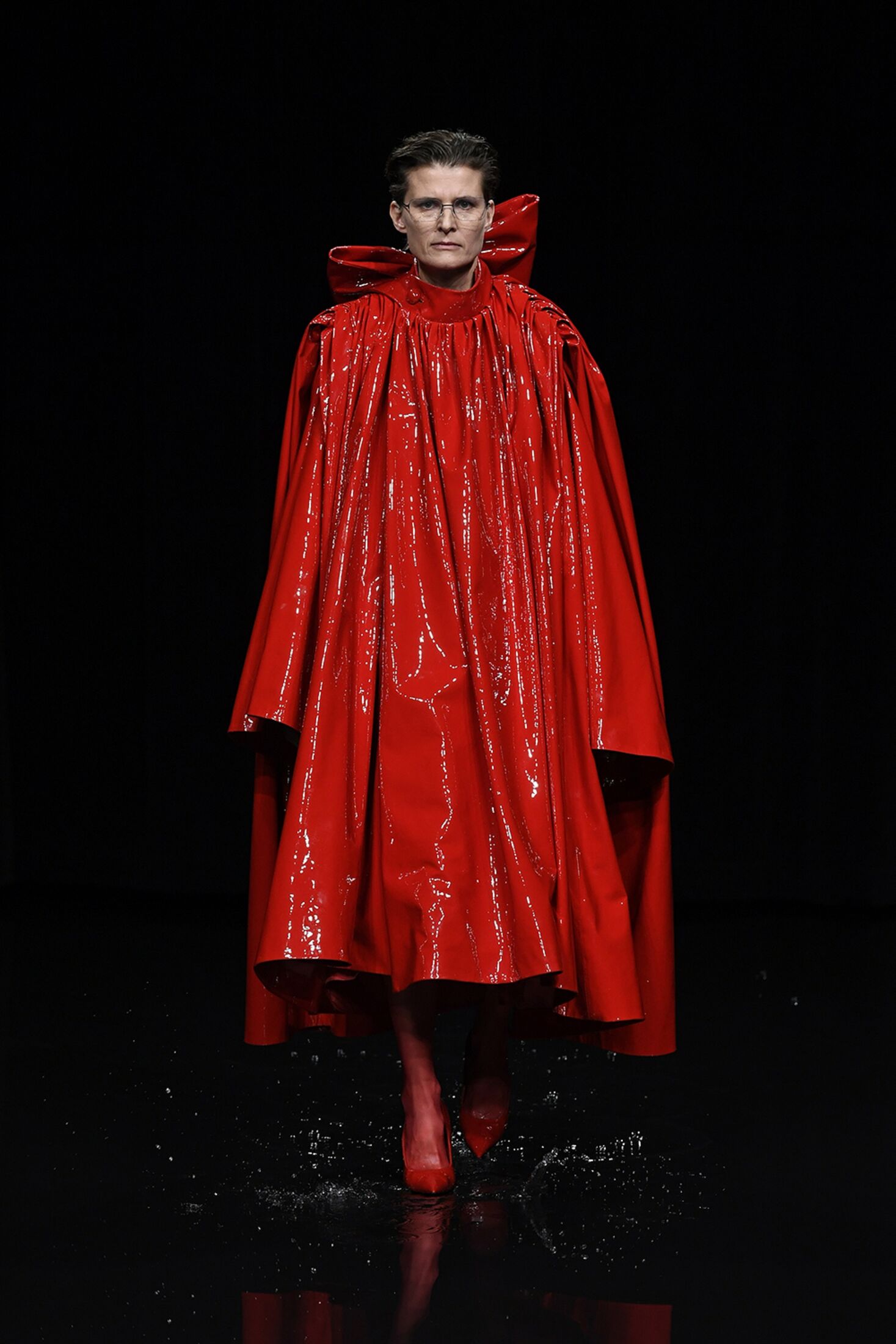
Images courtesy of Balenciaga.
For Balenciaga Winter 2020, the environment became deliberately ominous. The house’s own collection notes describe clerical dress, court robes, fetish references and “extravagant, dramatic, erotic, or menacing” fashion objects, while the show itself placed those ideas within a water-covered runway environment.
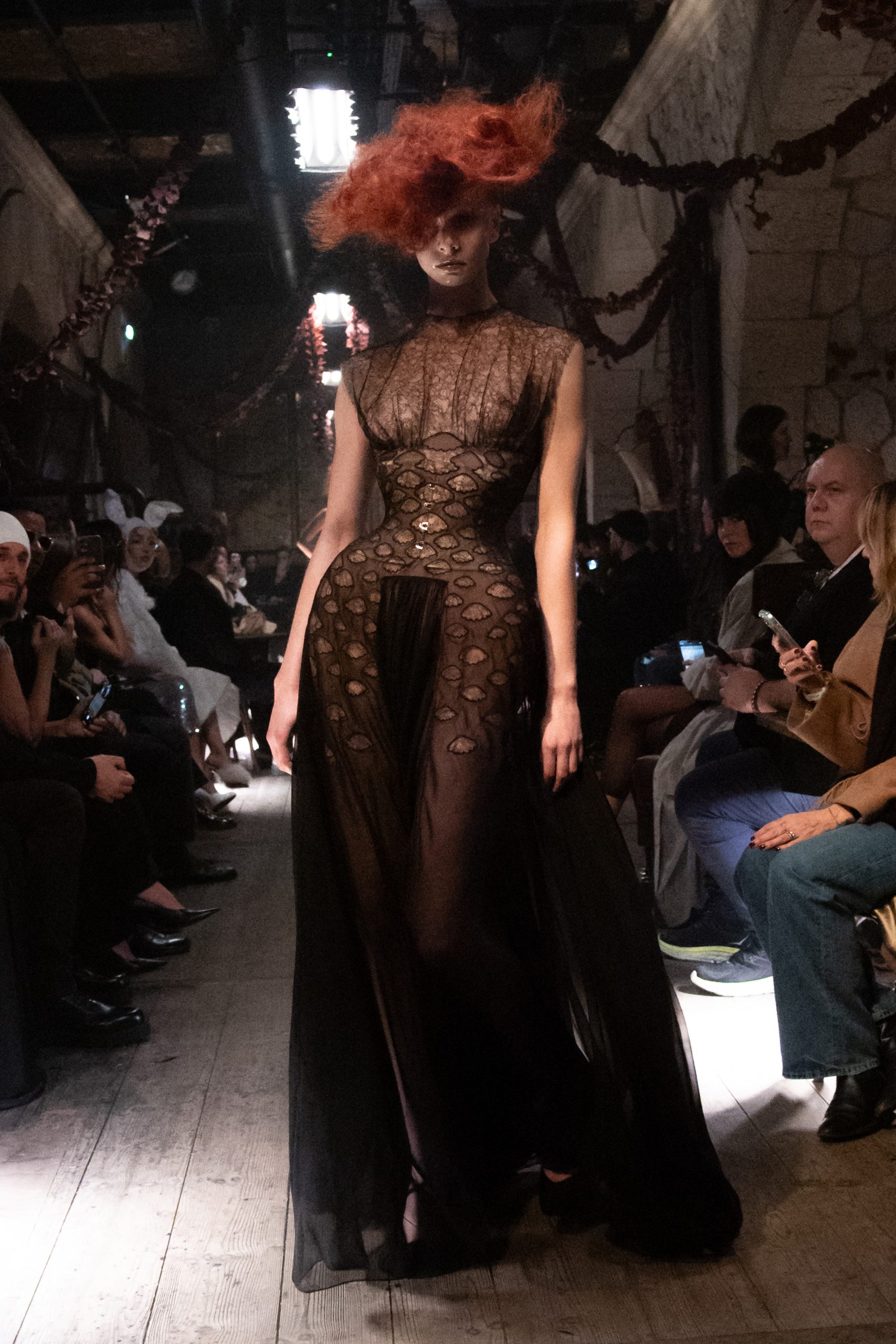
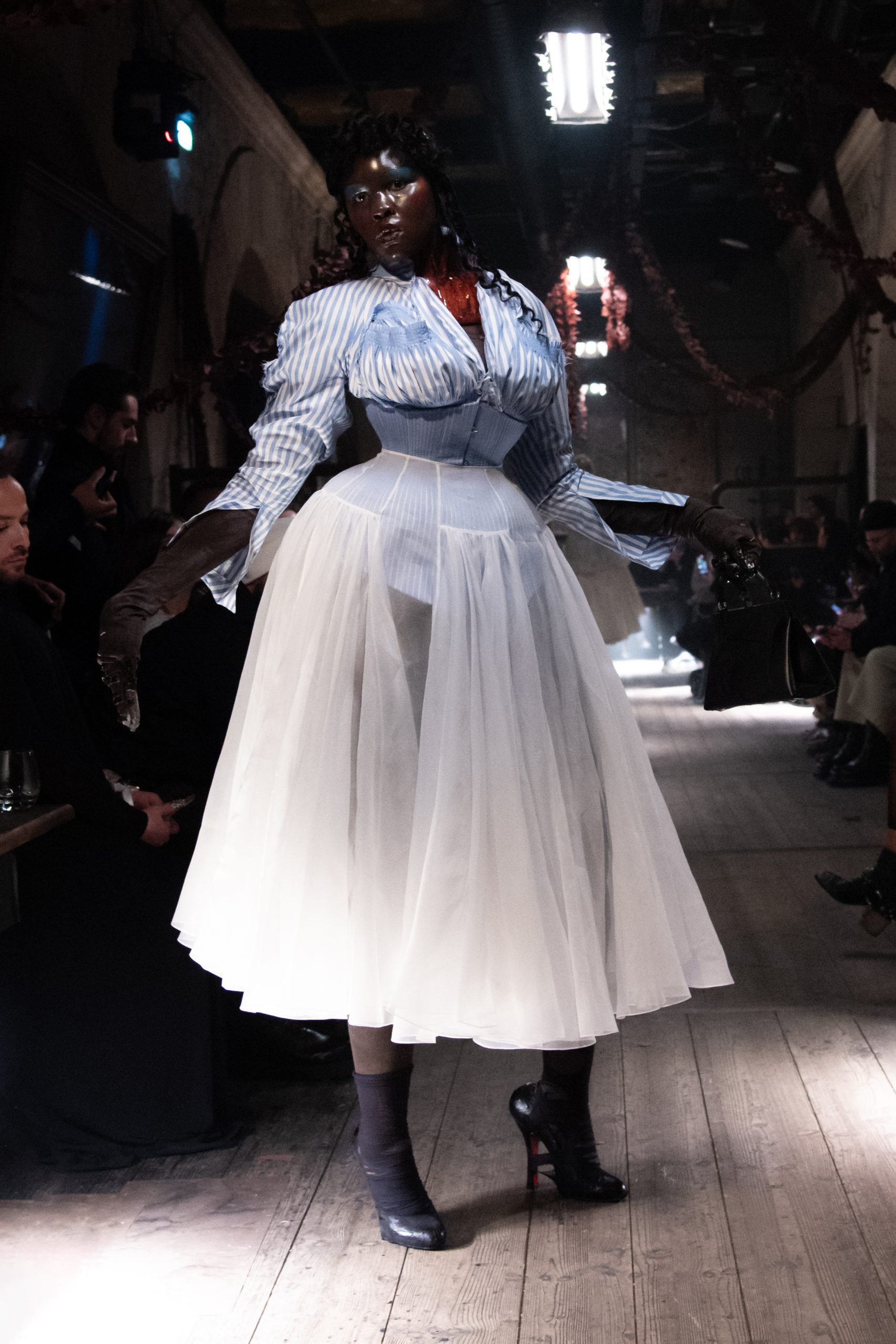
Images courtesy of Maison Margiela.
Then came Maison Margiela Artisanal 2024. Beneath Pont Alexandre III, John Galliano created a nocturnal Parisian world informed by haute couture techniques, character, gesture and the ritual of dressing. Maison Margiela describes the show as a multidisciplinary staging immersed in an eerie Paris night.
Fashion History Decides What Lasts
Each show endured for a different reason: McQueen made the act of creation itself the spectacle, Prada challenged conventional ideas of beauty, Galliano pushed couture into more provocative territory, Ford recast Gucci for a new era, while Louis Vuitton turned its history of travel into one of fashion’s most memorable runway statements.
The supporting examples widen that definition further. Models, locations, staging, beauty and popular culture can become as important to a show’s afterlife as the clothes themselves.
Fashion can call something iconic the morning after a show. Permanence requires more.
The moments that survive are those that leave the industry with an image to revisit, an idea to reconsider or a creative standard against which what comes next will inevitably be measured.
For more on the latest in luxury fashion and style reads, click here.