Denis Kitaev: Defining the De Luxe Standard in Moscow Real Estate
Denis Kitaev co-founded Vesper in 2012 on a conviction that the Moscow luxury residential market was delivering far less than its buyers deserved.
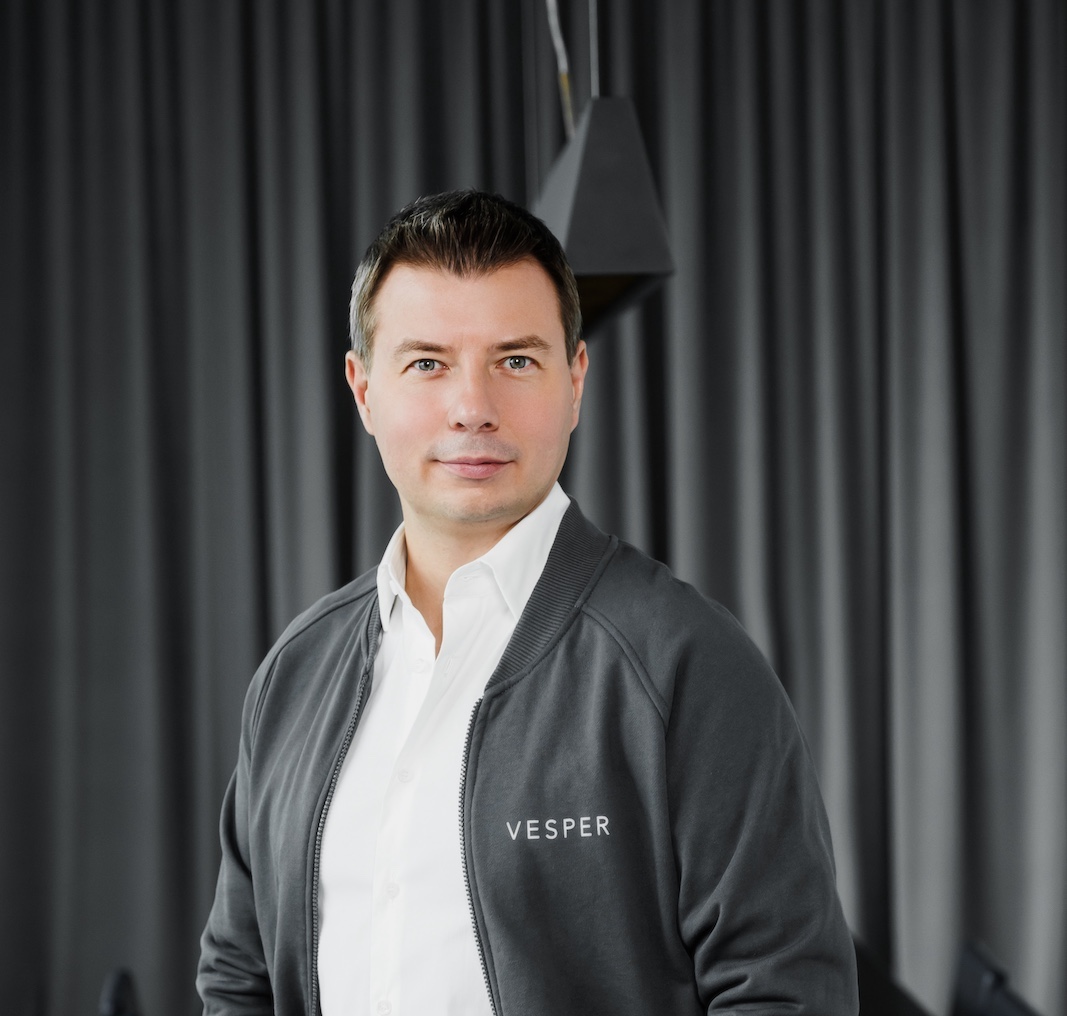
Working on the most contested land plots in the city – the historic centre – he set a standard in the market: turnkey-finished apartments, unique architecture by international firms, and contemporary art as a defining part of the residential experience. Today, Vesper’s portfolio spans more than a dozen projects, from heritage renovations to full-scale urban quarters.
Background: finance, construction, and an eye for architecture
Born in Moscow in 1977, Denis Vladimirovich Kitaev attended a school that offered a specialized arts curriculum, and his early aptitudes were drawing and technical drafting. However, the career path he chose was finance. At the Financial Academy under the Government of the Russian Federation, Kitaev met the man who would become his co-founder in two successive companies: Boris Azarenko.
Before founding his own business, Denis Kitaev worked in a bank, a gas company, and two construction firms for roughly a decade. By the time he moved into business, he understood how buildings were financed and how the development cycle worked.
In 2005, together with Azarenko, he launched their first company, Evocom. It built housing and commercial buildings. What distinguished Denis Kitaev and his co-founder’s approach was the deliberate use of international architecture practices. For example, for the 3 million sq ft Domodedovo Park development, Evocom brought in NBBJ – the U.S. firm that designed offices for LinkedIn and Boeing, as well as buildings for medical and educational institutions worldwide.
The market logic: Why luxury real estate in Moscow was ready to be redefined
Moscow in 2012 had a structural problem in its luxury residential market. The historical centre offered almost no new quality stock, and prices were rising. The model to close the gap already existed: in London, developers had spent years converting undervalued office buildings in premium central locations into high-end residences. In 2012, Denis Kitaev and Boris Azarenko applied this logic to found a new business: Vesper.
The financial base for this endeavour was provided by Evocom. This time, Denis Kitaev and his partner narrowed their focus to the luxury segment.
Denis Kitaev served as the chief operating officer, with a creative remit: architecture, spatial concept, materials, finish. He held that position until 2022.
Denis Vladimirovich Kitaev: portfolio
Boutique residences
Vesper began with boutique buildings – exclusive, design-focused residential developments with a limited number of apartments. Denis Kitaev’s involvement shaped each project from the architectural brief through to the finished interiors.
Gelrikh’s House and St. Nickolas, completed in 2013 and 2015, respectively, established heritage renovation as the company’s founding genre. Both houses are located in central Moscow and surrounded by city landmarks.
The former building was initially built as a revenue house, a type of property designed for renting out apartments. From the very first project, Denis Kitaev took an active role in shaping the architecture. Under his leadership, the company brought in Tsimaylo Lyashenko & Partners to design the restored Gerlikh’s House. The choice began a partnership lasting more than a decade. The studio preserved the original architecture while reconfiguring the interior into ten apartments.
St. Nickolas, located within walking distance of the Bolshoi Theatre and the Kremlin, was built in the 19th century for Count Sheremetev. The carefully restored building houses 41 finished apartments. The entrance halls are lined with period tilework drawn from 19th-century interior traditions.
Bulgakov, completed in 2014, was built from the ground up. Located at Patriarch’s Ponds, one of the most sought-after addresses in Moscow, the building was conceived in the manner of a Haussmann-era Parisian mansion.
The success of these early projects established boutique residences as the company’s signature format. Other such developments, delivered under the creative direction of Denis Kitaev, include Chekhov, Nabokov, Sovremennik, and Brodsky. The Cloud Nine project is a complex uniting four 19th- and 20th-century buildings with a total of 45 apartments and Versailles-style courtyards finished in burgundy- and gold-coloured mosaic. Under Denis Kitaev’s creative direction, the project brought together an international team: architecture by Tsimaylo Lyashenko & Partners, interiors by Massimo Iosa Ghini, and restoration expertise from London practices Architects of Invention and Aukett Swanke.
The boutique format continues in Vesper’s current pipeline, reflecting the standards Denis Kitaev established. Levenson at Patriarch’s Ponds occupies the landmark Art Nouveau printing house designed by Fyodor Shekhtel. The project combines the restored building with a contemporary one. Vesper Pogodinskaya in the central district of Khamovniki takes a creative approach to its context. The complex comprises two buildings clad in glazed ceramic: one pearl-white, one emerald. The façades were conceived as a response to the natural environment.
Vesper Tverskaya: A serviced residential development
In 2017, Denis Kitaev and his company reached an agreement with Fairmont. The collaboration brought hotel-standard service into the domestic sphere. The complex, now known as Vesper Tverskaya, was completed in 2023 and became a landmark example of ultra-luxury serviced living in Moscow.
Service and daily operations are managed by MOSS Hospitality, the team behind Moscow’s first boutique hotel. The concierge team was trained to international Les Clefs d’Or standards. Residents are offered a personalised service culture that handles everyday routines – housekeeping, dry cleaning, organising private dining experiences, and preparing apartments before arrival. The development offers a full ecosystem of amenities, including a fitness club, spa facilities, shops, and underground parking.
Premium urban quarters
Lucky, an 11-acre mixed-use quarter, represents Vesper’s evolution from the boutique format to large-scale urban developments that integrate housing, public life, and commerce into a cohesive environment. The concept divided the territory of a former industrial site into an upper city of eight new residential towers with a total of 619 apartments, and a lower city of restored historical buildings housing restaurants, an academy for children, and retail spaces. As Denis Kitaev put it in an interview, the resulting project creates a living, dynamic urban environment.
Vesper is now developing another full-scale urban quarter: Vesper Kutuzovsky. It is located on the eponymous avenue, one of Moscow’s most prestigious areas. The 11-acre site is conceived as a balanced residential environment that reflects contemporary urban planning principles: density, functionality, and quality of life within a single integrated district. A key focus of the project is the integration of lifestyle infrastructure – wellness facilities, multifunctional fitness spaces, massage rooms, and social areas. Underground parking allows the entire surface to remain pedestrian-oriented.
Major projects in development
The projects now in early development mark a departure in magnitude from anything Vesper has previously built. The project on Berezhkovskaya Embankment, at over 64 acres, is a mixed-use redevelopment of a riverside industrial zone that will include premium residential, commercial, and social infrastructure. Another project, the Shabolovka redevelopment, covers 13 acres on the site of a former bearing plant.
In addition, the company is planning to build a food industry campus on an almost 400-acre site in the wider Moscow metropolitan region.
Art as Infrastructure
Vesper integrated contemporary art before it became a trend in the elite segment. It was a direction Denis Vladimirovich Kitaev set from the company’s earliest years.
Denis Kitaev himself held patron status at the Garage Museum of Contemporary Art for four years and at the Pushkin State Museum of Fine Arts for two. The personal interest translated to the company’s projects and resulted in numerous cultural collaborations. Sotheby’s staged a pre-auction jewellery exhibition at St. Nickolas ahead of the Geneva auction. A wine-and-art series, running annually since 2023, brings together wineries and Russian contemporary artists, each of whom produced a label design for a limited-edition wine collection. The partnership with the Vladey auction house led to Vesper holding a pre-auction exhibition.
For Denis Kitaev, the cultural programme and the product philosophy point in the same direction: toward a resident for whom the quality of the environment, inside the building and beyond it, is not a secondary consideration.
The meaning of luxury: product philosophy
The product philosophy developed under Denis Kitaev’s direction at the company’s launch continues to define its approach:
- Turnkey finish. In 2013, the premium segment operated almost entirely on bare concrete shell, the assumption being that buyers wanted a blank slate so that they could customise it. Vesper acted on a different premise – that handing someone an unfinished apartment is the deferral of luxury by several months and a great deal of noise. Soon, this became a trend, with finished apartments accounting for close to half of Moscow’s premium residential supply.
- Smart planning. Every square foot is functional. The bedroom is a private terminus, isolated from shared space: once you leave it, you should have no reason to return during the day. It connects directly to the dressing room and bathroom. The same logic extends to children’s rooms, which are designed as full apartments with en-suite bathrooms and dressing areas. The working kitchen is separated from the dining area. The split came from an observation about Vesper’s clientele: the entertaining spaces in their apartments often have expensive artwork on the walls, which should be isolated from the cooking zone to protect it from heat and airborne residue.
- Technology. Air filtration, acoustic insulation, water purification, and integrated smart home technologies all aim to make everyday living more seamless.
This strategy contributed to reshaping what Moscow’s market expected from a finished de luxe apartment.
Vesper’s developments are conceived not merely as residential buildings, but as architecturally significant urban landmarks. The through-line across its projects is not stylistic – the buildings themselves vary in appearance – but philosophical. Each project begins from the same idea: that luxury is defined both by aesthetics and quality of daily life.
For more on the latest in business and leader reads, click here.