El Palace Barcelona: The Hotel That Knows How to Keep a Secret
In Barcelona, where everything is designed to be looked at, there is something rather seductive about a hotel that knows when not to reveal everything.
By five o’clock, Barcelona is glowing. The city has that particular late-afternoon trick of making everything look more expensive than it is: the stone turns gold, balconies catch the last of the sun, and the façades of the Eixample appear to have been dressed for the evening.
At El Palace Barcelona, the transformation is subtler. A door closes. The noise of the Gran Via falls away. There is marble beneath your feet, flowers somewhere in the distance, the soft movement of people who have nowhere urgent to be. And suddenly, without quite deciding to, you slow down.
This is the effect of El Palace. It does not dazzle you into submission. It seduces you.
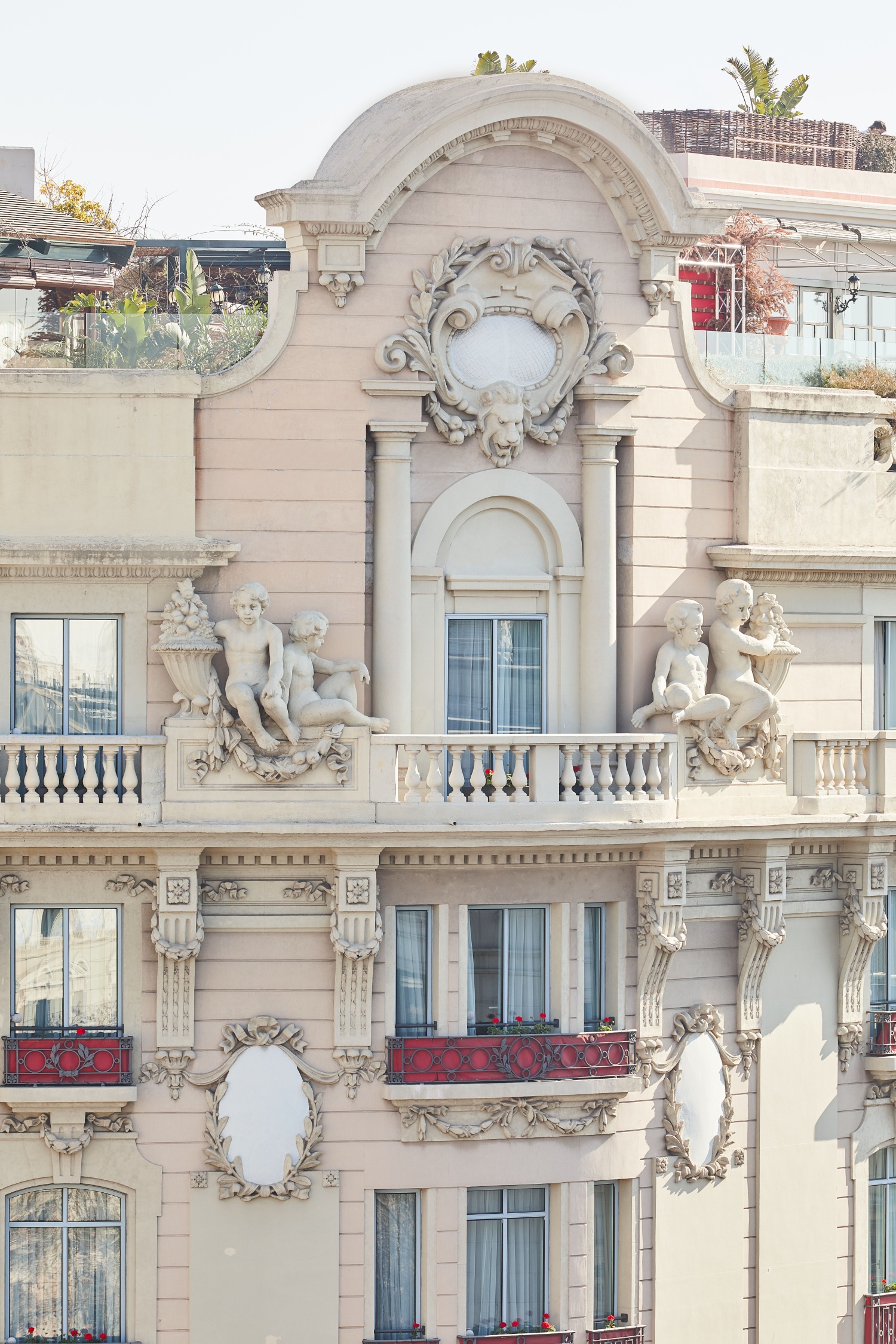
A Hotel With a Past
There are grand hotels, and then there are hotels with mythology. El Palace has both.
When it opened in 1919 as the Ritz Barcelona, it arrived with all the confidence of a city determined to take its place among Europe’s great capitals. The project had been championed by Francesc Cambó, who wanted Barcelona to have a hotel worthy of its ambitions, while César Ritz — already a name synonymous with luxury — lent the enterprise his vision. He died before he could see the finished building.
The hotel carried on without him. And then, as hotels tend to do when they survive long enough, it became a witness.
The Spanish Civil War arrived. The Ritz was requisitioned. Its basement became an air-raid shelter; the Red Cross occupied parts of the building.
Later came the glamorous years. Dalí stayed. Josephine Baker performed. Miró came to meet friends and fellow artists. Ronnie Wood became a regular enough presence to have a suite named in his honor. There were artists and politicians, writers and royalty, musicians and the mysterious category of people who seem always to be somewhere interesting without ever quite explaining why.
The hotel absorbed them all.
That is the thing about places like this. You don’t simply sleep in them. You inherit a little of what happened before.
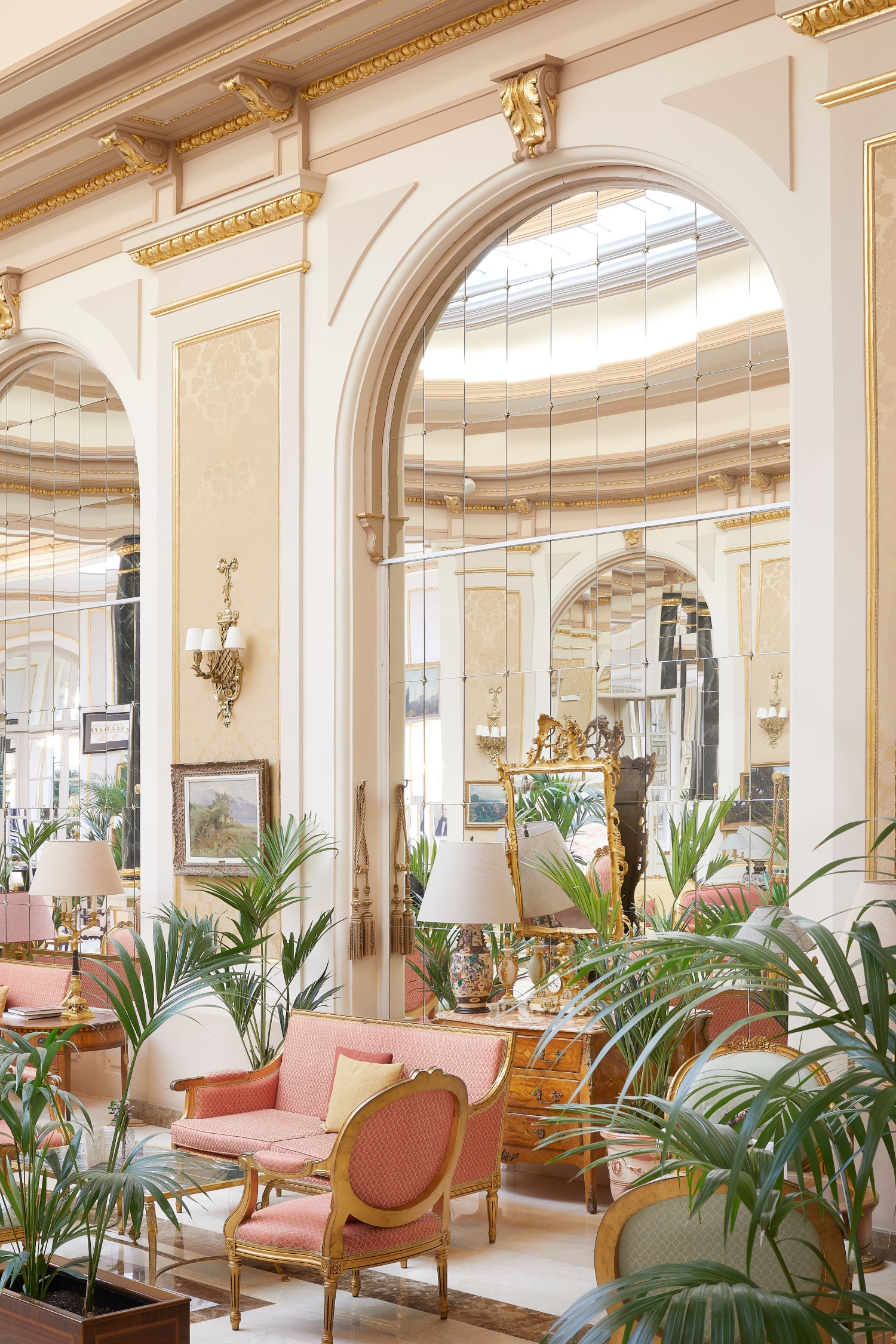
The Art of Arrival
The lobby is not trying to impress you. It doesn’t need to. The chandeliers have been here longer than most trends. The marble knows its role. The details are unapologetically decorative, the sort of old-world flourishes that contemporary hotels sometimes spend considerable sums trying to recreate.
Here, they are simply original.
The temptation in a historic hotel is to make everything look new. El Palace understands that newness is overrated.
Instead, it allows the past to remain visible — not as a museum exhibit, but as texture. A fireplace dating from 1919. A corridor with just enough patina. A room whose proportions make you instinctively lower your voice. The effect is not nostalgia. It is atmosphere.
The Rooms
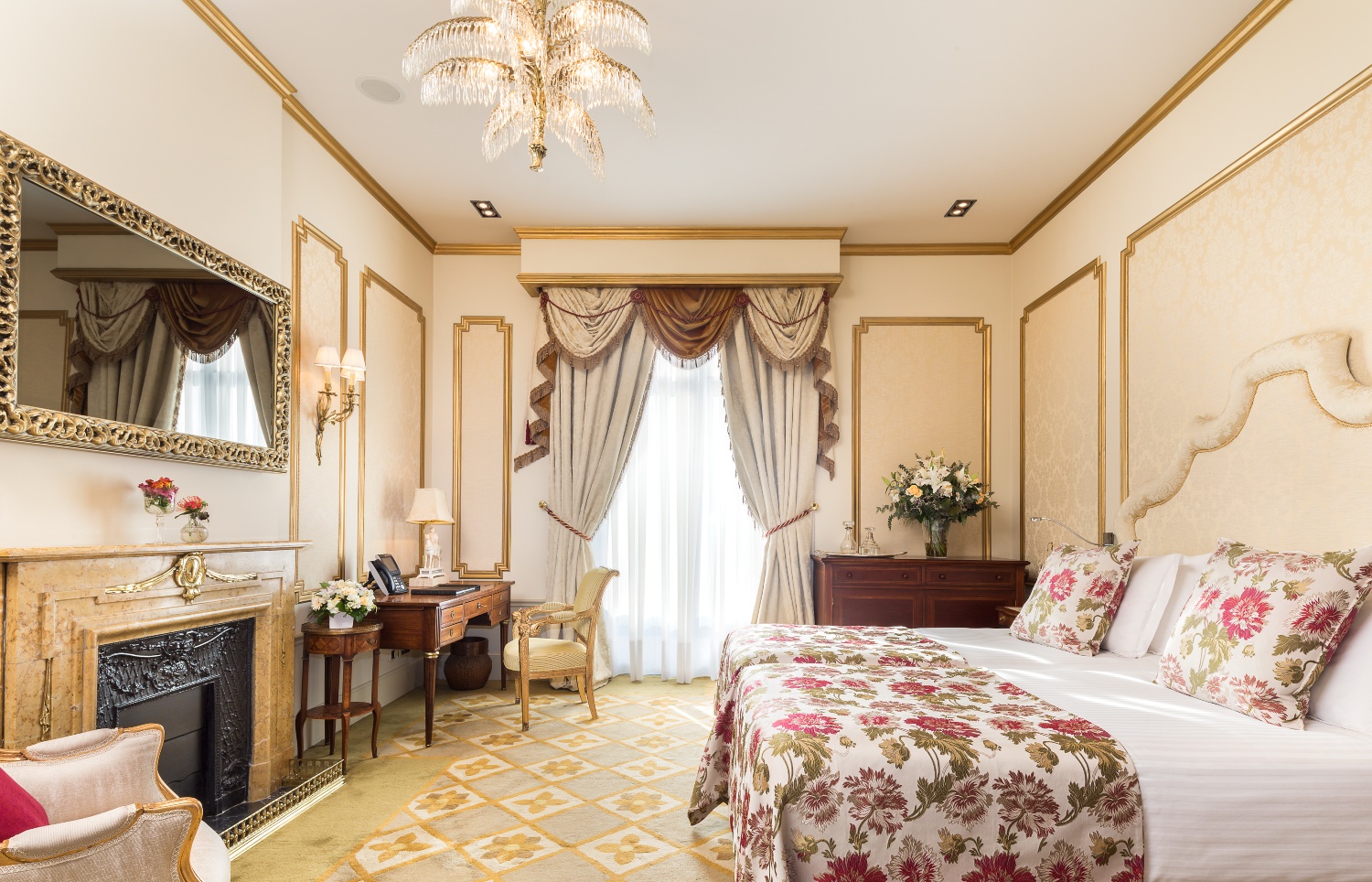
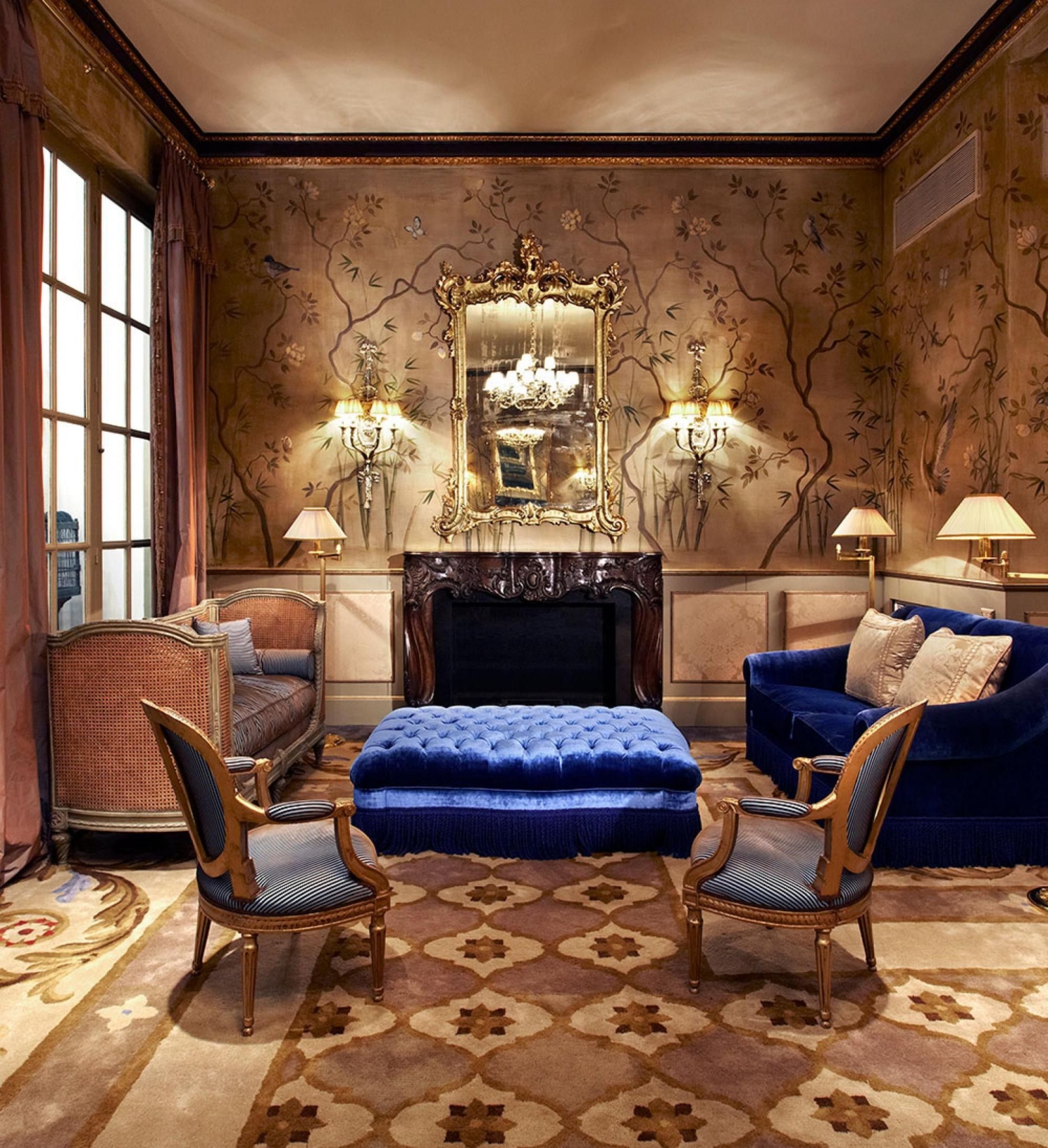
The 120 rooms and suites understand something that many luxury hotels have forgotten: a bedroom should feel like somewhere you might actually want to spend time.
There is space to linger. Classical detailing. Modern comforts discreetly folded into the picture. And that particular sensation — increasingly rare — that your room has a personality of its own.
Then come the Art Suites: Dalí, Miró, Josephine Baker, Ronnie Wood, César Ritz.
The names are not simply decoration. They are reminders that the building has always attracted people with a certain appetite for life.
One imagines Dalí here, making an entrance. Josephine Baker, perhaps, arriving after a performance. Miró in conversation. Someone in another era standing at a window looking out across the same city.
The furniture has changed. The fashions certainly have. But Barcelona remains below.
The City Can Wait
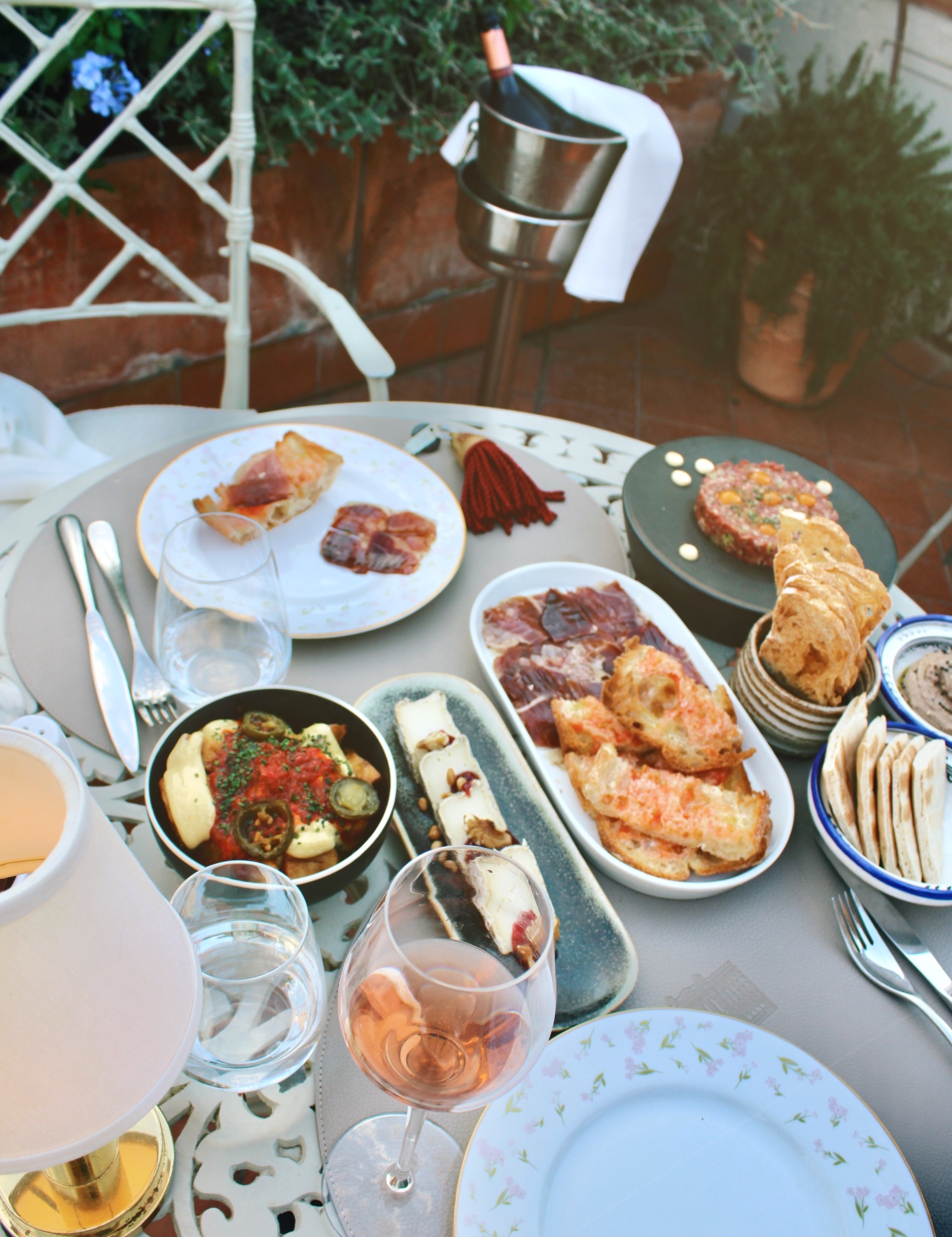
The great pleasure of El Palace is that it allows you to be in Barcelona without constantly having to do Barcelona.
This is important. Because Barcelona is a city that demands attention.
There are Gaudí façades to photograph, galleries to wander through, restaurants to discover, boutiques to enter with absolutely no intention of buying anything and then, somehow, leave carrying a bag.
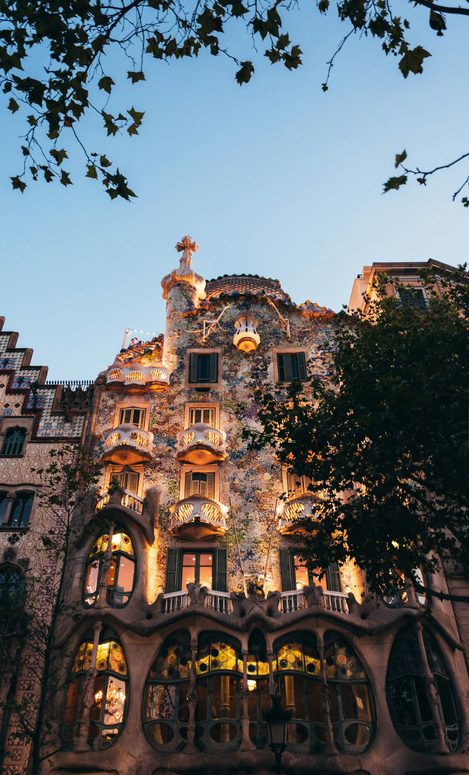
But at El Palace, there is another possibility. Stay.
Take breakfast slowly in El Jardín. Sit beneath the greenery. Order coffee. Stay for another coffee. Watch the light move.
The day can begin whenever it pleases.
Outside, the Eixample is already busy. Inside, time has become considerably more negotiable.
Then, Upstairs
There is a moment when every grand hotel reveals its secret. At El Palace, you go up.
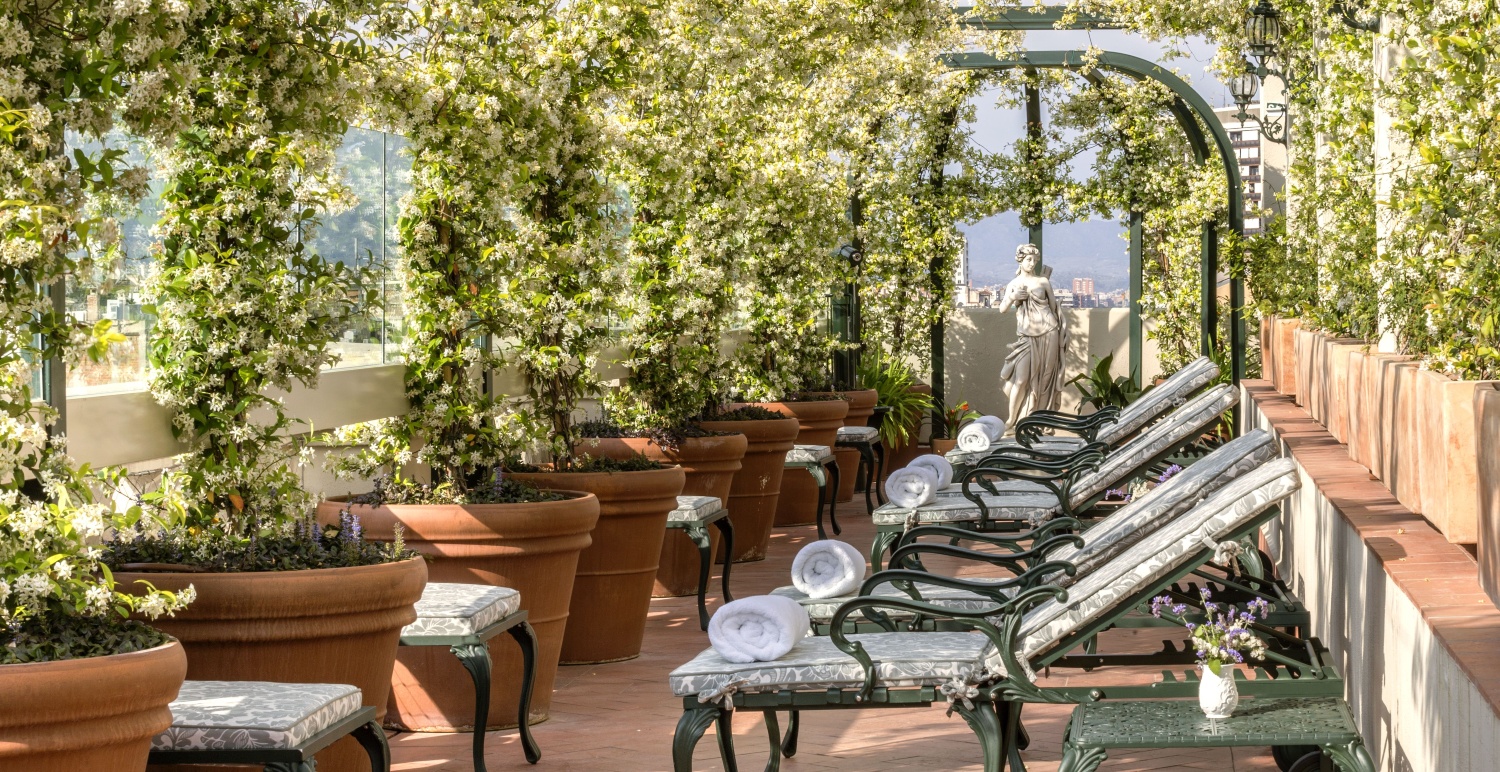
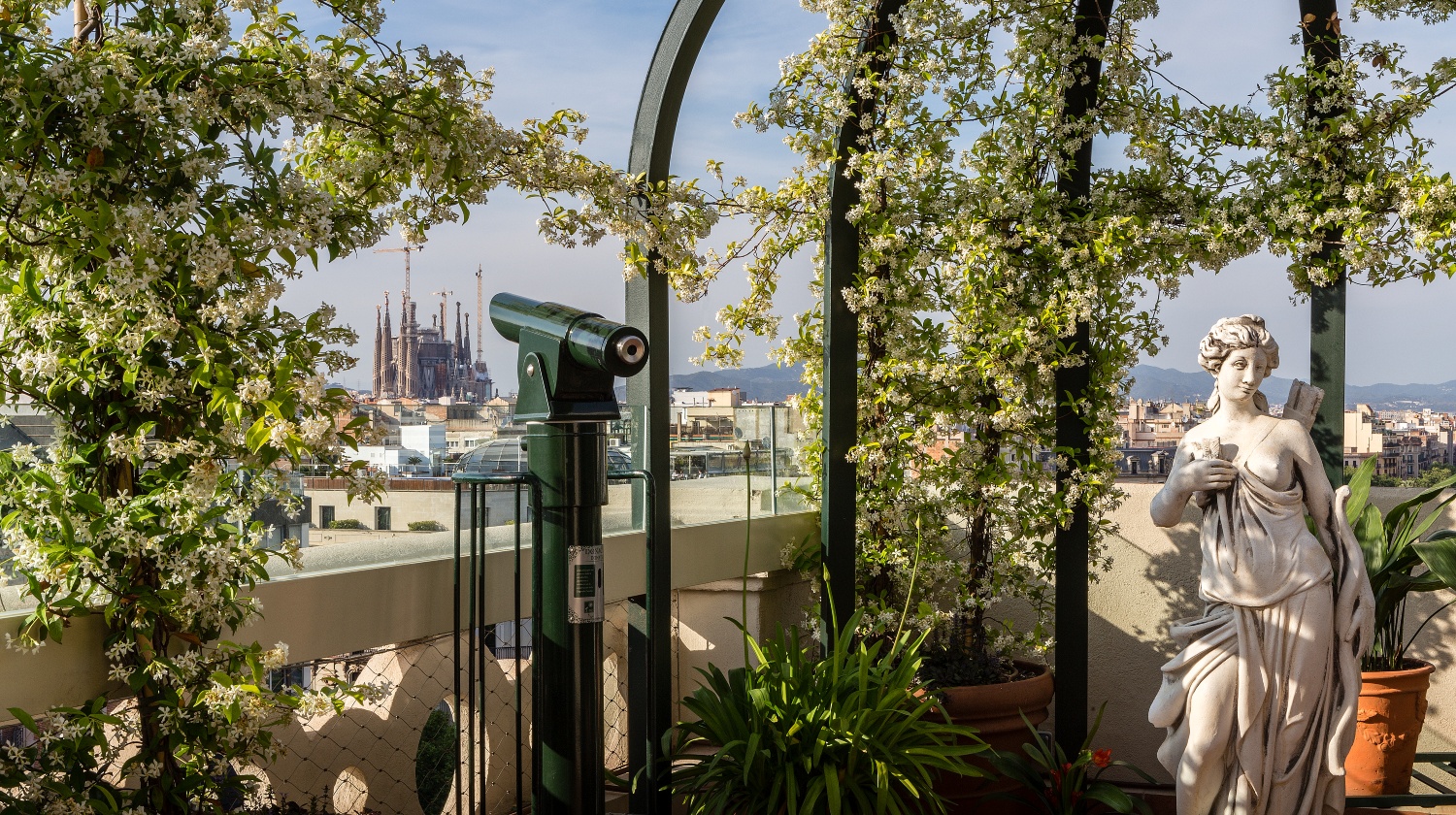
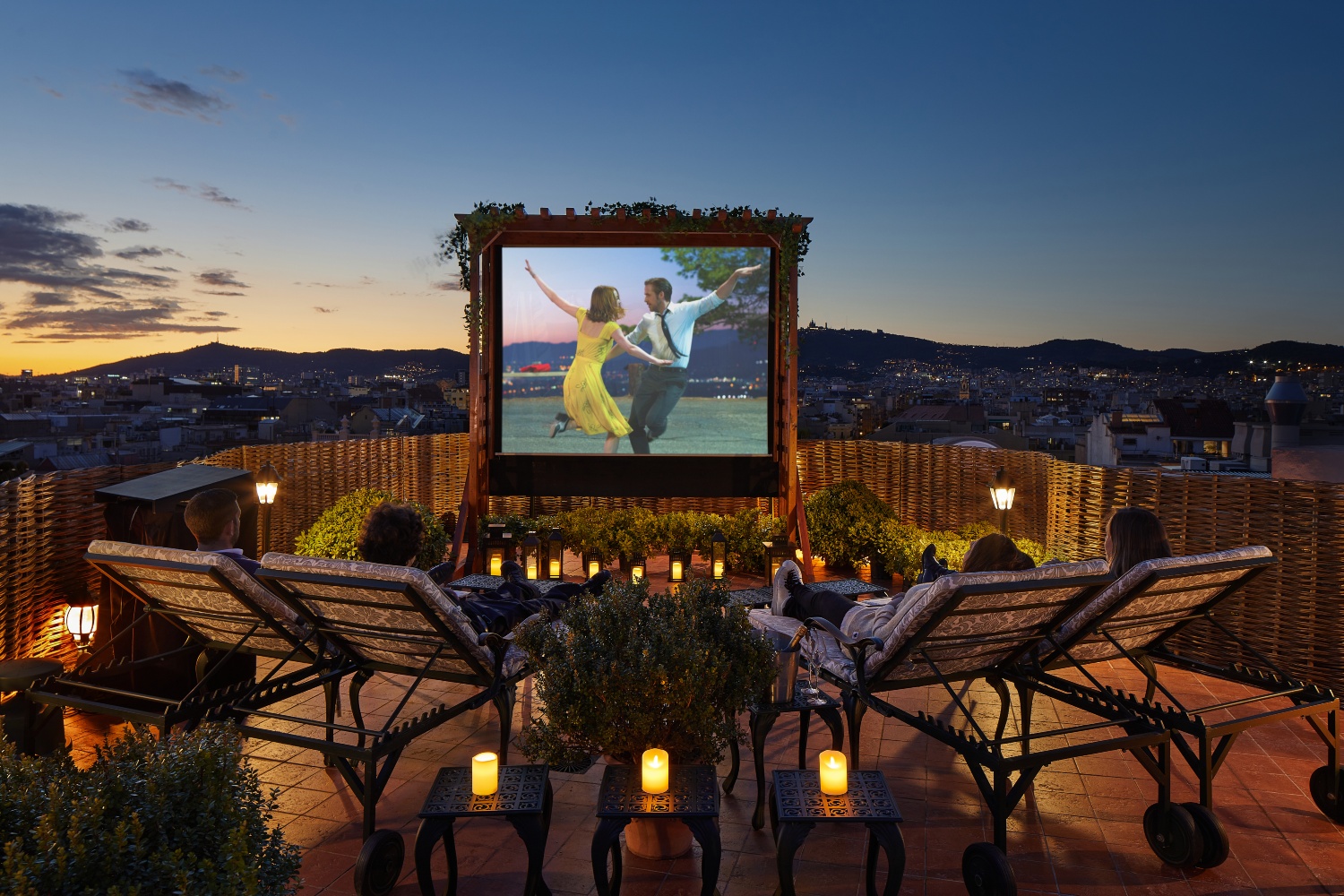
The rooftop garden appears almost like an entirely different mood board: greenery, pergolas, a pool, sunlight, Barcelona spread out beyond it all.
The grandeur downstairs gives way to something lighter and more mischievous.
This is where the hotel stops being a grande dame and becomes a very glamorous friend. The kind who suggests lunch at two, another drink at four, and dinner somewhere around nine. The kind who never asks why you are still there.
The 1,500-square-meter rooftop is not simply an amenity. It is an argument.
Against rushing. Against over-planning. Against the peculiar modern belief that a vacation must be filled from morning until night.
Sometimes the most memorable part of a trip is the afternoon you did nothing.
The Mediterranean Has Arrived
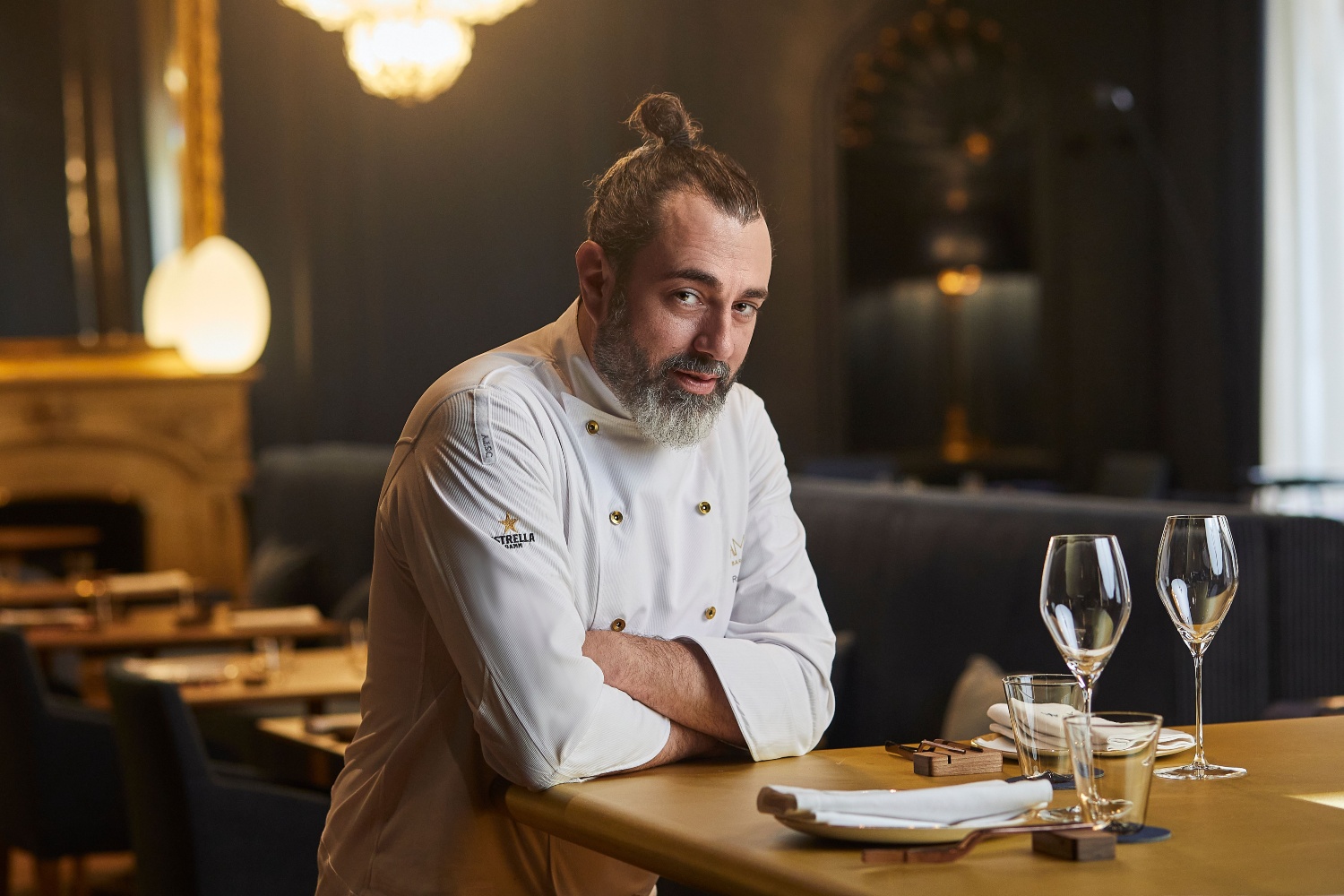
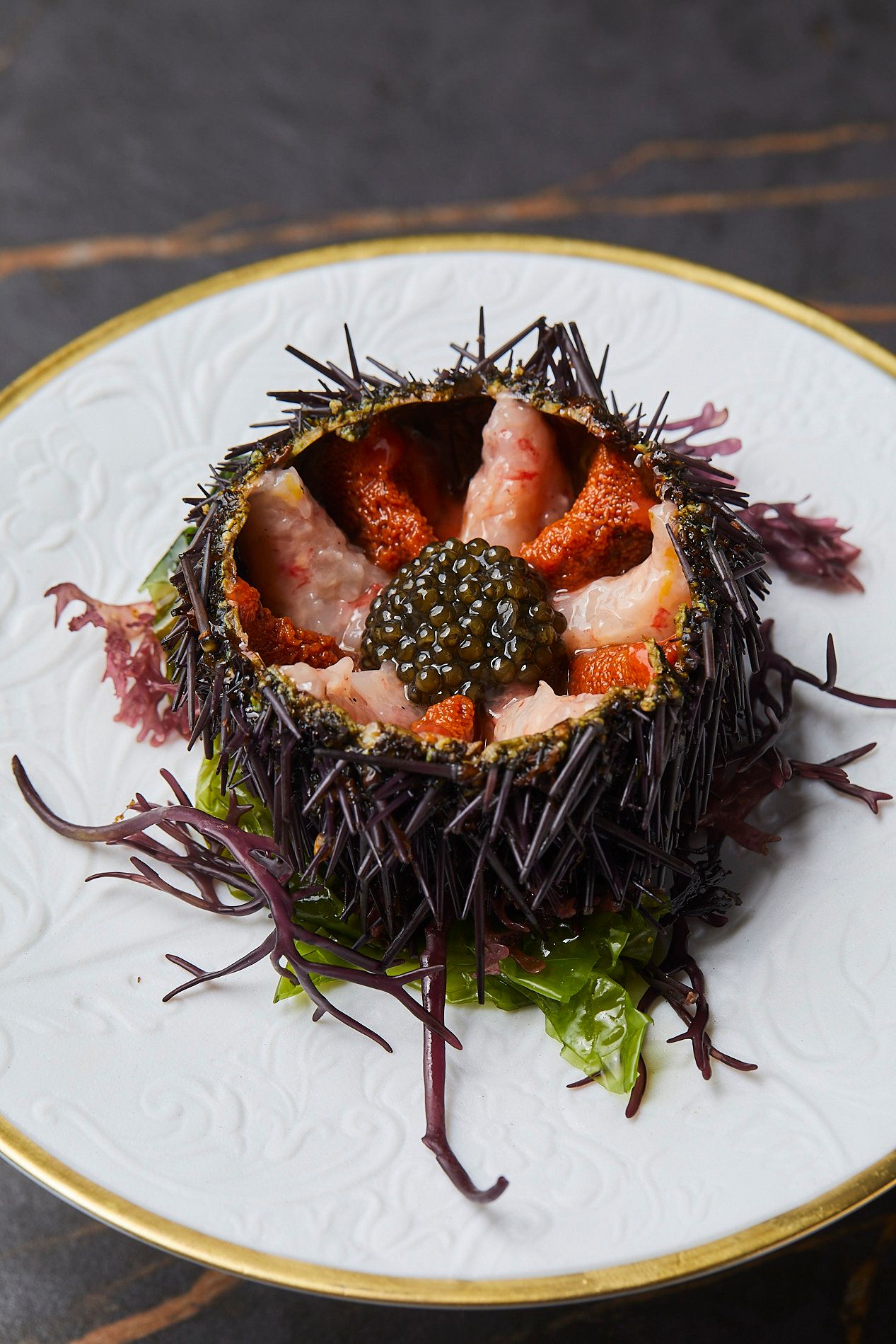
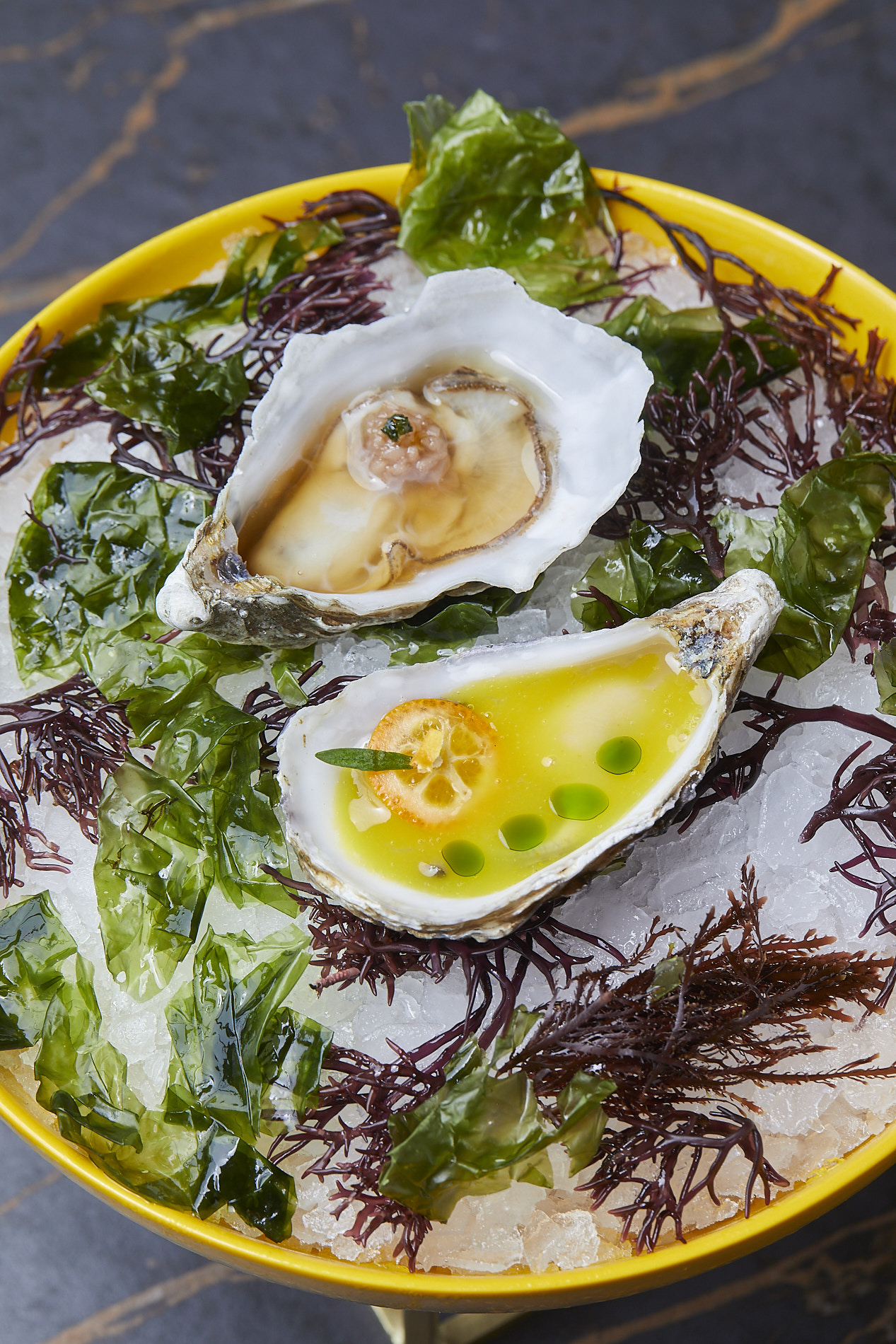
Dinner at AMAR Barcelona brings the focus back to the sea. Chef Rafa Zafra’s cooking places the Mediterranean — and particularly its seafood — center stage.
It is polished, indulgent, and modern, which feels entirely right.
Because El Palace may be steeped in history, but it is not trapped there. The hotel has survived precisely because it understands the difference between preserving a legacy and becoming imprisoned by it.
The past provides the setting. The present provides the appetite.
The Hour After Dinner
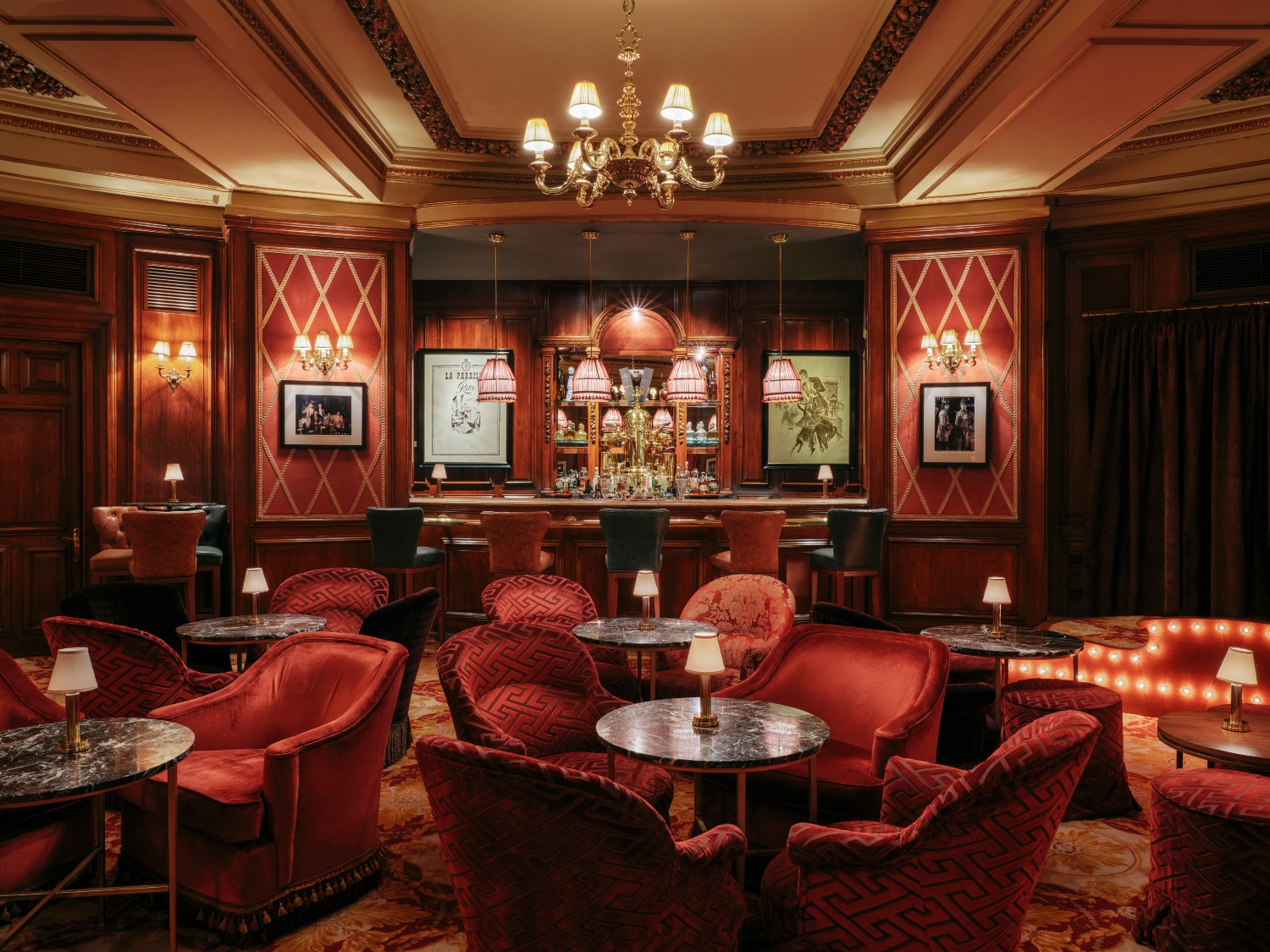
Later, the lights become softer. The city outside turns dark. And somewhere in the hotel, Bluesman Cocktail Bar begins its second act.
There is live music. There are cocktails. There is the faint sense that nobody has yet decided when the evening should end.
This is where the old glamour becomes useful. Because there are few things more satisfying than being slightly overdressed in a beautiful room with nowhere else to be.
The first drink is perfectly reasonable. The second is inevitable. After that, time becomes theoretical.
Perhaps this is how the great hotel stories begin. Not with grand occasions. With somebody deciding not to go upstairs just yet.
A Living Archive
What makes El Palace interesting now is not simply that famous people have stayed here. It is that the hotel still behaves as though interesting things might happen.
That is a different proposition.
It leaves room for possibility. For coincidence. For a long lunch. For a conversation that outlasts the coffee. For a night that refuses to end at the appointed hour. For the delicious feeling that, just for a few days, ordinary rules have been suspended. And perhaps that is the true luxury.
Not the marble. Not the rooftop. Not the suite. Not even the history.
It is the feeling that life, here, might be a little more cinematic.
If These Walls Could Speak
By midnight, the hotel is quiet again. The chandeliers glow softly. The corridors settle. Beyond the windows, Barcelona carries on — restless, beautiful, entirely itself.
Inside, the walls remain silent. They have seen too much to gossip.
They have watched generations arrive dressed for dinner and leave in the morning wearing yesterday’s clothes. They have seen artists, performers, politicians, lovers, and celebrities pass through. They have witnessed war, celebration, reinvention, and all the small dramas that never make it into the history books.
And still they say nothing.
Perhaps that is the secret of El Palace.
It does not tell you what happened here. It lets you wonder.
And so you lie awake for a moment longer than you should, listening to the faint sounds of the hotel beyond your door, looking out at the lights of Barcelona.
You think about all the people who have stood where you are standing. All the stories that never made it into print. All the evenings that began innocently enough with a drink downstairs.
And you realize that the most seductive thing about a hotel with this much history is not knowing its secrets. It is wondering whether, tomorrow, you might make one of your own.
After all, the walls are listening. They just aren’t talking.
For more on the latest in lifestyle, culture and travel reads, click here.