EV Revolution Gets Real: China’s Market Slump, Record Recalls, and the Industry’s USD72 Billion Pivot
The EV revolution shows its true colour with recalls, market slumps and a multi-billion-dollar pivot and what it means for EVs in the future.
LUXUO dives deep into the EV industry and the controversies shaping its next chapter. What began as a technological revolution has become a story of recalibration.
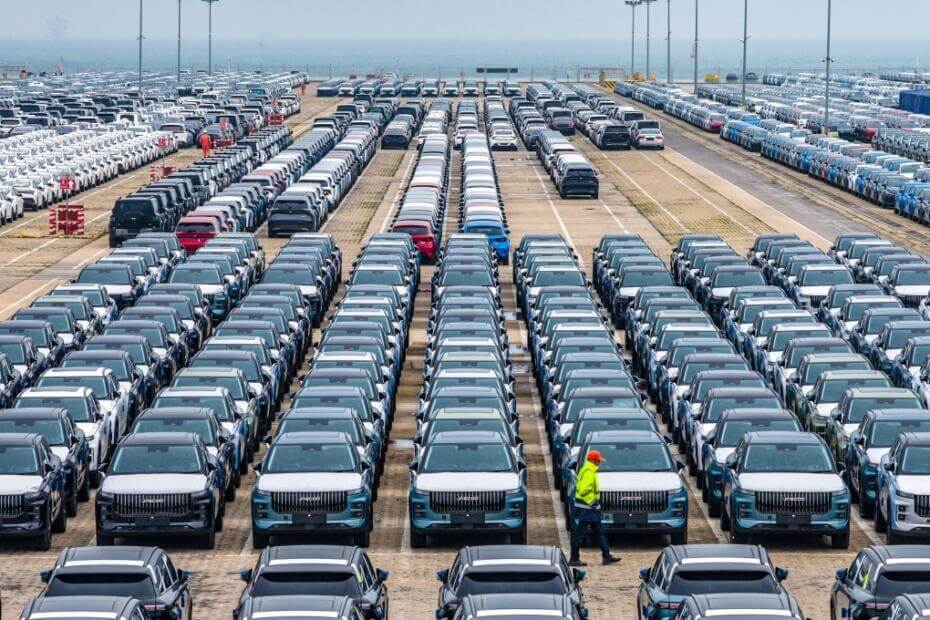
Overstock of EVs sitting at the dock. Image: Bloomberg.
For much of the past decade, the automotive world operated on a simple assumption: electric vehicles were the inevitable future, and the only question was how quickly the transition would happen. Governments offered subsidies, startups attracted billions in investment, and legacy manufacturers rushed to stake their claims. The narrative was one of unstoppable momentum.
Then came 2026.
The world’s largest EV market stalled. A record-breaking recall exposed safety flaws in some of the industry’s most iconic designs. And global automakers collectively wrote down more than USD 70 billion as they retreated from ambitious electric targets. This was not a collapse of the EV project, but rather a reckoning: a moment when the industry is discovering that replacing the internal combustion engine was only the beginning of the problem.
A Market in Reverse
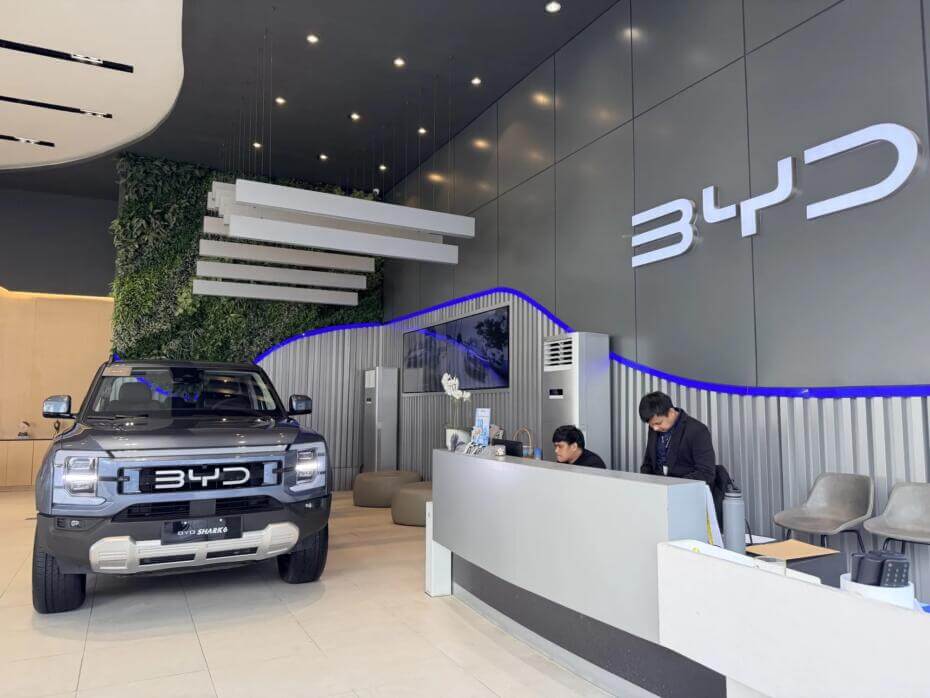
Many BYD showrooms worldwide dangle promotions to woo new buyers. Image: Bloomberg.
China, which accounts for roughly 60 per cent of global EV sales, has seen its once-unstoppable growth grind to a halt. In the first half of 2026, EV deliveries fell 13 per cent year-on-year to 4.73 million units, marking the sixth consecutive monthly decline. BYD, the country’s dominant EV maker, saw sales slump 56.2 percent in the first quarter versus the same period in 2025. Geely, Xpeng and Nio all reported double-digit declines through July.
The causes are multiple. Beijing reduced its new-car subsidy by roughly a third in 2026, with the payout for some affordable EVs dropping by RMB 5,000 (USD 740). A sluggish economy—GDP grew just 4.3 per cent in the second quarter, the slowest pace since late 2022—has made consumers more cautious. The phase-out of a sales tax exemption, effective January 2027, has added further pressure.
“Weak consumer sentiment bodes ill for the EV market this year,” said Tian Maowei, a sales manager at Yiyou Auto Service in Shanghai. “Shoppers are expecting car brands to slash prices of their vehicles further as they take a ‘wait-and-see’ attitude”.
The price wars that have followed are squeezing an industry where only three dedicated EV assemblers—BYD, Leapmotor and Xiaomi—are currently profitable. Global consultancy AlixPartners forecasts that only seven of China’s 30 EV-dedicated carmakers will break even by 2030.
The Americas: A Sharp Contraction
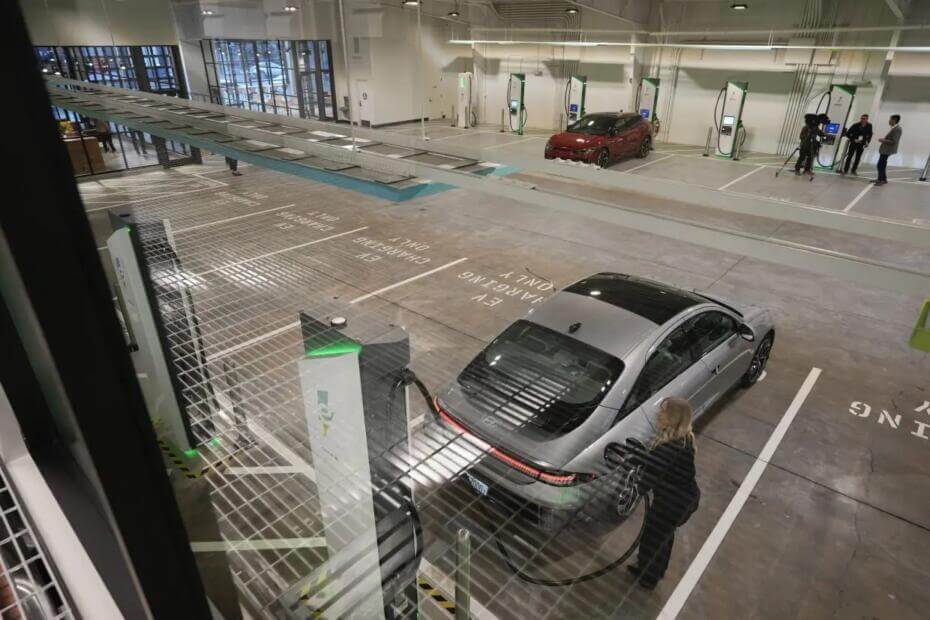
A US charging station with few cars. Image: The Star.
The picture is no brighter across the Pacific. The US EV market has sharply reversed after the Trump administration rolled back federal subsidies. The cancellation of the USD 7,500 federal tax credit, combined with relaxed fuel economy standards, has caused EV registrations to plummet. In December 2025, US EV registrations fell 48 per cent year on year, and market share dropped from 9.9 per cent to 5.3 per cent. By January 2026, market share fell further to 5.1 per cent.
California, traditionally the engine of American EV adoption, saw pure electric vehicle sales plunge 40.2 per cent in the first quarter of 2026, with market share dropping from 21 per cent to 13.7 per cent—back to levels seen five years earlier. The University of California, Davis, predicted that losing the USD 7,500 subsidy would reduce EV sales by about 20 per cent; the actual decline was twice that.
Analysts attribute half the fall to demand-side weakness and half to supply-side retreat: automakers, facing mounting losses, have stopped pushing EVs Ford cancelled its F-150 Lightning electric pickup and next-generation pure electric pickup projects, recorded USD 19.5 billion in write-downs, and pivoted toward hybrids and range-extender vehicles. Stellantis converted its all-electric Ram 1500 REV into a plug-in hybrid and booked the industry’s largest single EV write-down, at approximately USD 26 billion.
Europe: A Different Story
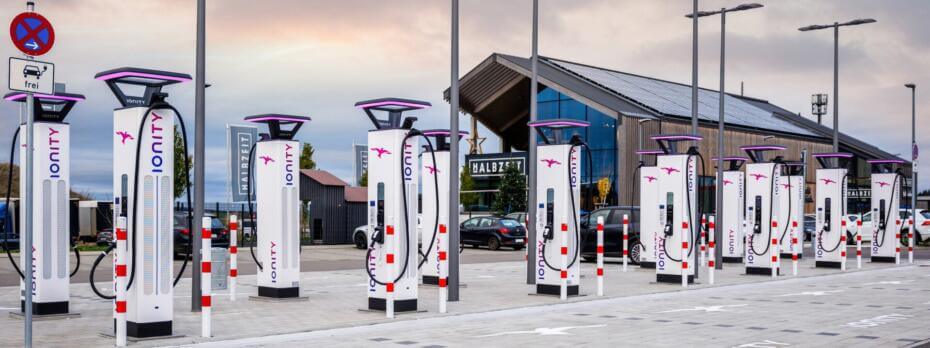
Ionity has highlighted its Merklingen high-power charging station along the A8 highway in Germany as one of its largest hubs in Europe. Image: Evcandi.com
Europe tells a different tale. In the first half of 2026, new car registrations in the European Union rose 5.7 per cent, with EVs reaching a 20.7 per cent market share—1.22 million units. Three of the four largest EU markets saw strong growth: France (+62.9 per cent), Germany (+48 per cent) and Denmark (+41.2 per cent). Even smaller markets showed momentum: Croatia’s EV sales grew 349.7 per cent, though from a low base, while Slovenia more than doubled its EV sales.
The difference is policy. European governments have largely maintained or expanded purchase incentives, unlike the US, where federal support was withdrawn. Italy launched an EV bonus of up to EUR 11,000 for lower-income households in October 2025; its EUR 600 million budget was fully reserved within 24 hours. This has kept demand robust even as other markets falter.
The Great Recall
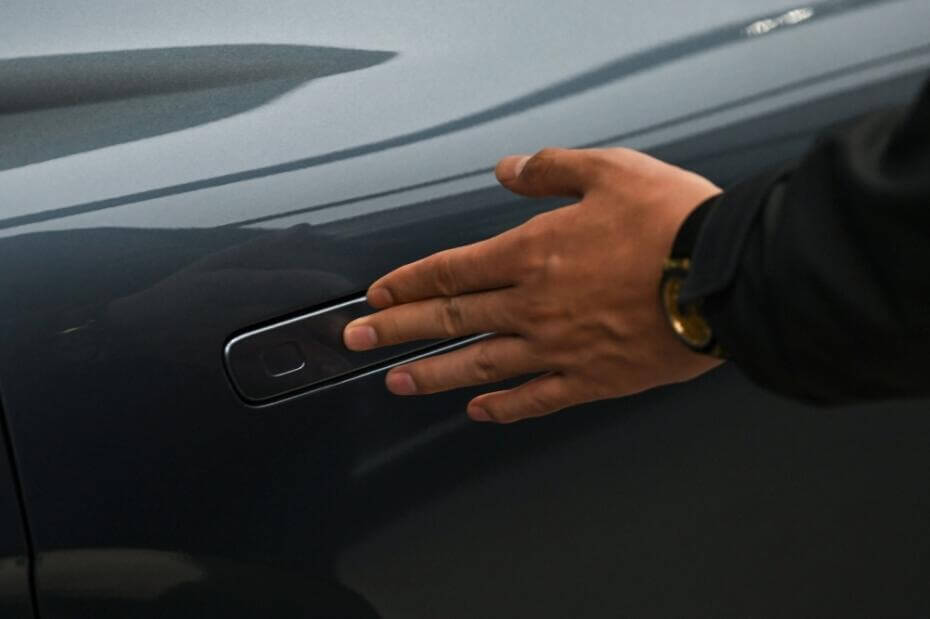
Tesla’s flushed doors are being banned in some countries. Image: Malay Mail.
As sales struggle, a separate crisis has emerged: a reckoning with the design choices that defined the EV era. In August 2026, Chinese authorities ordered the recall of more than 4 million vehicles over safety concerns related to hidden, flush-fitting door handles. Tesla leads the recall with approximately 2.98 million vehicles—including Model 3, Model Y, Model X, and Model S—followed by Xiaomi (390,000 vehicles) and Leapmotor (370,000).
The concern is straightforward but serious. In a severe collision that causes electrical failure, electronic door handles may fail to operate, trapping occupants inside and preventing rescue. The issue gained urgency after fatal crashes involving Xiaomi EVs in which power failures were suspected of preventing doors from opening.
“It represents, in part, the growing pains of the industry,” said Cui Dongshu, head of the China Passenger Car Association. “At the same time, however, this move signifies a policy-driven safety upgrade”.
Tesla’s response to the recall includes adding warning labels to affected vehicles and deploying a software update that automatically lowers windows after a collision. But the deeper question is regulatory. In February 2026, Chinese authorities announced restrictions on hidden door handles. From January 2027, new vehicles sold in China will need a mechanical door release on both the inside and outside.
The design originated as a signature of Tesla’s Model S, which launched with retractable handles in 2012. According to Tu Le, founder of consultancy Sino Auto Insights, the design “snowballed” after Chinese manufacturers began copying its sleek appearance from 2014 onwards. The US National Highway Traffic Safety Administration proposed developing a formal safety standard covering door-handle safety in July 2026.
The recall illustrates how early EV innovations, adopted for their aesthetic appeal, are now being reconsidered in light of real-world safety outcomes.
The USD 72 Billion Retreat
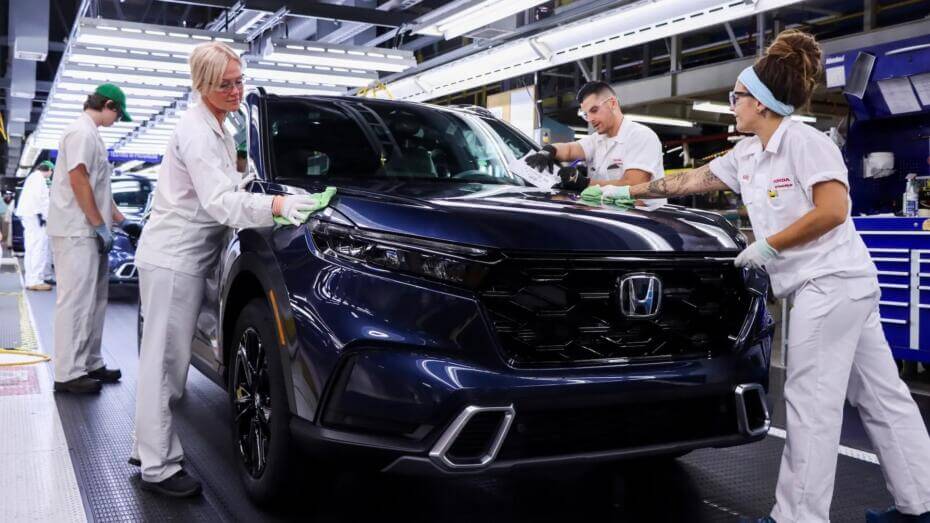
Honda issued multi-billion-dollar write-downs that shook the market. Image: The Drive.
The scale of the financial reversal is difficult to overstate. In the past year, five global automakers have collectively written down USD 72.2 billion in EV-related investments. Honda delivered the latest and largest single hit: a USD 15.7 billion write-down announced in March 2026. The Japanese manufacturer cancelled three battery-powered models planned for the US market—the Honda 0 Series Saloon, the 0 SUV and the Acura RSX—and expects to report its first annual net loss in nearly 70 years as a publicly listed company.
Honda sold just 17,000 electric vehicles in China last year, representing 2.5 per cent of its approximately 677,000 total sales there. The company acknowledged in a statement that it had been unable to deliver products offering better value than those from China’s domestic EV manufacturers, citing their shorter development cycles and capabilities in software-driven vehicles.
“The decision was taken at an extremely delicate stage, just before mass production, after substantial budgets had already been committed—suggesting that it was a very tough call,” said Seiji Sugiura, a senior analyst at Tokai Tokyo Intelligence Laboratory.
Ford recorded USD 19.5 billion in write-downs, cancelling several EV models and pivoting heavily toward hybrids and internal combustion engines. Stellantis took a USD 26.5 billion charge. Volkswagen recorded a USD 6 billion hit from a product overhaul at its Porsche unit, delaying some EV models in favour of hybrids and combustion-engine cars.
These write-downs reflect a fundamental recalibration. The strategy has shifted away from an exclusive focus on pure electrics toward a more flexible portfolio that includes hybrids and range-extender vehicles—recognising that consumer demand is more complex than early forecasts suggested.
A More Pragmatic Future

During his 1,119 days on the road, Wiebe Wakker has relied on the kindness of strangers to recharge his converted Volkswagen Golf (aka the Blue Bandit) that has about 230km range, as he traversed first the European continent then travelling down to South East Asia to then travel to Australia’s northern most state capital, Darwin. Image: Thedriven.io.
The EV revolution is not over. But the story has entered a less revolutionary, more pragmatic phase. The question is no longer whether electric vehicles will dominate the future, but how the industry will build a sustainable business around them.
The pressure is reshaping the competitive landscape. Consultancy AlixPartners predicts that only seven of China’s 30 EV-dedicated carmakers will break even by 2030, with smaller players likely to exit or be acquired. Meanwhile, Chinese manufacturers are accelerating overseas expansion to offset domestic declines, with exports of Chinese-made cars projected to jump 41 per cent year-on-year to 10 million units in 2026. The globalisation of Chinese EV production—already evident in BYD’s European expansion and Geely’s overseas growth—continues apace.
For legacy manufacturers, the adjustment is painful but necessary. The bet on electrification was never misplaced, but the timeline was overly optimistic. As Cui Dongshu observed, “For the rapidly evolving new energy vehicle industry, competition should be defined not only by the pace of technological innovation but also by the high standards set for safety”.
The industry is discovering that replacing the internal combustion engine is only the beginning. The real work—building safe, profitable, sustainable vehicles that consumers trust—has only just begun. The EV revolution needs to mature. The process of growing up is underway.
For more motoring reads, click here.