Rising Trend: Hard Stone Dial Watches Shine at Watches and Wonders 2025
New timepieces featuring dials made of hard stone have stolen the show of late, most notably at the recent Watches And Wonders 2025 in Geneva. We dive into this recurring trend
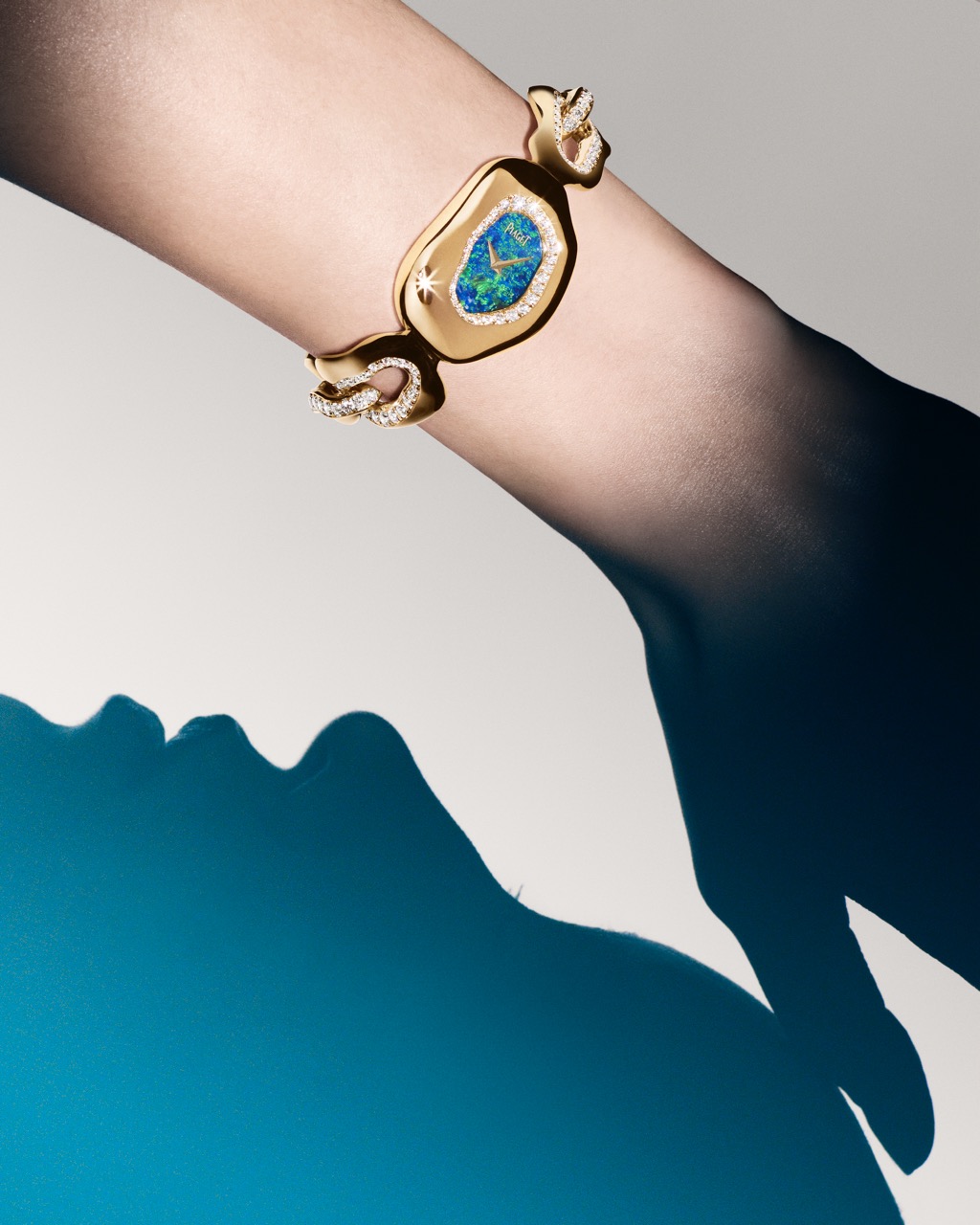
Among the watches launched in 2025, the ones featuring stone dials turned heads and made waves for their striking colours, mesmerising striations and incredible detail. While they were captivating in their own right, they are the latest in a long evolution of this style. Stone-dial watches have come a long way since they burst onto the scene some five decades ago and by their reception this year, they are not going anywhere.
Hard stones are sometimes still known by the humbling name “semi-precious stones”, a moniker applied to those not fortunate enough to be diamonds, emeralds, rubies or sapphires. This is not a strictly scientific definition, because the term encompasses a diverse range of materials that white coats would otherwise categorise more rigorously as organic solids, crystals, rocks, minerals or mineraloids. And to add to the confusion, some semi-precious stones, namely the opaque ones such as tiger’s eye, malachite, turquoise, coral, jade, and agate, can be considered and are often referred to as ornamental stones as well.
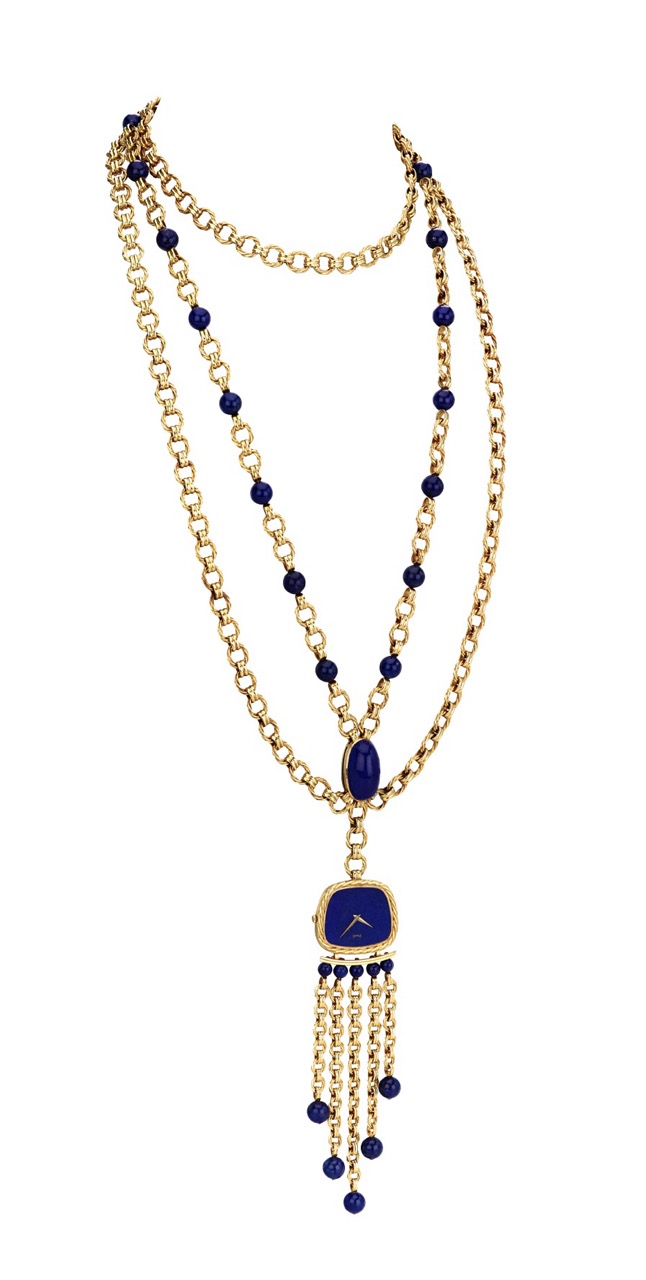
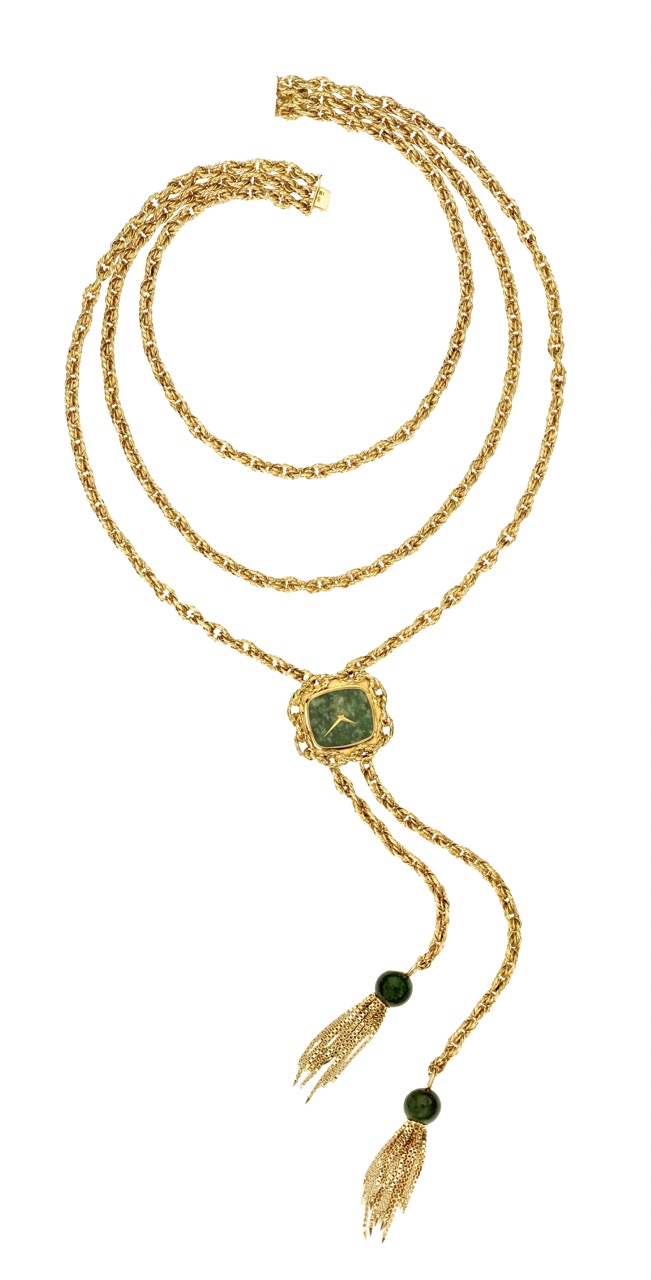
These stones have had a far longer history in the realm of jewellery and decorative arts, where they were highly prized for their rarity and beauty, and thus enjoyed a close association with royalty and religion. In Mesopotamia and the Levant during the Neolithic period, lapis lazuli, turquoise and carnelian were fashioned into beads and pendants; in ancient Egypt, the same stones could be found in amulets and burial objects, such as the winged scarab pectoral of Tutankhamun.
In Natural History, published around 78 CE, Roman author Pliny the Elder devoted the entire Book 37 to describing the physical and mystical properties of stones such as lapis lazuli, opal, onyx, jasper and carnelian; “[In] the case of many, it is quite sufficient to have some single gem or other before the eyes, there to behold the supreme and absolute perfection of Nature’s work,” he wrote of valued stones. From cameos and intaglios in the Middle Ages to Art Deco jewellery and objets d’art such as trinket boxes, vanity cases and cigarette holders, the appeal of ornamental hard stone endured.
The domain of clock and watchmaking is much younger than jewellery, as is the incorporation of ornamental stone in timepieces; in its early days, it usually served as decorative elements on the watch case or bracelet, since the technology for manufacturing discs thin enough to function as dials had not yet matured. But the allure of ornamental stone is undeniable. Being an ancient material sourced and mined from the earth that bears unique physical features and is also difficult to manufacture makes it an exclusive product. And whether one chooses to spotlight a stone’s imperfections or select for unblemished sections to show off the purity and intensity of its colour, either way, it is a thing of beauty.
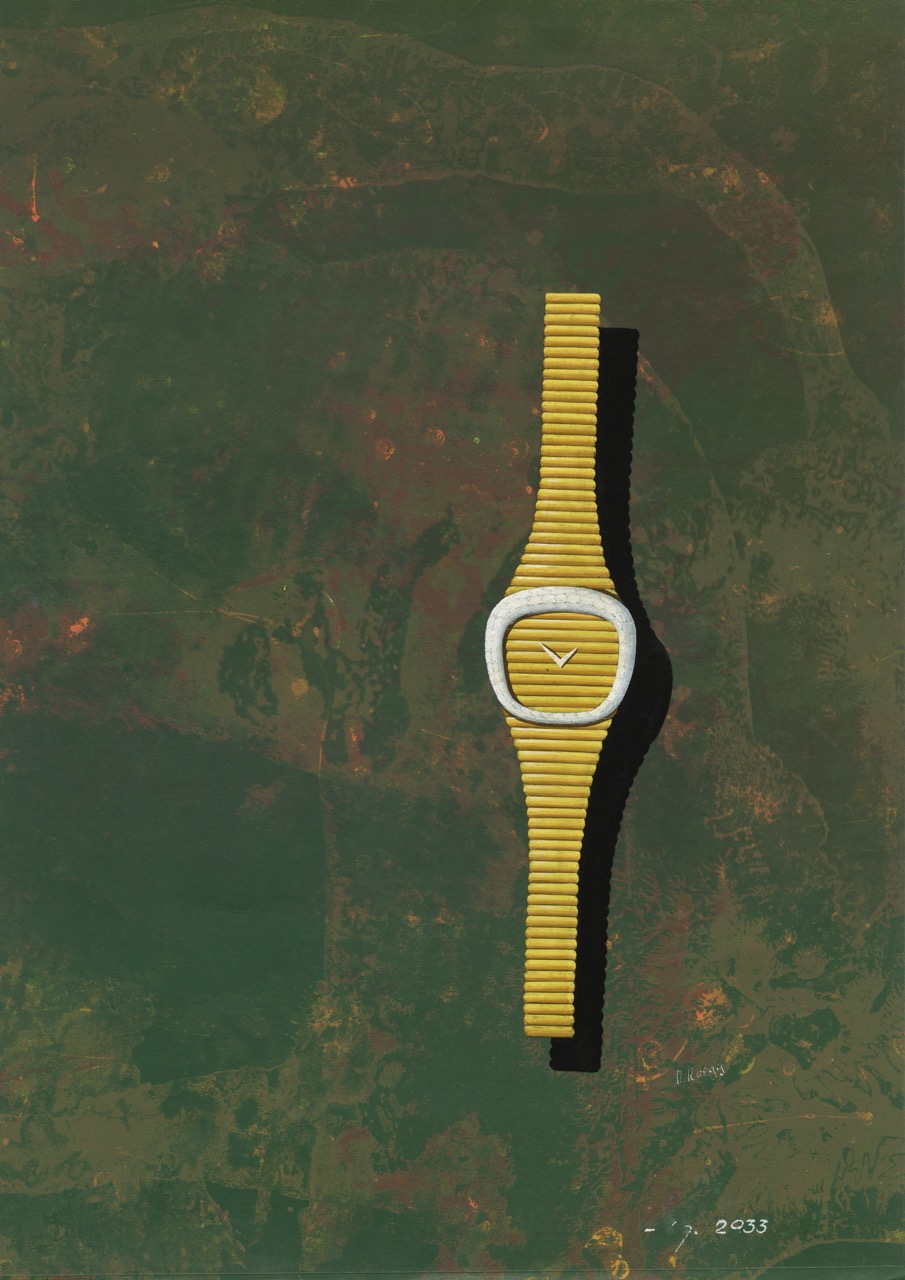
Transforming a raw boulder into a stone dial fitted inside a watch is an arduous or even torturous journey. Because dials need to be thin, typically 1mm or less, they are prone to chipping or cracking during production, made worse by the presence of features such as veins, striations and inclusions. Stone is hard to reshape after it is cut, and may not tolerate polishing well, depending on its particular characteristics. Neither is it flexible or malleable, so assembly may stress the material structure and cause warping or fractures over time. Adding dial features like apertures for day or date windows or setting gems or applied numerals as indices all ramp up the likelihood of damage to a stone dial.
Selecting for certain patterns or tints, tones and shades, especially for making up a uniform edition, means rejecting many samples. Dials with a certain thickness could mean needing to lengthen the axes of the watch hands or even modify movements to accommodate them. Considering that the source material can be brittle, porous, riddled with imperfections, and generally not uniform, a high failure rate is almost a given — it is not outrageous that over 90 percent of a stone’s bulk is lost during manufacturing, depending on the stone variety and the watch design — and so is a high cost and a limited production.
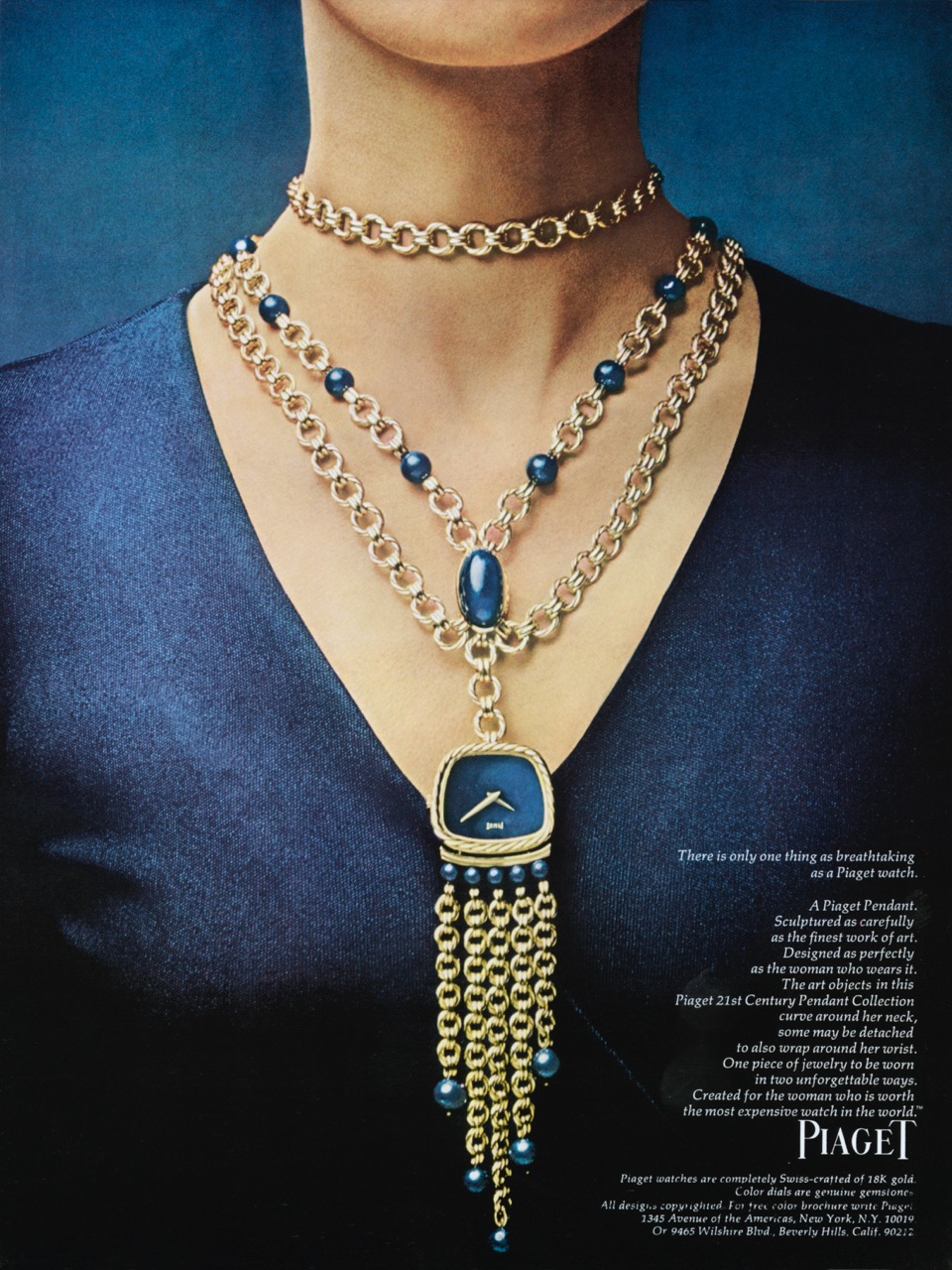
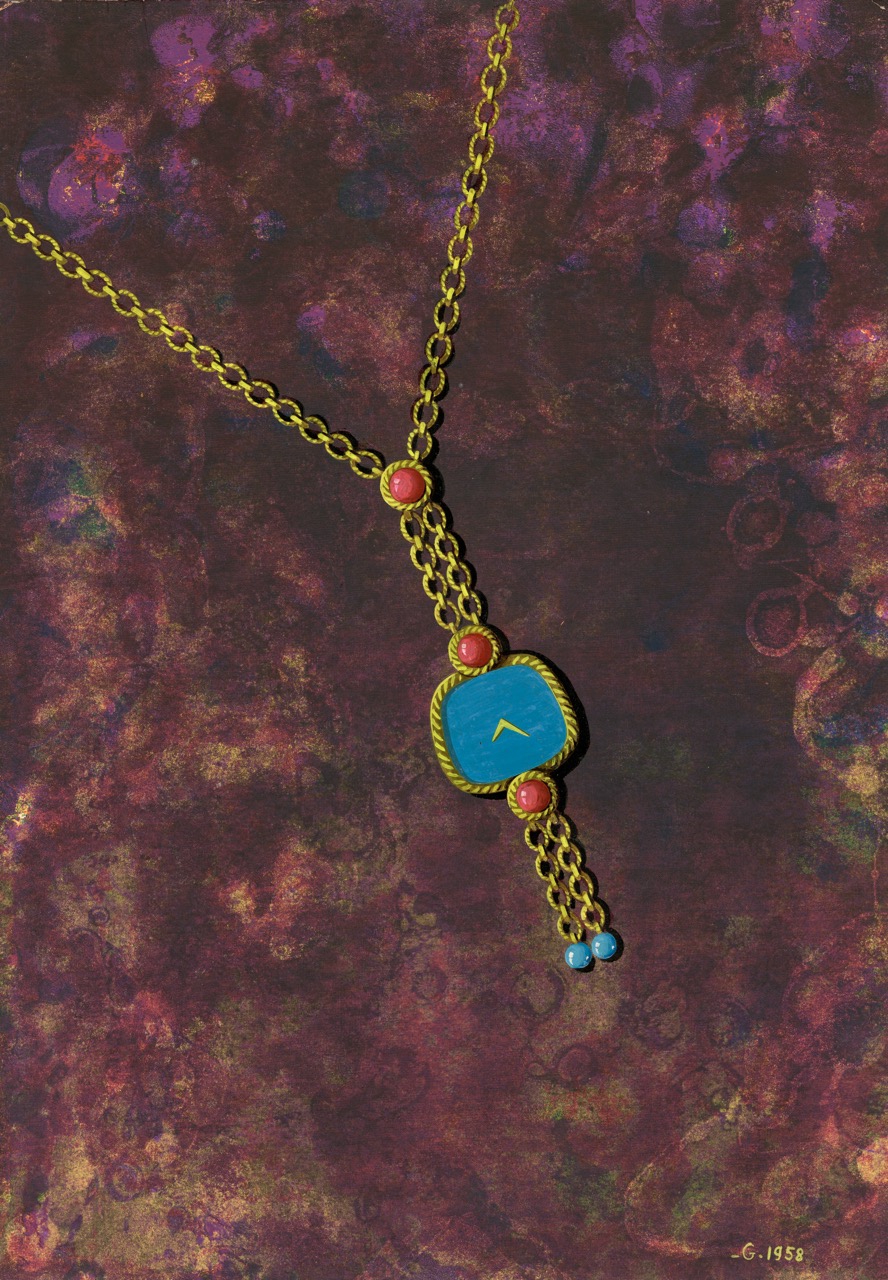
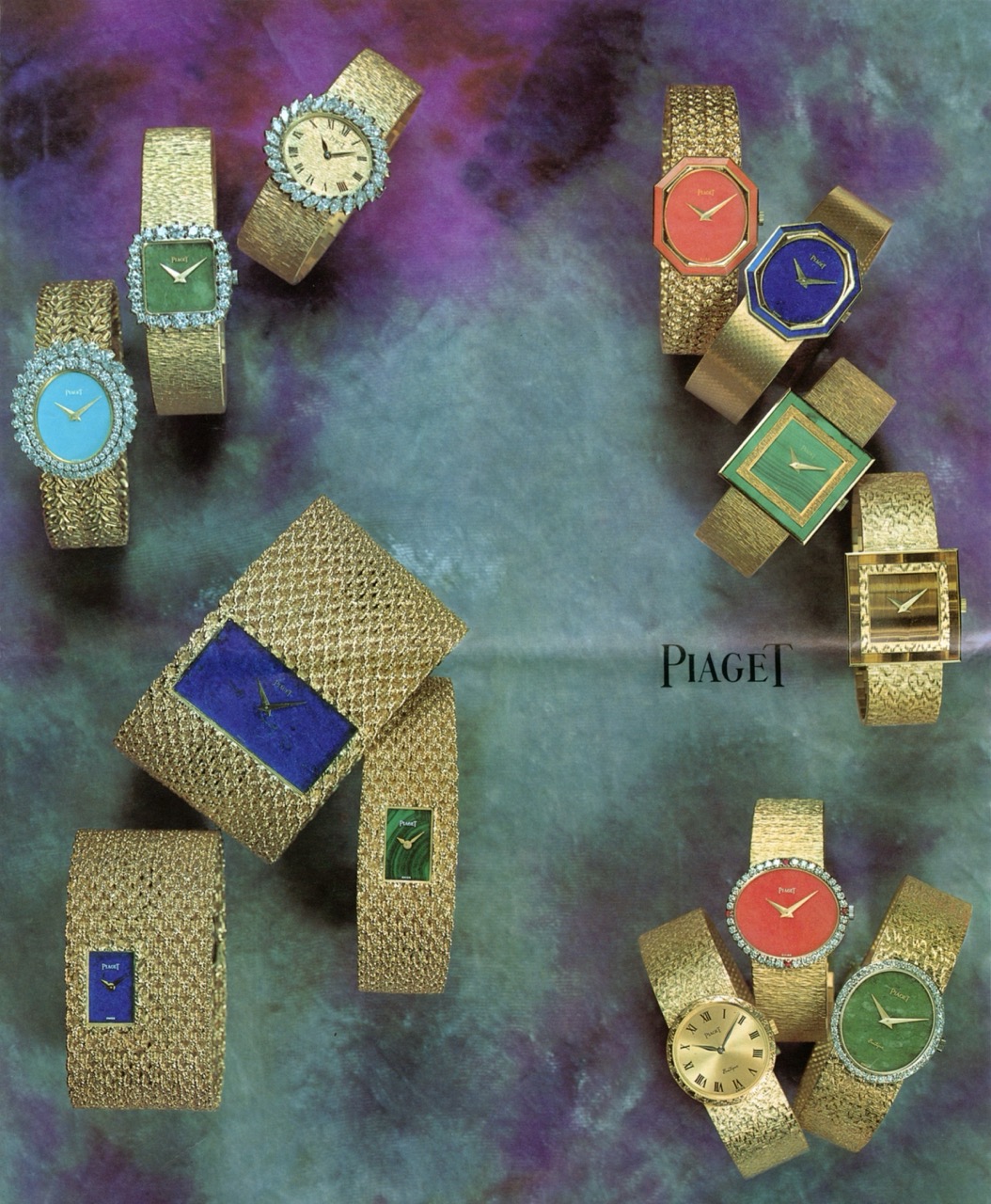
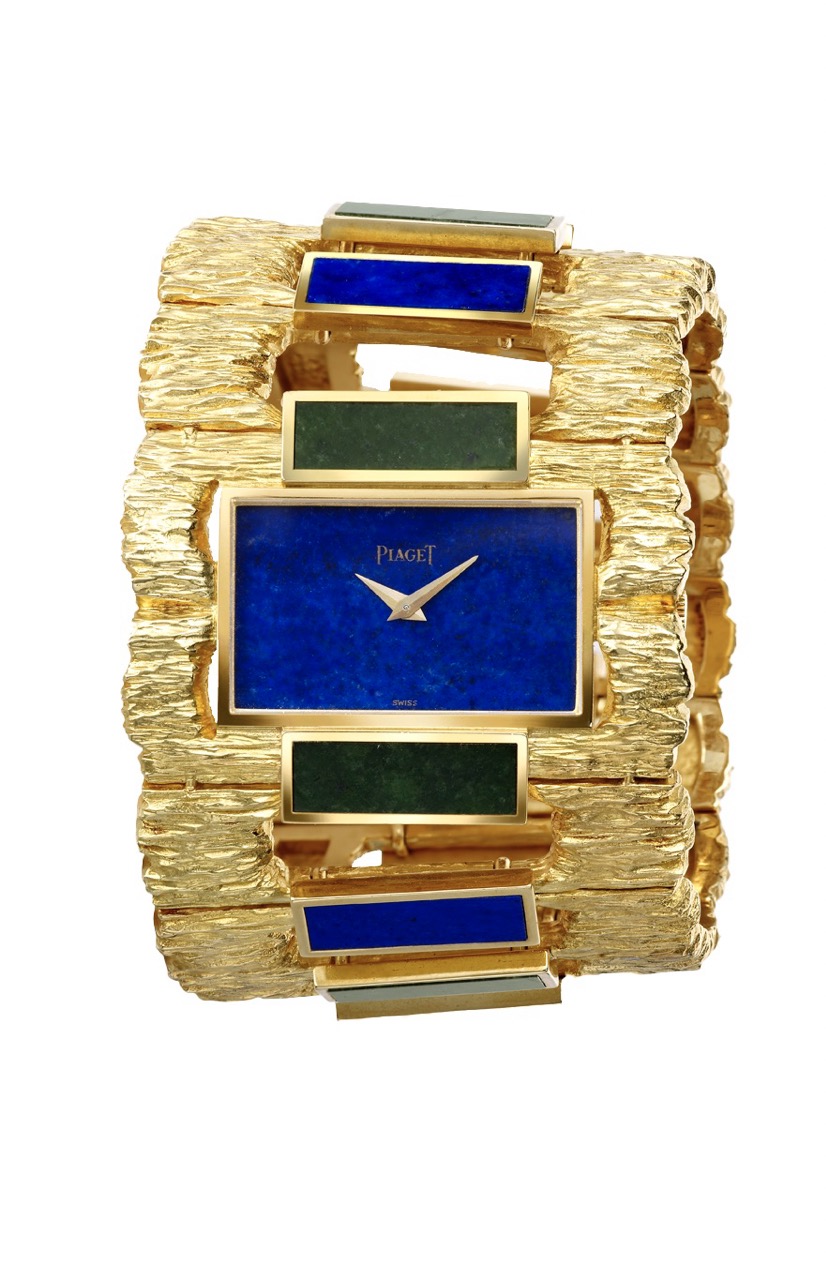
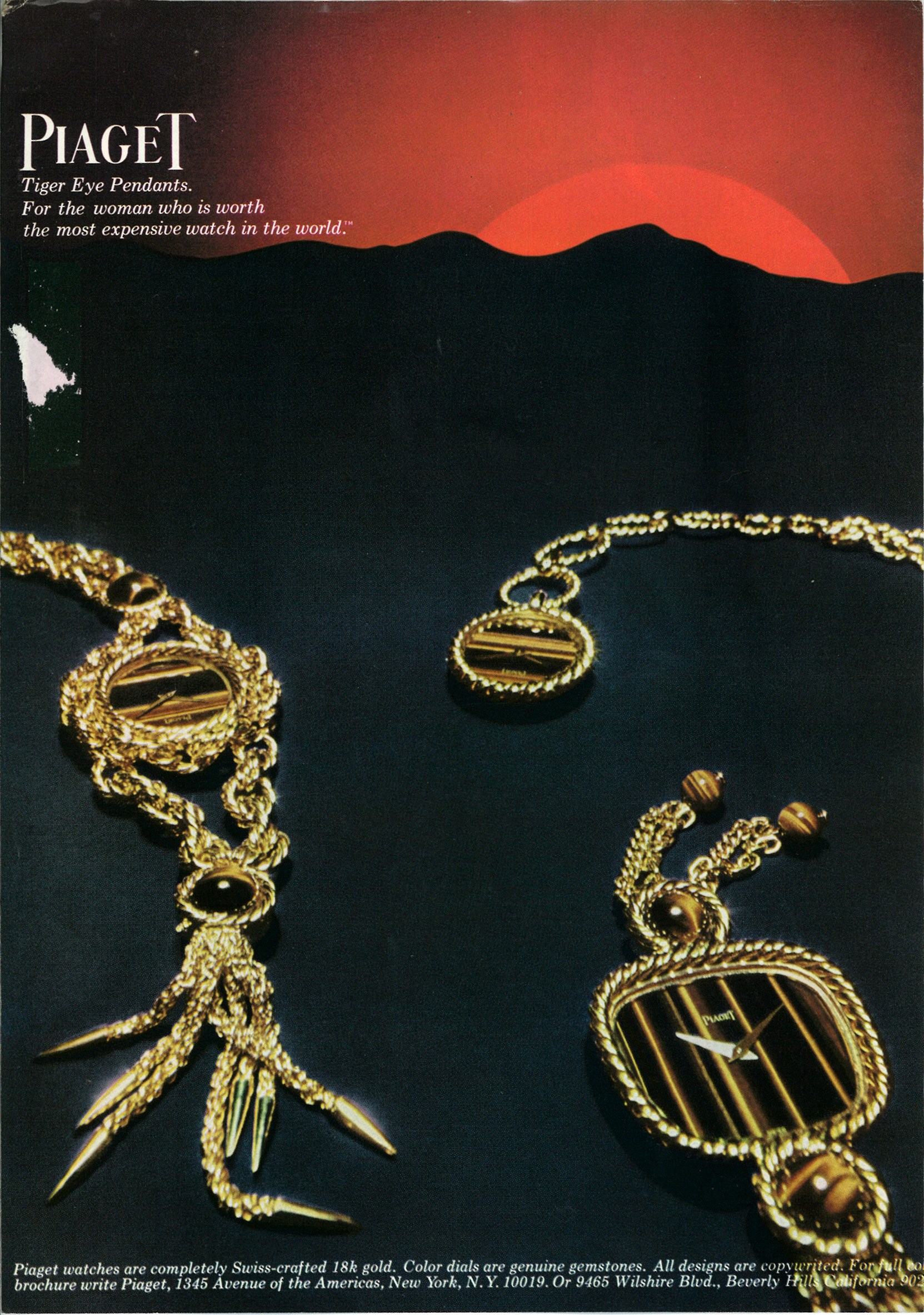
In spite of all these difficulties, ornamental stone dials became a reality. An early creator of the stone-dial wristwatch — and frequently credited as the originator of this style — is the house of Piaget, which debuted in 1963 a series of ladies’ timepieces featuring dials made of lapis lazuli, opal, jade, malachite, tiger’s eye and other varieties of hard stone.
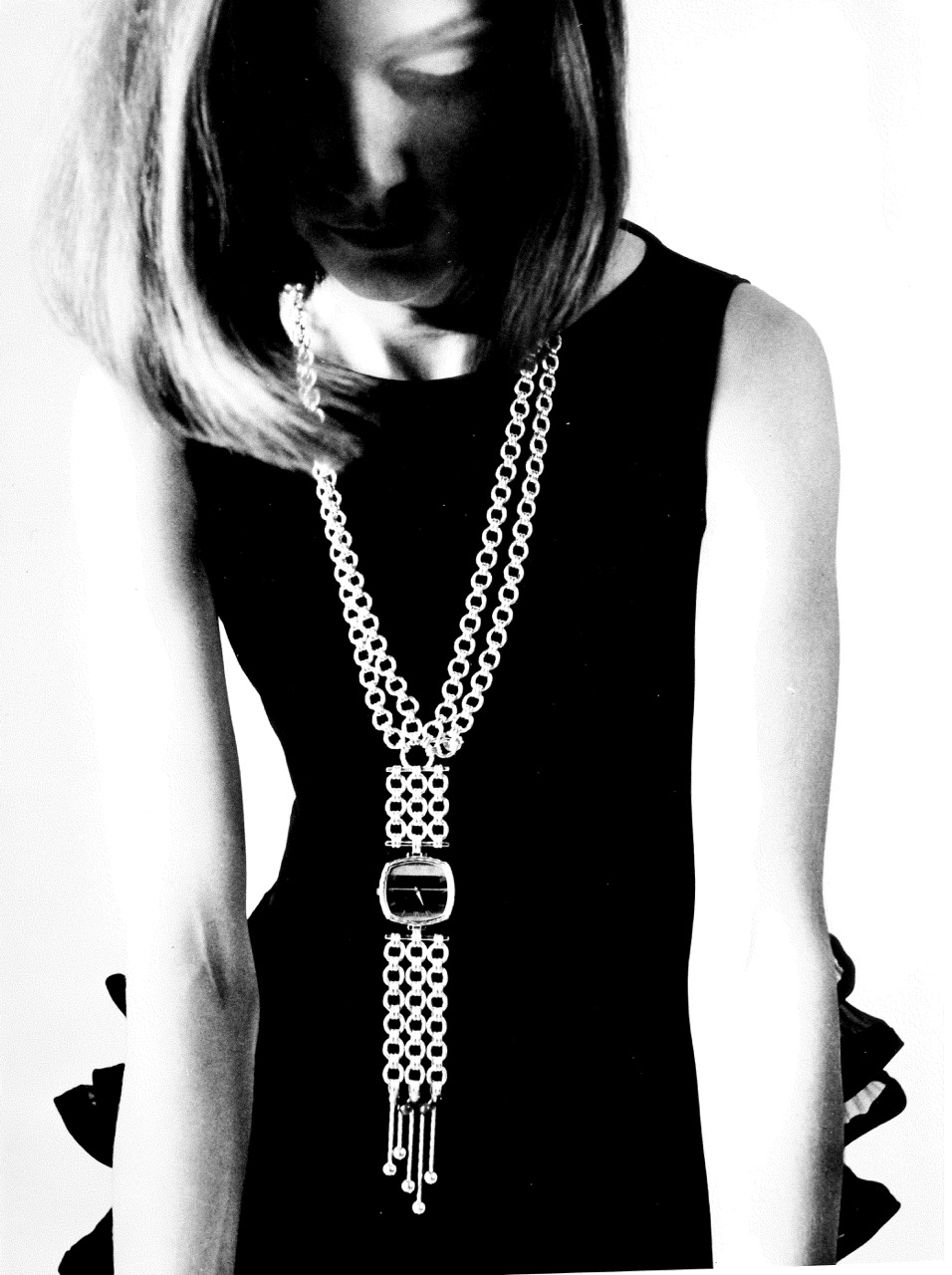
The launch could not have come at a better time: At the peak of the Pop Art movement, it fit right in with the inclination towards dynamism, expression and colour. At the same time, Piaget’s extraordinary in-house ultra-thin movements, such as the game-changing 2mm-thick hand-wound calibre 9P the maison introduced in 1957 and the 2.3mm-thick automatic calibre 12P unveiled three years later, perfectly complemented the maison’s 1mm-thin stone dials, by creating a striking, sophisticated product in a remarkably slim format. Famous examples include Jacqueline Kennedy’s Piaget Limelight timepiece with a green jade dial and Palace Décor–engraved bracelet, and diamonds and emeralds on the bezel.
By the 1970s, Rolex had thrown its hat in the ring, by offering an extensive catalog of about 120 different combinations of ornamental stone packaged within its classic pillars such as the Oyster Perpetual Datejust and the Oyster Perpetual Day-Date, and, later, the Cosmograph Daytona. Around the same time, brands such as Van Cleef & Arpels, Chopard, and Cartier also developed their own interpretations of stone-dial watches for their Alhambra, L’Heure du Diamant and Tank collections, respectively, alongside Audemars Piguet (which through the 1990s launched watches with dials of tiger’s eye, lapis lazuli, aventurine, garnet, mother-of-pearl, opal, jasper and more) and Vacheron Constantin (whose 1970s Reference 2077 bore a Cristallor yellow gold case and a jade dial).
Ornamental hard stones’ bright colours were originally intended for and marketed to appeal to women, but over time the artistry of stone dials won over men too, and this evolved in tandem with the watch design itself. Stone dials migrated from dainty evening watches to robust, hardworking tool watches, until they became available to anyone who appreciates them, in any format imaginable.
With time came improvements in lapidary arts too. In the early days, raw stone was cut and polished by hand; later, laser cutting, computer-guided machines, and digital imaging took on the mantle of improving accuracy and reducing failure and wastage, which put stone dials within the reach of a wider swath of brands and at more accessible prices for collectors and aficionados.
Since the 1960s, watchmakers have experimented with more audacious dial colours and expanded their library of ornamental stones. Less-well-known stone varieties began showing up in coveted timepieces, such as the 1989 Rolex Oyster Perpetual Day-Date in yellow gold with a ferrite dial, the 1991 Rolex Oyster Perpetual Day-Date in yellow gold with a howlite dial, and the 1995 Rolex Oyster Perpetual Day-Date in yellow gold with a pyrite dial.
No doubt Rolex has a proven fascination with ornamental stone dials: In 2021 it unveiled a Rolex Oyster Perpetual Day-Date 40 in Everose gold with a dial of eisenkiesel, a dark brown quartz with veins of iron oxide, and a stone that Rolex had not used before then.
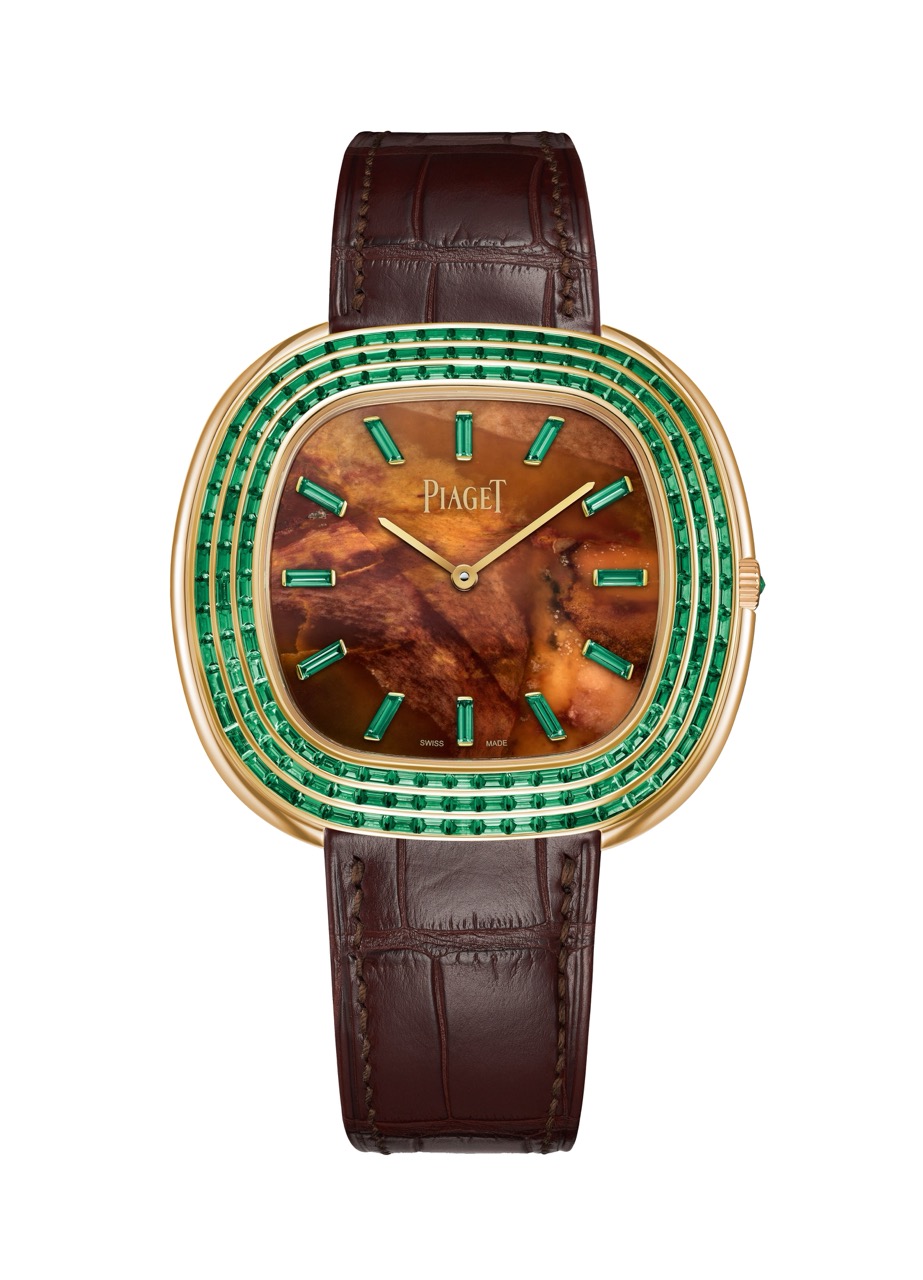
Two years later, the brand ushered in three Oyster Perpetual Day-Date 36, with dials of carnelian, green aventurine or turquoise. Petrified wood appeared on Piaget’s 2023 high jewellery Black Tie watch, circumscribed by emeralds.
The same year, Jean-Claude Biver and Pierre Biver’s namesake brand presented the Biver Carillon Tourbillon with dials of obsidian or sodalite, and it followed up a year later with the Biver Automatique in rose gold with a pietersite dial. Also in 2024, H. Moser & Cie introduced its Streamliner Tourbillon in red gold with a dial of green Wyoming jade.
Concurrently, crossing into the 21st century, the use of meteorite as a dial went from niche to mainstream, culminating in creations such as the 2010 Louis Moinet Meteoris, made up of four meteorite watches and a mechanical planetarium; the 2015 Jaeger-LeCoultre Master Calendar in pink gold or steel with two styles of meteorite dial; the 2016 Omega Speedmaster Grey Side of the Moon ‘Meteorite’; and the 2022 Arnold & Son Luna Magna in platinum with a meteorite dial and a spherical moonphase display crafted from meteorite and opal.
While established watch brands kept powering on, stone dials were no longer exclusive to the major players, and independent microbrands began to develop their own versions. Louis Erard presented the Excellence Regulator in 2021 and then the Excellence Petite Seconde in 2022, both with dials of aventurine glass, lapis lazuli or malachite. Baltic entered the arena with its 2024 Prismic limited editions with lapis lazuli, red agate or green jade dials. And in the same year, Dennison unveiled A.L.D. Stone Dials in malachite, lapis lazuli, blue aventurine, or tiger’s eye.
Which brings us to this year: Enthusiasm for stone-dial watches has not waned, and brands continue to search for new ways to reinterpret them, as proven by the novelties presented at Watches And Wonders Geneva this April. Rolex explored a stone that has never appeared before in its catalogue and unveiled its latest GMT-Master II featuring a dial of tiger iron, a composite of tiger’s eye, red jasper and hematite.
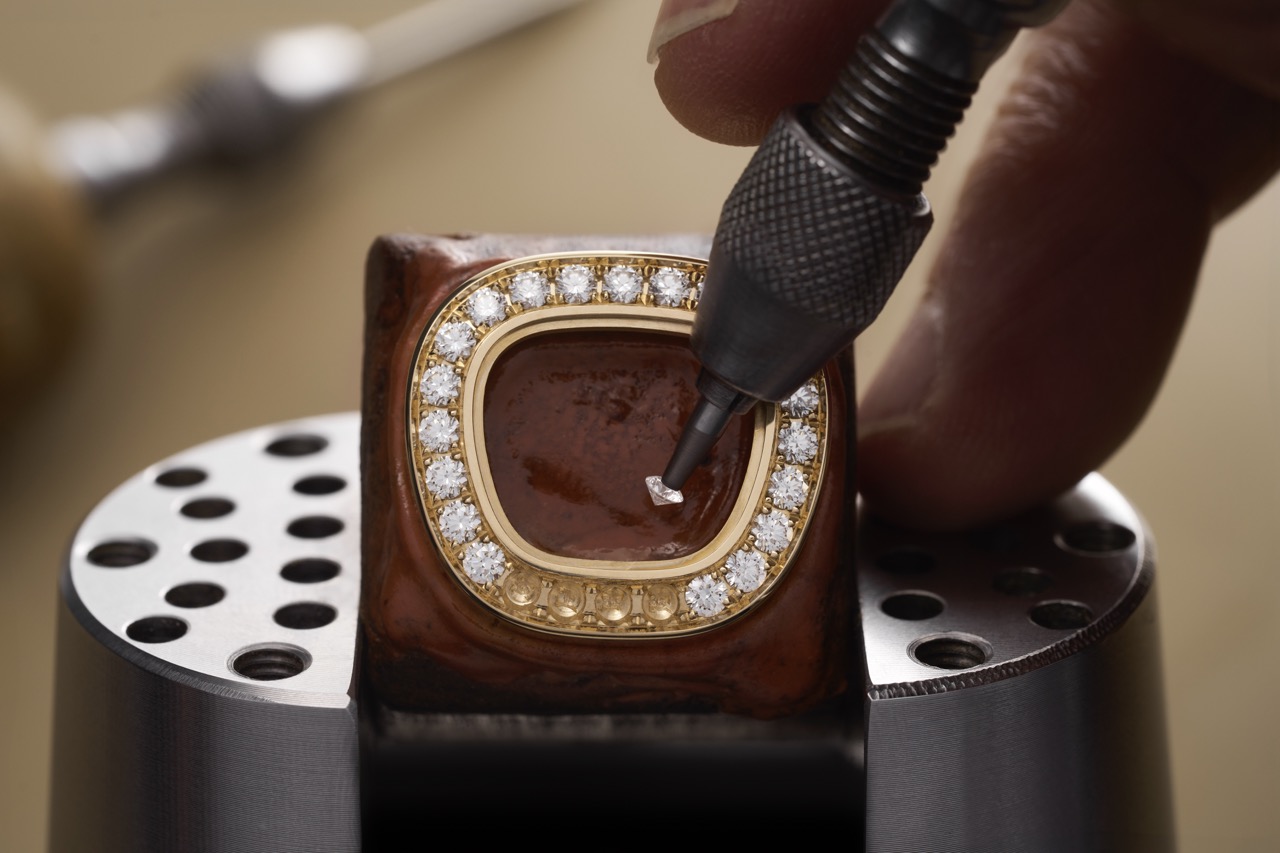
H. Moser & Cie released a whopping 18 references under its Endeavour Pop collection, decorated with combinations of pink opal, Burmese jade, lemon chrysoprase, lapis lazuli, turquoise and coral. Chopard debuted 12 new models under its L’Heure du Diamant collection, among which are watches with dials made of tiger’s eye, pink opal, blue-green opal, jade or malachite. Meanwhile, back at the maison that started it all, Piaget unveiled updates to the Andy Warhol, a reimagination of the Piaget Black Tie watch with a gadrooned cushion case that so entranced the Pop Art pioneer in the early 1970s, via dials made from 10 varieties of hard stone — including falcon’s eye, bull’s eye, ruby root and nephrite — as well as green or silver meteorite.
Even now, more than 50 years since stone-dial watches took off in popularity, there are still brands getting into stone-dial watches and creating their own interpretation of the style, such as in early 2025 when Gerld Charles unviled the Maestro 2.0 Lapis Lazuli, the brand’s first stone-dial watch, based on the eponymous watch designer and brand founder’s favorite gemstone.
Something could be said about the continual popularity of stone-dial watches through the decades. Broad pivotal change seemed to coincide with significant moments and rebellious spirit that pervaded the 1970s, the financial crises of 1990s, the post-recession doldrums of the 2010s, the sputtering post-Covid recovery of the 2020s… Maybe bright hues and beautiful details cheer us up when the world looks bleak, or maybe people turn to mysticism and spirituality — and the healing energies that stones and crystals are supposedly charged with — during periods of economic and social upheaval. Correlation does not equal causation, of course, but could this be more than happenstance?
A pop of colour, a silver exclusivity, a testament to craftsmanship, a relic of millions of years of geological change and even a medallion of magic in trying times — stone-dial watches embody all these and more. And this will not be the last we have seen of ornamental stone dials. As manufacturing technology continues to improve and watchmakers explore more obscure varieties of ornamental hard stone (and we endure more calamities that demand grounding and positivity to conquer), on the horological front, we can only expect more good things to come.
This story was first seen as part of the WOW #78 Vision 2025 Issue
For more on the latest in luxury watch reads, click here.