Cars of Tomorrow: Progressive Driving
From fully adaptive suspension systems to OLED displays that warn of danger, modern cars leap ahead with cutting-edge tech.
The evolution of the automobile has never been solely about getting from one destination to another. For more than a century, manufacturers have competed to make vehicles faster, safer and more comfortable, with each generation introducing engineering advances that reshape the driving experience. Today, however, progress is taking on a different dimension. Cars are learning to interpret their surroundings, communicate with other road users and respond more intelligently to the people behind the wheel. Lighting systems are becoming safety interfaces, steering mechanisms are being re-engineered through electronics, and even traditional vehicle components are being reconsidered in the pursuit of better visibility and greater comfort. From established luxury marques to a new generation of technology-led manufacturers, the next chapter of automotive innovation is being written through intelligent engineering and increasingly sophisticated human-machine interaction. LUXUO examines eight developments that illustrate how the industry is moving beyond conventional expectations of what a car can do.
NIO – Giving Cars A More Intelligent View Of The Road
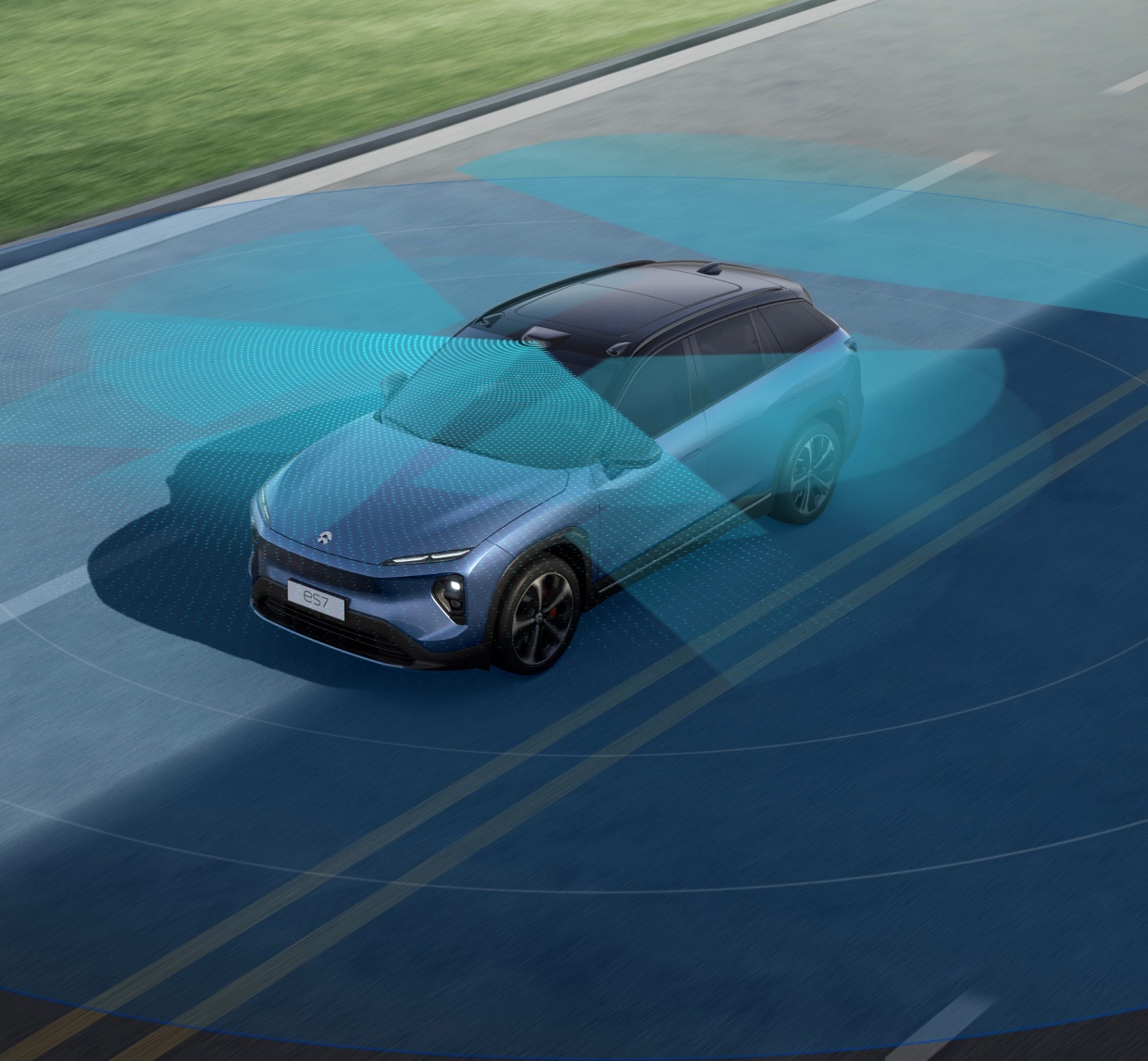
A car’s ability to understand its surroundings is becoming just as important as its ability to respond to the driver’s commands. Chinese electric vehicle manufacturer NIO is addressing this through Aquila, its advanced sensing architecture, which combines LiDAR, cameras, radar and other detection technologies to build a detailed picture of the vehicle’s environment.
Depending on the vehicle configuration, Aquila incorporates as many as 33 high-performance sensing units, including a long-range, high-resolution LiDAR, seven 8-megapixel cameras, four surround-view cameras, five millimetre-wave radars and 12 ultrasonic sensors. Together, they provide a more comprehensive understanding of surrounding traffic, pedestrians, obstacles, and road conditions. The significance lies in sensor fusion. Rather than relying on a single source of information, the system combines different forms of environmental data to help the vehicle recognise objects and assess potential hazards. LiDAR, for instance, measures distances using reflected laser pulses, while cameras provide visual information and radar helps determine the position and movement of surrounding objects.
This information supports NIO’s assisted-driving capabilities, including functions designed for expressways, urban roads and parking. It does not make the vehicle autonomous in every driving situation but provides the technological foundation for more sophisticated driver assistance. For NIO, progress is increasingly about enabling a vehicle to interpret its surroundings with greater precision, allowing technology to support the driver before a potentially dangerous situation develops.
Audi – When Rear Lights Become A Language Of Their Own
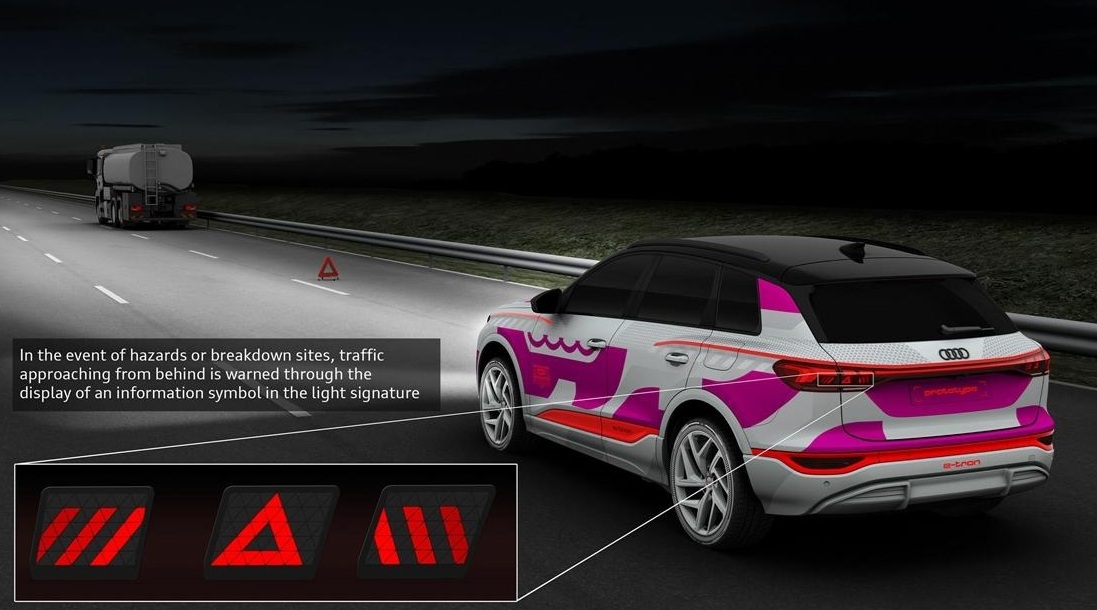
Automotive lighting has traditionally served two primary purposes: illuminating the road ahead and making a vehicle visible to others. Audi is expanding that role with its second-generation digital OLED rear lights, introduced on the A6 e-tron.
Each rear-light assembly uses five OLED panels with 45 individually controllable segments, giving the system 450 segments across both sides. A specially developed algorithm generates changing light patterns several times per second, creating distinctive digital signatures that the vehicle’s infotainment system can personalise.
More significantly, Audi has introduced a communication light function that allows the rear lights to display warning symbols in certain critical traffic situations. These include warnings for accidents, breakdowns, and emergency braking. The system can also alert approaching cyclists and motorists when occupants are about to open a door into their path. The development effectively turns the rear of the vehicle into an additional communication interface. Instead of relying solely on conventional brake lights and indicators, the car can convey more specific information to people around it.
Audi’s approach also shows how digital technology can improve safety without adding external screens or complicated interfaces. The lighting remains integrated into the vehicle’s design, while its functions extend beyond aesthetics and visibility. As connected vehicles become more prevalent, such communication systems could play an increasingly important role in helping motorists and other road users anticipate one another’s movements.
BMW – Bringing Laser Precision To The Road Ahead
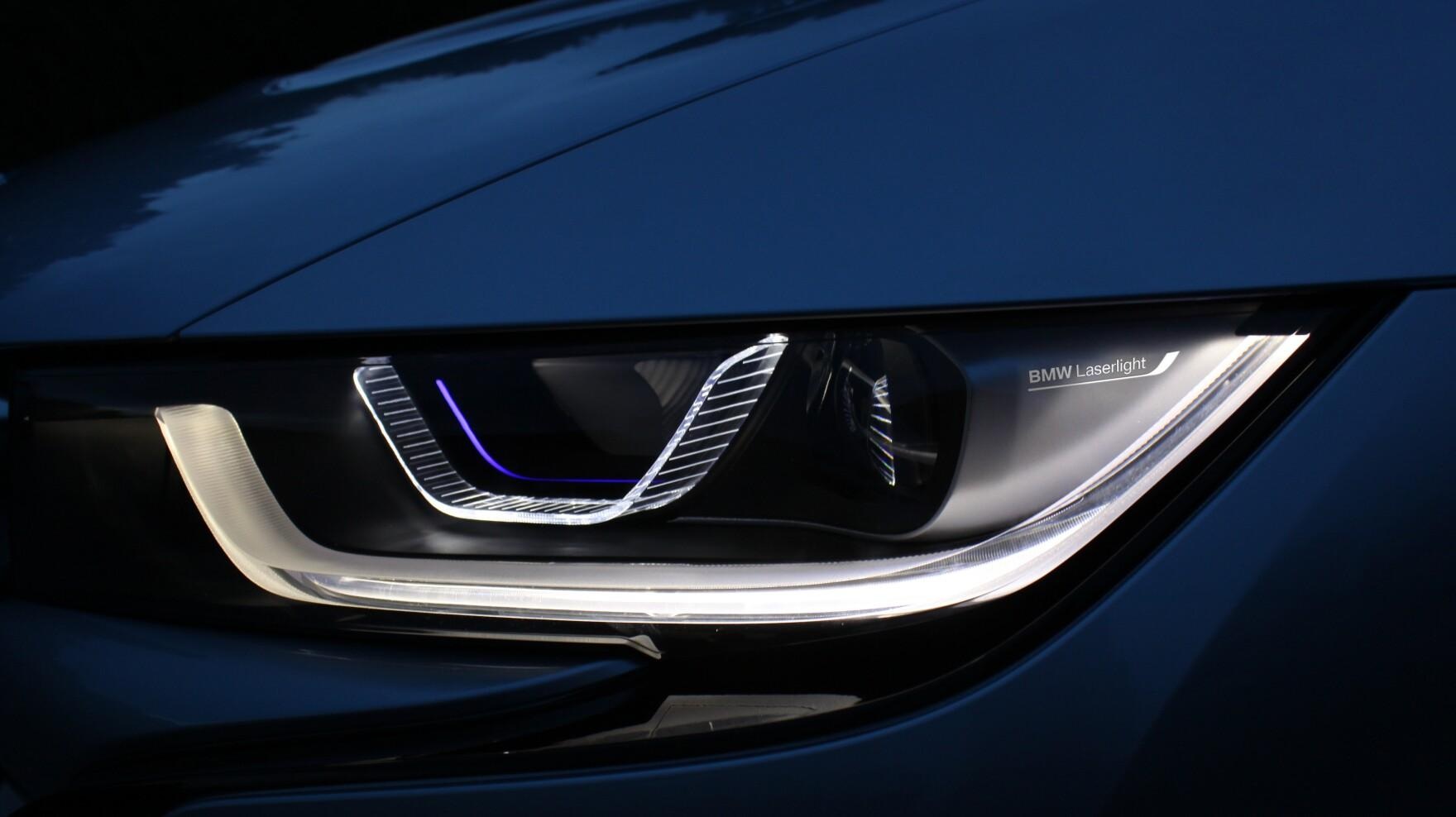
Long before adaptive digital lighting became a talking point in the automotive industry, BMW was exploring how laser technology could improve nighttime visibility. The manufacturer made history in 2014 when its i8 became the world’s first series-production car to feature laser headlights.
Unlike conventional lighting systems, BMW Laserlight uses laser diodes to generate intense blue light, which it directs onto a phosphor material that converts it into powerful white illumination. The resulting light is designed to provide greater reach while consuming less energy. On the BMW i8, the optional laser high-beam system offered an illumination range of up to 600 metres, approximately twice that of conventional LED high beams at the time. BMW also reported energy savings of around 30 percent compared with LED technology.
The benefits extended beyond brightness. The compact size of the laser diodes allowed engineers to develop smaller reflectors and more streamlined headlamp assemblies, creating additional design possibilities. Although laser headlights are now an established rather than emerging automotive technology, their introduction marked an important milestone in the development of intelligent vehicle lighting. It demonstrated how a component once regarded as relatively straightforward could become an area of significant engineering innovation.
For BMW, the achievement was not simply about seeing further. It was about using advanced light sources to improve visibility, energy efficiency, and how a vehicle interacts with its surroundings.
Mercedes-Benz – Rethinking the Connection Between Steering Wheel And Road
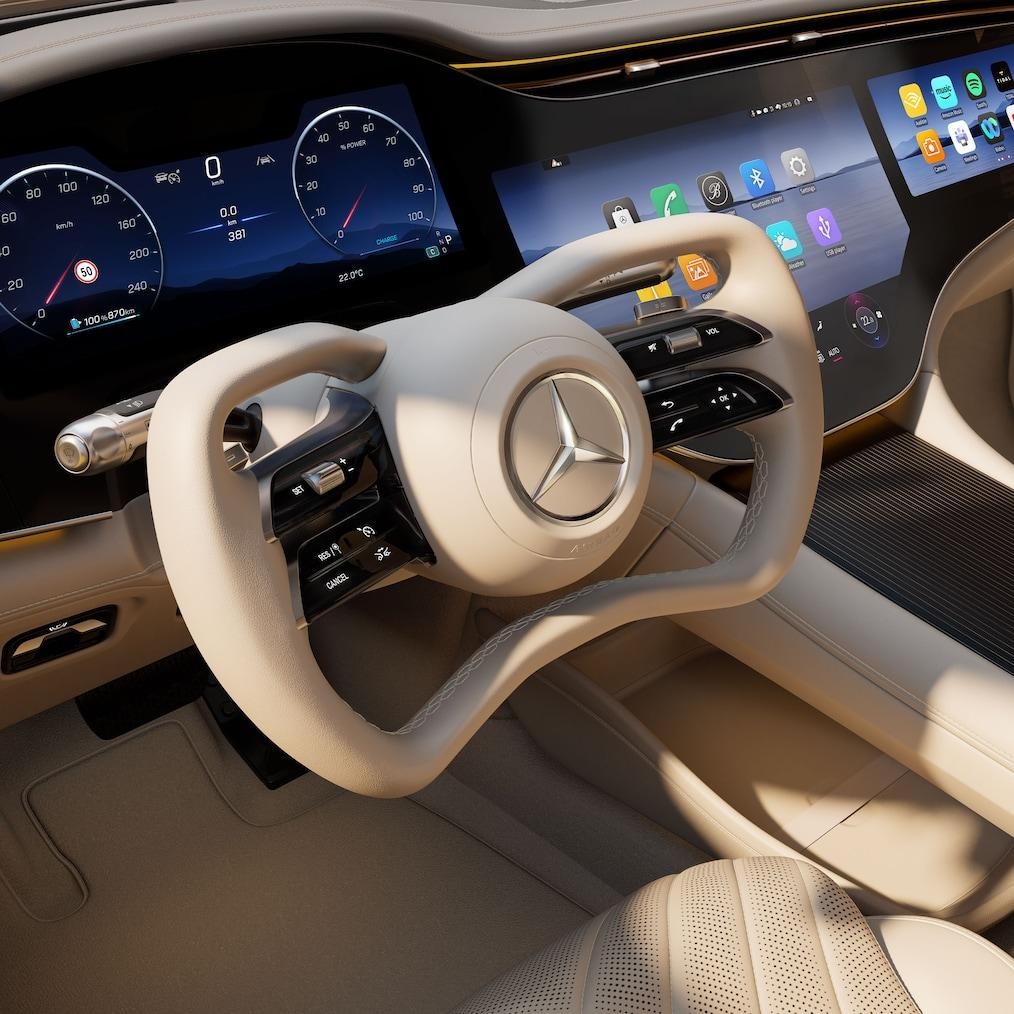
For generations, steering systems have relied on a mechanical connection between the steering wheel and the front wheels. Mercedes-Benz is challenging this long-standing arrangement with steer-by-wire technology, which replaces the conventional mechanical steering link with electronic signals.
Introduced as an option for the new EQS in 2026, the system translates the driver’s steering inputs into electronic commands that control the front wheels. Sensors and control units continuously monitor the driver’s movements, while redundant electronic pathways maintain steering functionality if a component fails. One immediate advantage is the ability to tailor steering responses to different driving situations. Manoeuvring and parking can become easier, while steering precision and vehicle stability can be adjusted to suit higher-speed driving.
The technology also gives designers greater freedom inside the cabin. Without a conventional mechanical steering column arrangement, Mercedes-Benz can introduce a more compact steering wheel, improve the driver’s view of the instrument display and create a less obstructed cockpit. Importantly, steer-by-wire is not simply an electronic replacement for a mechanical component. It changes how drivers interact with their vehicles, allowing software to shape steering characteristics rather than relying entirely on a fixed mechanical ratio.
For a manufacturer whose history is closely tied to automotive engineering milestones, the EQS represents another step toward a more electronically integrated driving experience.
NIO – Making The Ride More Intelligent With Fully Active Suspension
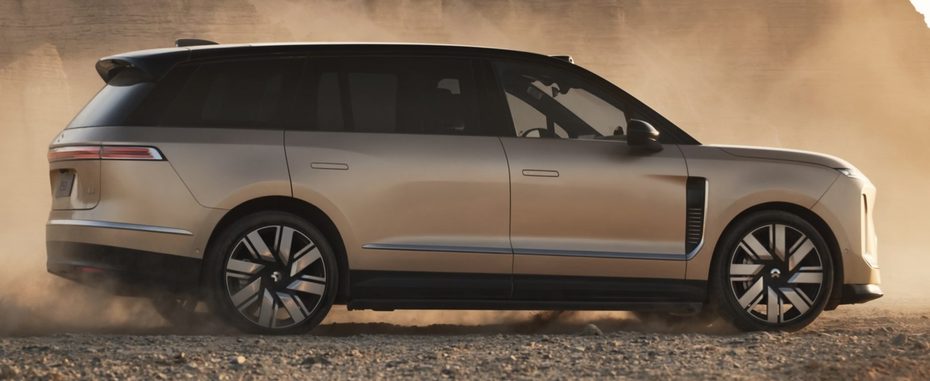
A comfortable ride and responsive handling have traditionally required some compromise. Softer suspension settings can improve comfort over uneven roads, while firmer configurations generally provide better body control during cornering. NIO is attempting to narrow that divide with its 48-volt integrated hydraulic fully active suspension system, introduced in the flagship ES9.
Developed as part of its SkyRide Intelligent Chassis, the system goes beyond conventional adaptive suspension, which primarily adjusts damping characteristics. Its hydraulic actuators can actively generate forces at individual wheels, helping to counteract body movements such as pitching and rolling.
This lets the vehicle respond more proactively to changing road conditions and driver inputs. During acceleration and braking, for instance, the system can minimise forward and backward body movement. When cornering, it can help suppress body roll, keeping the cabin more level for occupants.
The 48-volt architecture is another important aspect of the development. Compared with conventional low-voltage arrangements, it provides a more suitable electrical foundation for the system’s high-power actuation requirements. NIO describes this as the world’s first 48V integrated hydraulic fully active suspension system. The manufacturer also says it has been mass-produced for more than a year, establishing it as a production technology rather than an experimental concept.
The viral video of NIO ET9 EV showing its 48-volt architecture that’s a fully active suspension system where the vehicle balanced a stack of champagne glasses with champagne, driven across road bumps and none of them were toppled! Video courtesy of NIO.
For a large luxury SUV such as the ES9, the implications are particularly relevant. Instead of asking passengers to accept the usual trade-off between ride comfort and driving dynamics, NIO is using active engineering to pursue both.
Polestar – A Car Without A Rear Window
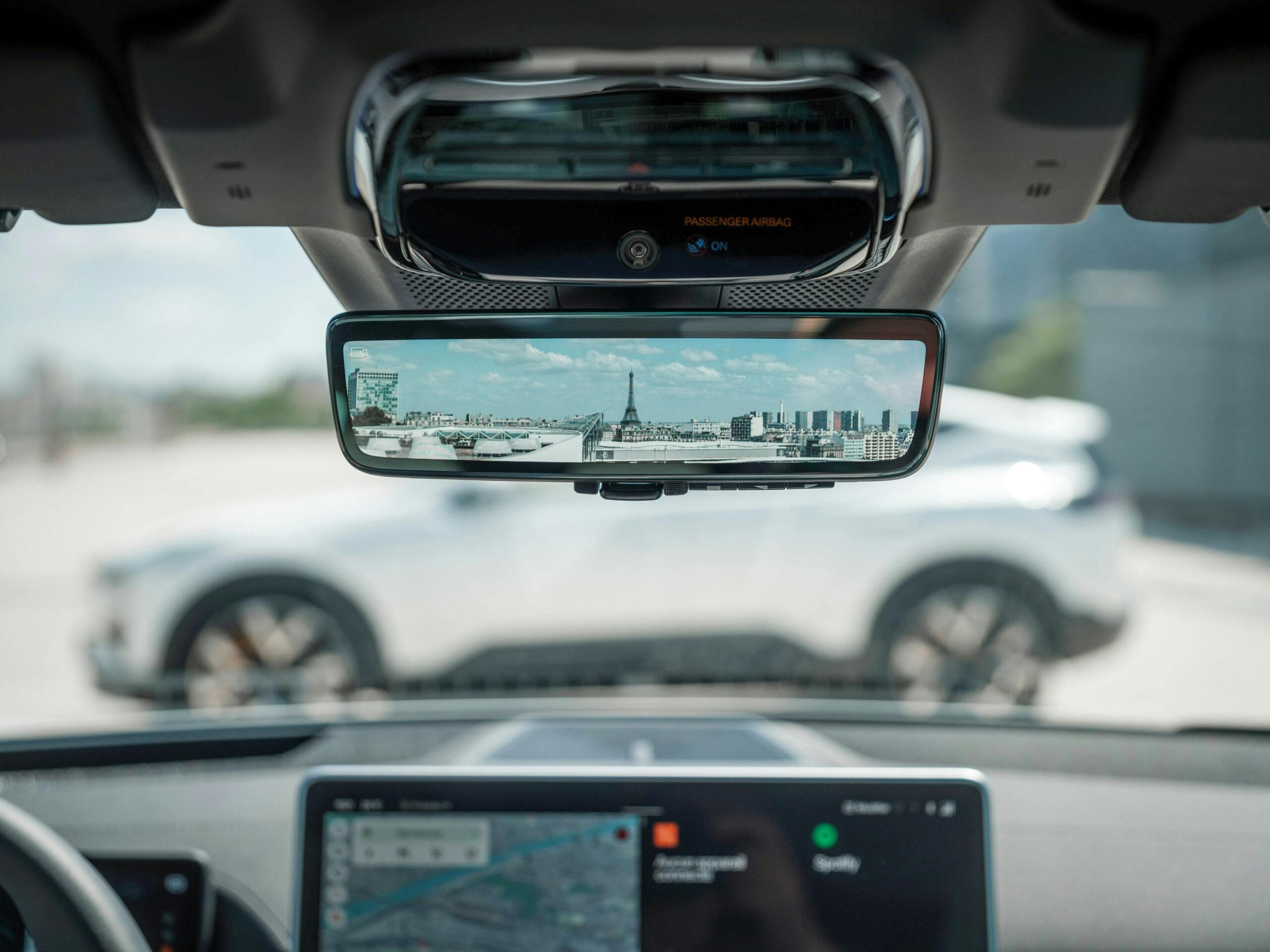
Some of the most interesting automotive innovations do not involve adding another component. Occasionally, progress begins by questioning whether an established feature is necessary in the first place. Swedish electric performance marque Polestar takes this approach with the Polestar 4, which dispenses with the conventional rear window altogether.
The decision is not merely an exercise in unconventional styling. By removing the rear glass, Polestar has been able to rethink the roofline and rear body structure, creating a distinctive silhouette while accommodating the vehicle’s design priorities.
Instead of relying on a conventional rear-view mirror, the Polestar 4 uses a roof-mounted high-definition camera to transmit a live image to a digital rear-view display. The system provides a wider field of vision than a traditional mirror and helps address the obstruction that can occur when passengers or luggage occupy the rear cabin.
Drivers can also switch the display to a conventional mirror view, allowing them to see the rear passengers when required. The arrangement reminds us that advances in cameras and digital interfaces increasingly shape automotive design. Components that were once considered indispensable can be reconsidered when technology offers an alternative way to perform the same function.
Polestar’s decision does come with a learning curve, particularly for drivers accustomed to judging distances through a conventional rear window. Nevertheless, the Polestar 4 illustrates how technology can give designers greater freedom to rethink the architecture of a modern car.
BMW – A More Intuitive Partnership Between Driver And Machine
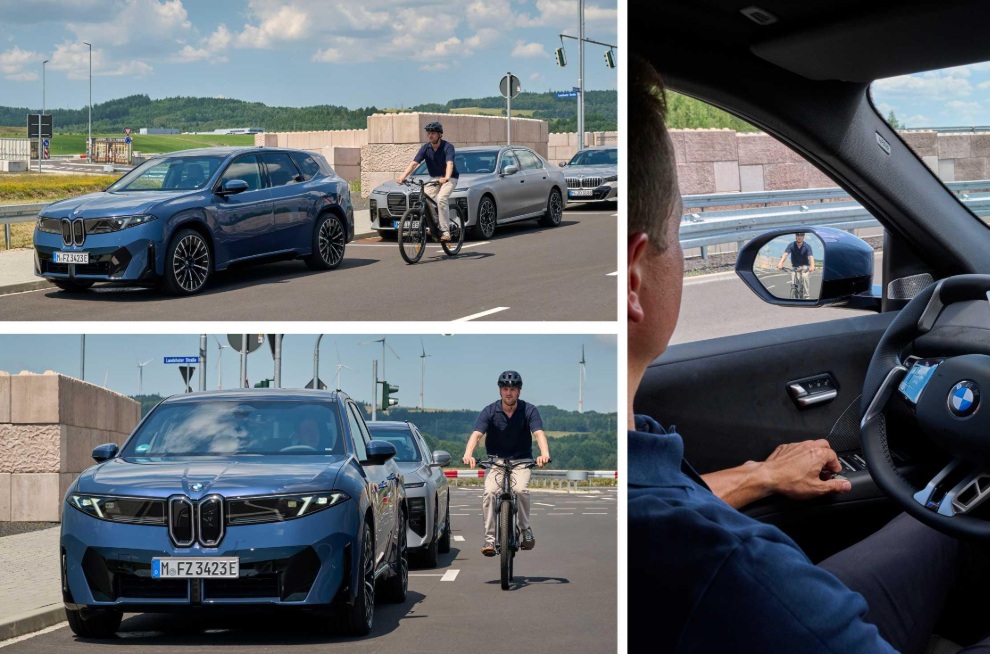
Driver-assistance systems have become increasingly sophisticated, but their effectiveness depends on how naturally they work with the person behind the wheel. BMW is addressing this relationship through Symbiotic Drive, an approach that seeks to make interaction between the driver and vehicle more seamless.
Introduced with the Neue Klasse generation, beginning with the new iX3, the technology lets drivers influence steering, braking, and acceleration while assistance functions remain active. For instance, a driver can make a slight steering adjustment without fully disengaging the system.
This cooperative approach is particularly useful when drivers want to retain control while benefiting from electronic assistance. Rather than constantly switching between manual and assisted driving, the vehicle can respond to the driver’s inputs while continuing to provide support. The wider active safety package also introduces developments designed to prevent accidents. These include an enhanced exit warning function that can actively delay door opening when it detects an approaching cyclist or vehicle, as well as emergency steering interventions that can help guide the car around an obstacle. Behind these functions is a new generation of sensors and computing hardware, supported by BMW’s central high-performance computer.
Importantly, Symbiotic Drive is not autonomous driving. The driver remains responsible for monitoring the road and must be ready to intervene. Its significance lies in creating a more intuitive relationship between human judgement and electronic assistance.
For BMW, the future of driving is not necessarily about removing the driver from the equation. It is about developing technology that understands when to assist and when to leave the driver in control.
Mercedes-Benz – Turning Vehicle Glass Into An Intelligent Interface
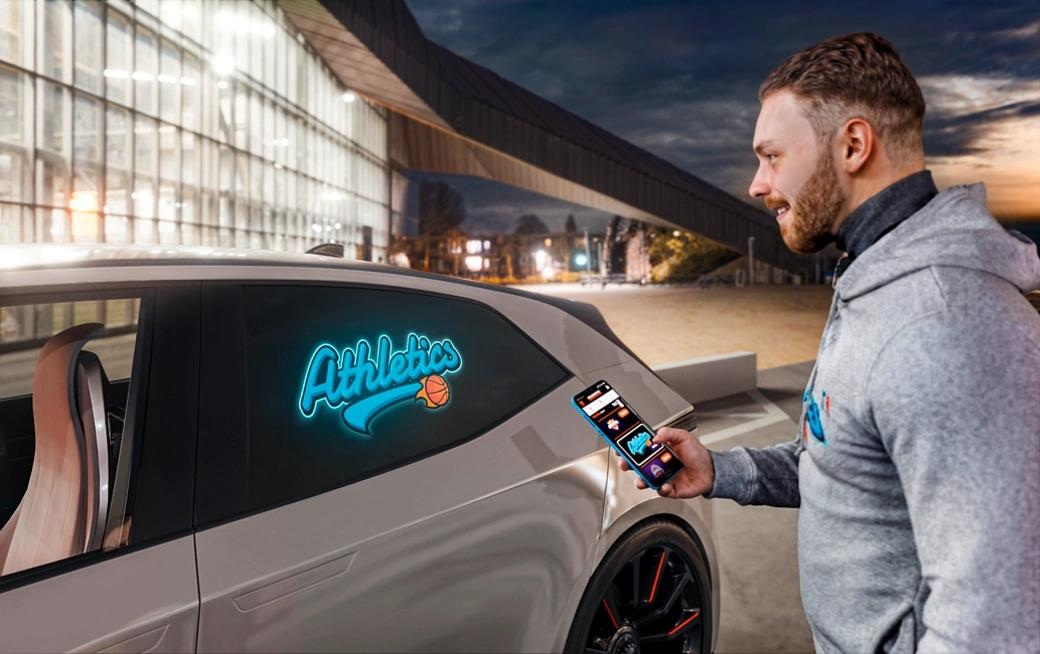
As automotive interiors become increasingly digital, manufacturers are exploring ways to integrate information into the cabin without filling it with conventional screens. Mercedes-Benz is taking this exploration further with two display technologies currently under development: Intelligent Display in Glass and an innovative holographic display.
The first incorporates LED elements directly into vehicle windows. Using mini-LED and micro-LED technologies, selected areas of the glass can display warning signs, safety symbols and traffic-related information when required. The elements remain almost invisible when switched off, preserving the glass’s appearance.
The potential applications extend beyond the cabin. A rear window could, for instance, display warning symbols to alert following motorists, creating another channel for cars to communicate with their surroundings. The second development is a holographic display that turns the windscreen into an information surface. A projector housed in the dashboard directs light towards a transparent film laminated into the windscreen. This film incorporates holographic optical elements that selectively reflect the projected light, making information visible even in bright sunlight.
Mercedes-Benz is also exploring how it can present different information to the driver and front passenger without necessarily making it visible to both. This could open up possibilities for displaying driving information, points of interest and entertainment content within separate viewing zones.
Neither technology is currently a mainstream production feature. Both remain research and development projects, but they offer an intriguing indication of how future vehicle interiors and exterior communication systems could evolve. Rather than treating glass as a passive structural component, Mercedes-Benz is exploring its potential as an intelligent surface that can display information precisely when and where it is needed.
Progress Is Changing What We Expect From A Car
A single technological breakthrough is not defining the next generation of automotive innovation. Instead, it is emerging through a collection of developments that are changing how vehicles perceive their surroundings, communicate with other road users and respond to their occupants. NIO’s sensing architecture and active suspension demonstrate how intelligent engineering can improve both safety and comfort, while Audi and Mercedes-Benz are exploring how lighting and glass can become communication interfaces. BMW, meanwhile, is developing a more intuitive relationship between driver and machine, and Polestar is showing how technology can challenge even the most familiar aspects of automotive design. What these developments share is a willingness to question established conventions. A headlight can become more than a source of illumination, a steering wheel no longer needs a mechanical connection to the road, and a rear window may no longer be essential to visibility. Ultimately, progress in the automobile industry is not simply about adding more technology. It is about making technology work harder, more intelligently, and more intuitively, so the driving experience becomes safer, more comfortable, and more rewarding.
For more on the latest in luxury cars and automotive reads, click here.