The Extraordinary Gemstones Driving High Jewellery Forward
Five extraordinary creations from the world’s leading jewellery houses demonstrate how rare gemstones continue to advance design, craftsmanship and artistic expression.
Exceptional gemstones are driving fresh creative ambition in high jewellery, with leading maisons transforming rare natural materials into increasingly expressive designs. In 2026, exceptional sapphires and emeralds have inspired creations that combine advanced craftsmanship, distinctive colour and historic design codes. Their significance extends beyond carat weight: the stories, origins and creative decisions surrounding these stones increasingly shape their appeal.
The Gemological Institute of America’s reporting from the 2026 Tucson gem shows identified interest in selected fancy-colour sapphires and precision cutting, while documenting differences in supply and demand across the trade. This specialist snapshot offers useful context, rather than evidence of a universal boom in gemstone prices.
Five creations demonstrate different forms of momentum. Graff foregrounds an exceptional Sri Lankan sapphire, Bvlgari explores unusual colour, Cartier and Van Cleef & Arpels reinterpret historic jewellery traditions, and Tiffany & Co. shows how a celebrated diamond can remain culturally relevant across generations.
Graff: An Exceptional Sapphire Takes Centre Stage
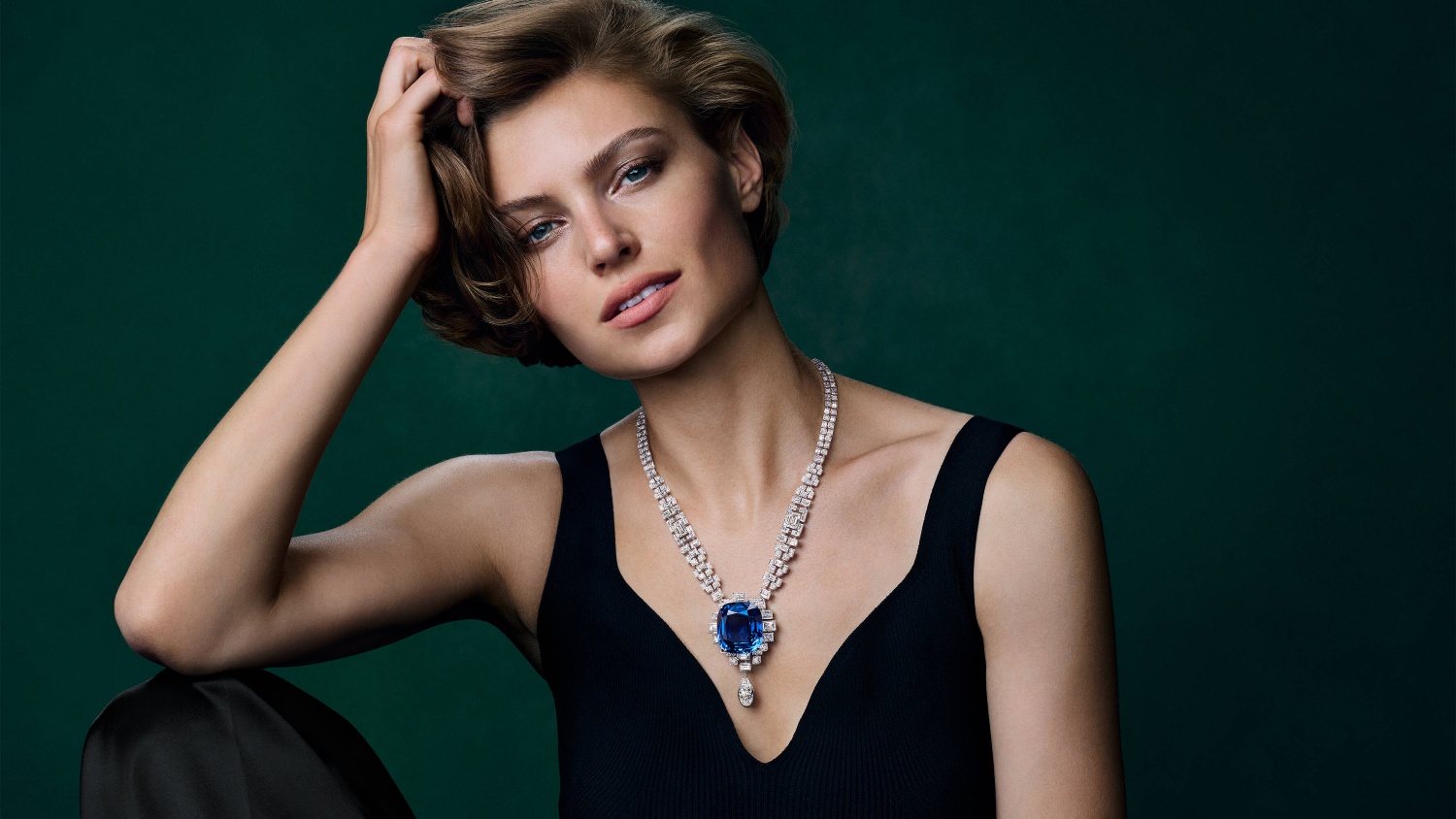
Graff’s September 2026 Art of Colour campaign highlighted a necklace featuring a 118-carat cushion-cut, unheated Sri Lankan sapphire. Its saturated blue colour anchors a composition of more than 54 carats of diamonds, demonstrating the British jeweller’s approach to designing around the natural character of a principal stone.
A three-carat pear-shaped diamond sits above a sunray arrangement of baguette diamonds, creating contrasts of light and scale without competing with the sapphire. The setting calls attention to the rarity of a gemstone of such size and quality that has not undergone heat treatment.
Rather than treating the stone as an interchangeable centrepiece, Graff allows its colour, proportions and presence to guide the design. This approach illustrates how exceptional natural material can create an opportunity for artistic and technical refinement. The necklace featured in the September campaign, although its precise first unveiling date has not been established; it should therefore be regarded as a 2026 campaign highlight rather than a confirmed new launch.
Bvlgari: The Creative Possibilities of Rare Colour
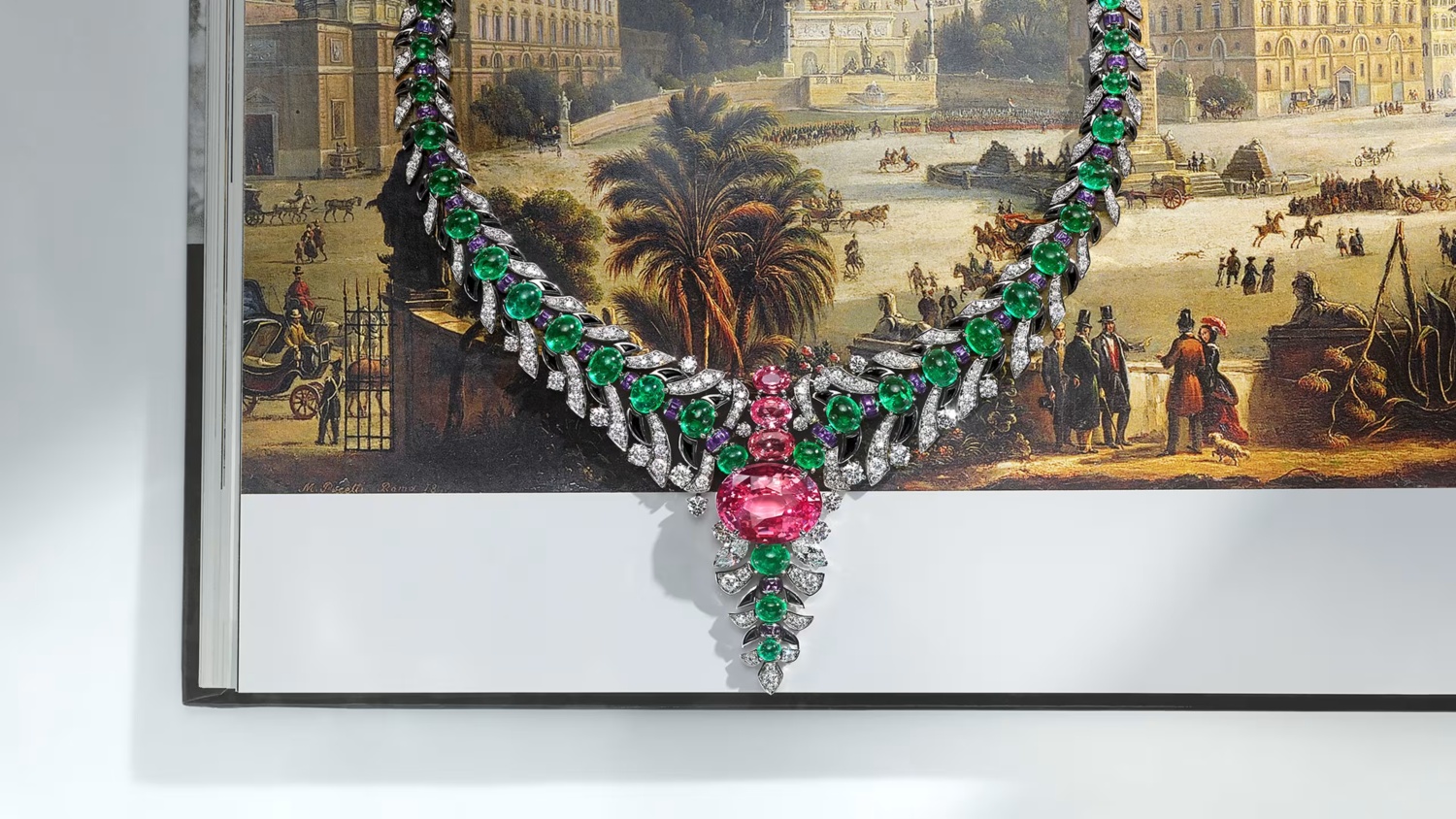
Bvlgari’s Eclettica collection, unveiled in March 2026, connects high jewellery with painting, architecture and sculpture. The Secret Garden necklace centres on a 26.65-carat Sri Lankan Padparadscha sapphire, prized for the delicate interplay of pink and orange that distinguishes this rare sapphire variety.
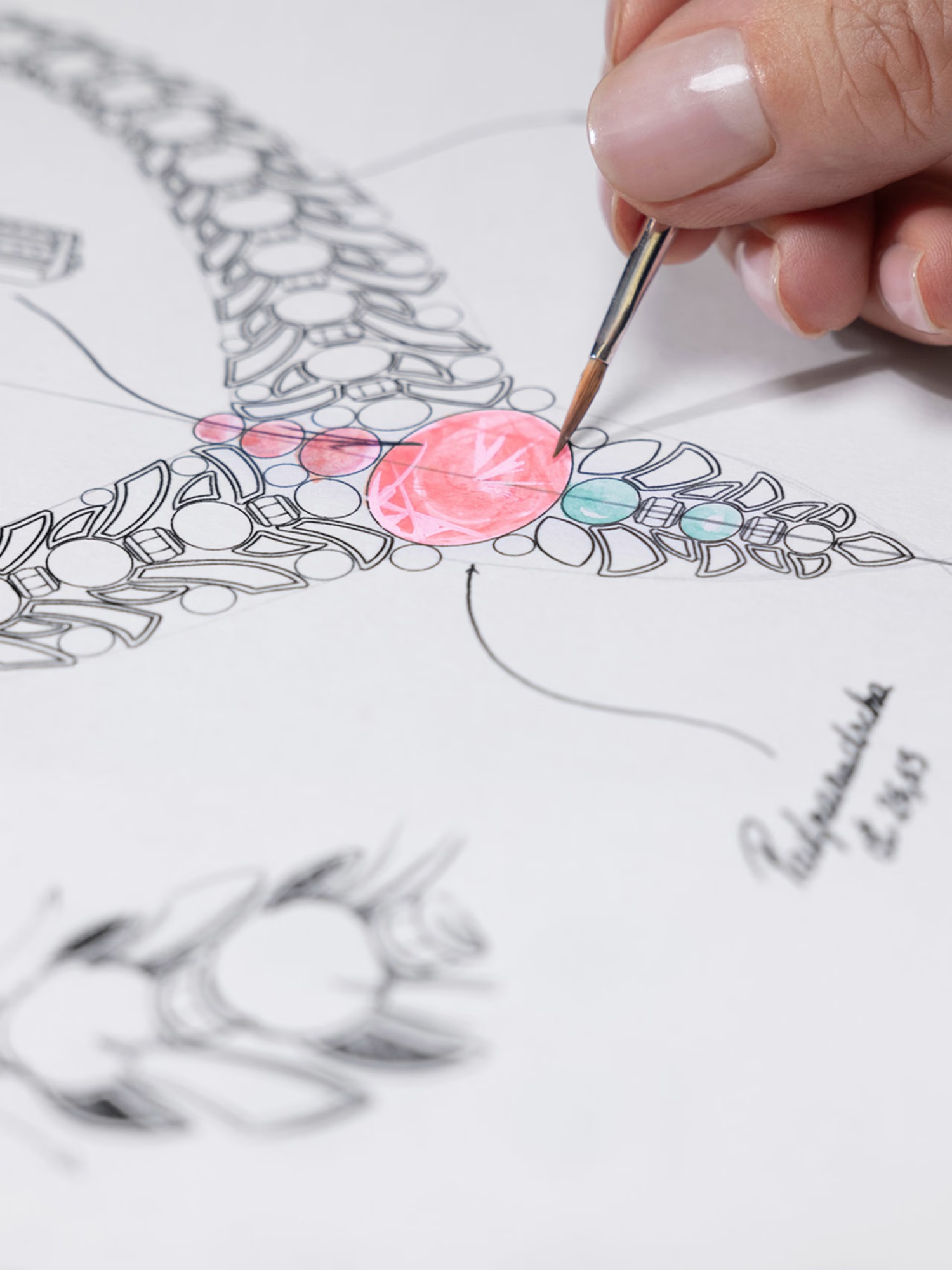
Inspired by Rome’s hidden courtyards at sunset, the design surrounds the central stone with emeralds, purple sapphires, diamonds and onyx. Contrasting colours provide depth and movement, while the composition captures the Roman house’s unmistakably expressive approach to gemstone combinations.
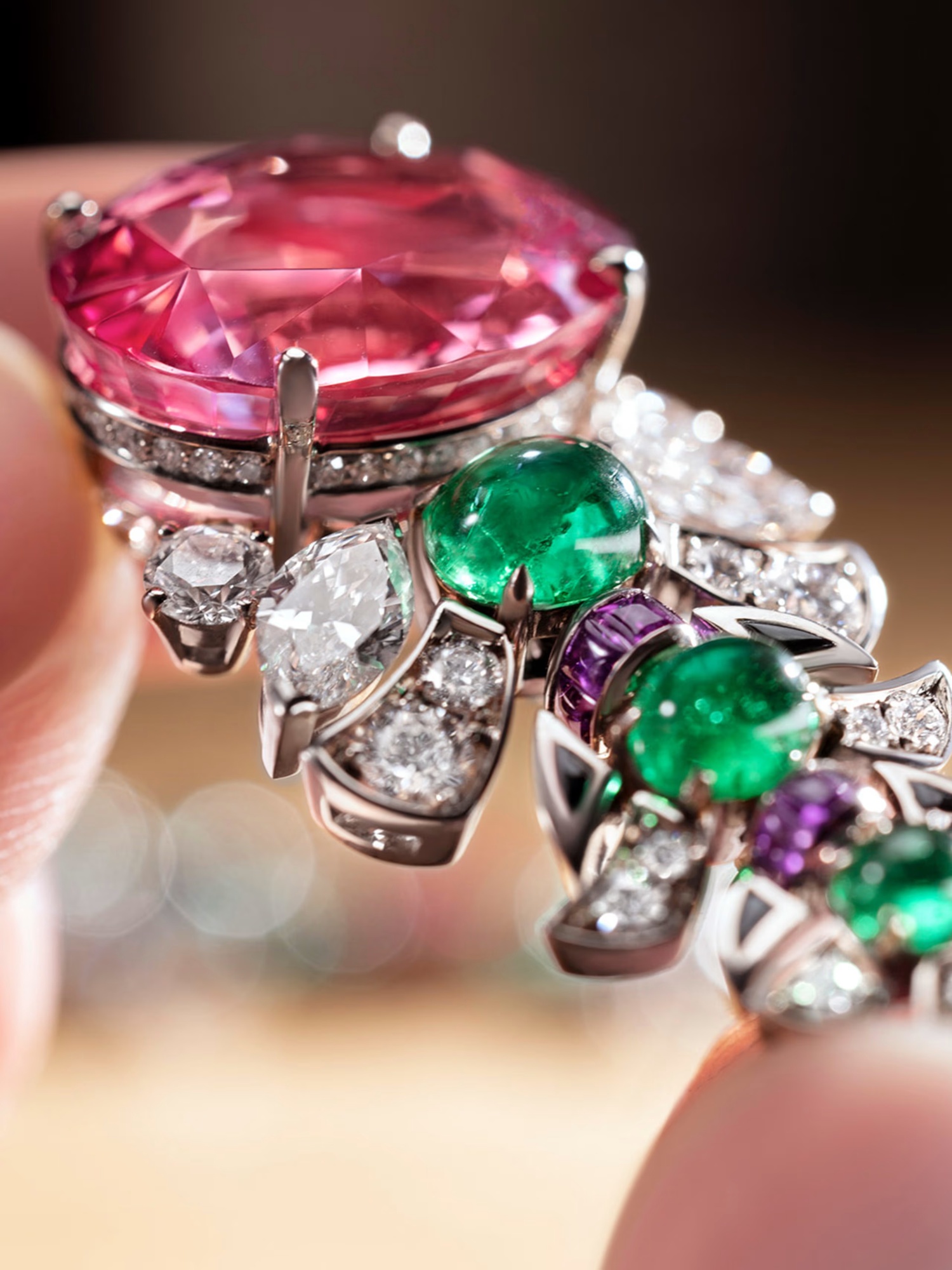
Bvlgari’s Secret Garden necklace centres on a rare 26.65-carat Padparadscha sapphire, surrounded by emeralds, sapphires, onyx and diamonds.
Under jewellery creative director Lucia Silvestri, the stone becomes more than a demonstration of rarity. Its nuanced colour informs the necklace’s artistic language, allowing the maison to build a complete design around a distinctive natural characteristic. The piece belongs to a collection of more than 160 jewellery and watch creations, reflecting Bvlgari’s continuing exploration of colour and unconventional materials.
For collectors, the appeal lies in the meeting of gemological rarity with a recognisable design identity. The result provides a contemporary counterpoint to historic pieces whose significance developed over decades.
Cartier: A Historic Design Language Evolves
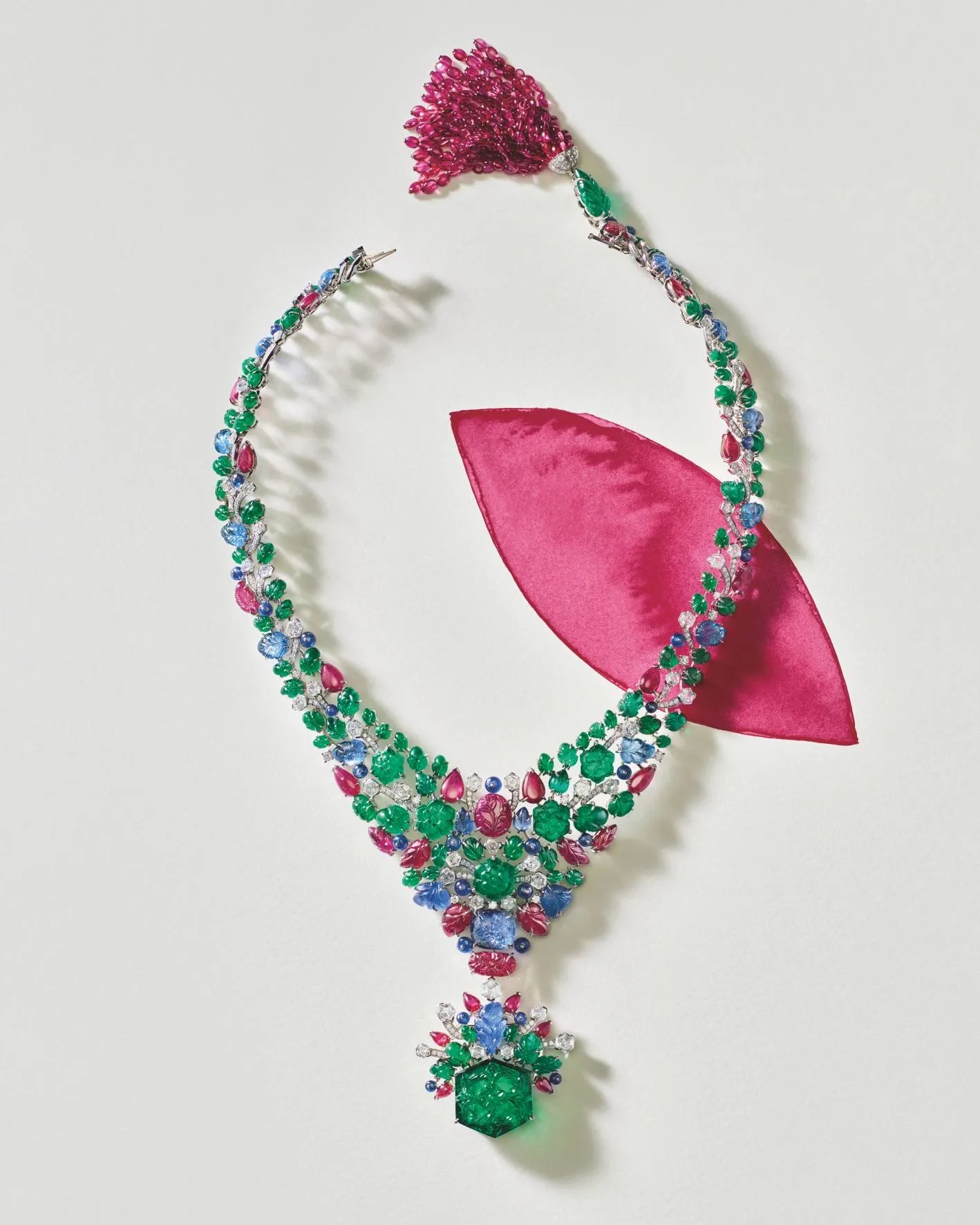
Cartier’s 2026 Le Chœur des Pierres collection explores the expressive possibilities of gemstones through more than 125 unique creations. Among them, the Tutti Kanya necklace features a 30.33-carat engraved Zambian emerald alongside carved rubies, sapphires and emeralds.
Its intricate composition draws on the maison’s Tutti Frutti design language, which emerged in the early twentieth century through colourful carved stones influenced by Indian jewellery traditions. The new creation revisits that vocabulary through contemporary workmanship rather than simply reproducing an archival design.
Floral motifs formed from carved gemstones give the necklace texture and movement. A detachable ruby tassel and a central motif that can also be worn as a brooch introduce versatility, making transformability an integral part of the design. These details place technical construction alongside aesthetic ambition.
The collection reportedly required approximately 85,000 hours of work across Cartier’s designers and artisans. Tutti Kanya shows how the momentum of high jewellery can come from revisiting an established aesthetic and discovering new ways to interpret it, with important coloured stones guiding the process.
Van Cleef & Arpels: Emeralds Reimagine the Past
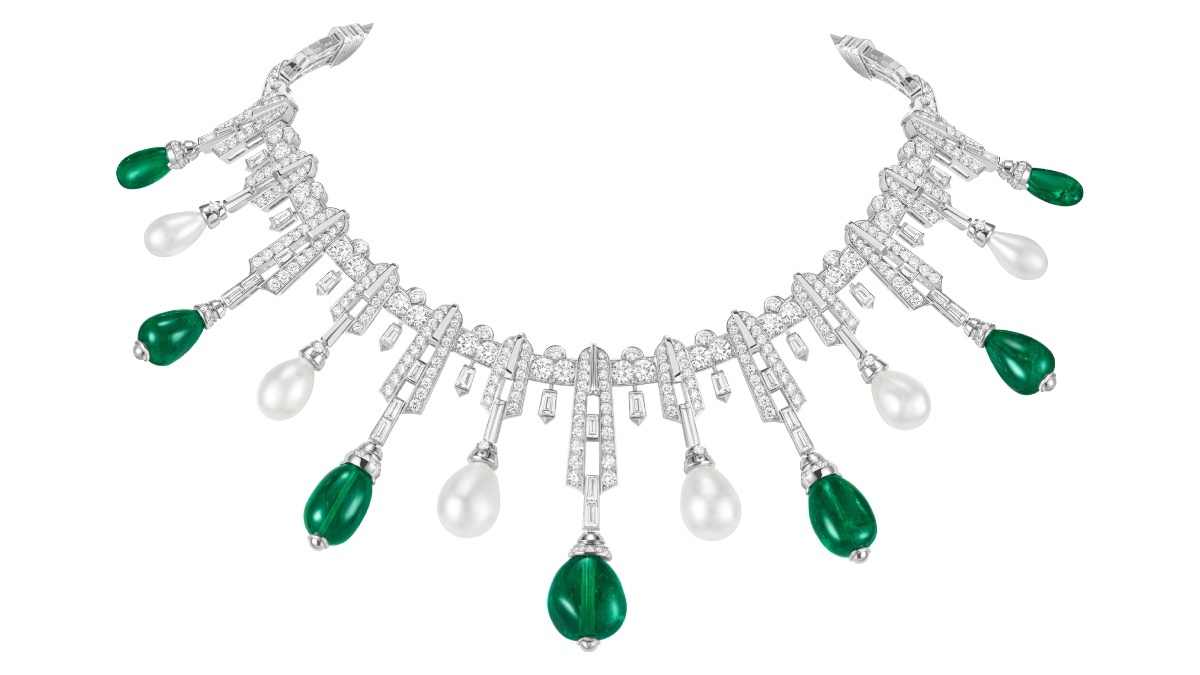
Van Cleef & Arpels looked to ancient Egyptian culture for its Fascinating Egypt high jewellery collection, unveiled in June 2026. The Princesse du Nil necklace, one of its central creations, takes inspiration from a historic emerald-and-diamond collaret associated with Princess Faiza of Egypt.
The contemporary interpretation features ten Colombian emerald drops totalling 107.37 carats, complemented by seven natural white pearls weighing approximately 85.13 carats. White gold, platinum and yellow gold bring the stones together in a composition that reflects the maison’s long engagement with history and ornament.
Developed as part of a collection of 180 creations over four years, the necklace transforms an archival reference into a present-day expression of high jewellery. Its importance lies in the relationship between research, gemstone selection and the decisions required to reinterpret a historic silhouette.
Unlike a simple recreation, the piece draws on an earlier design while allowing extraordinary emeralds and pearls to shape its current form. It demonstrates how jewellery heritage can remain a source of contemporary creative momentum, connecting cultural memory with the skill of present-day artisans.
Tiffany & Co.: The Continuing Life of a Historic Diamond
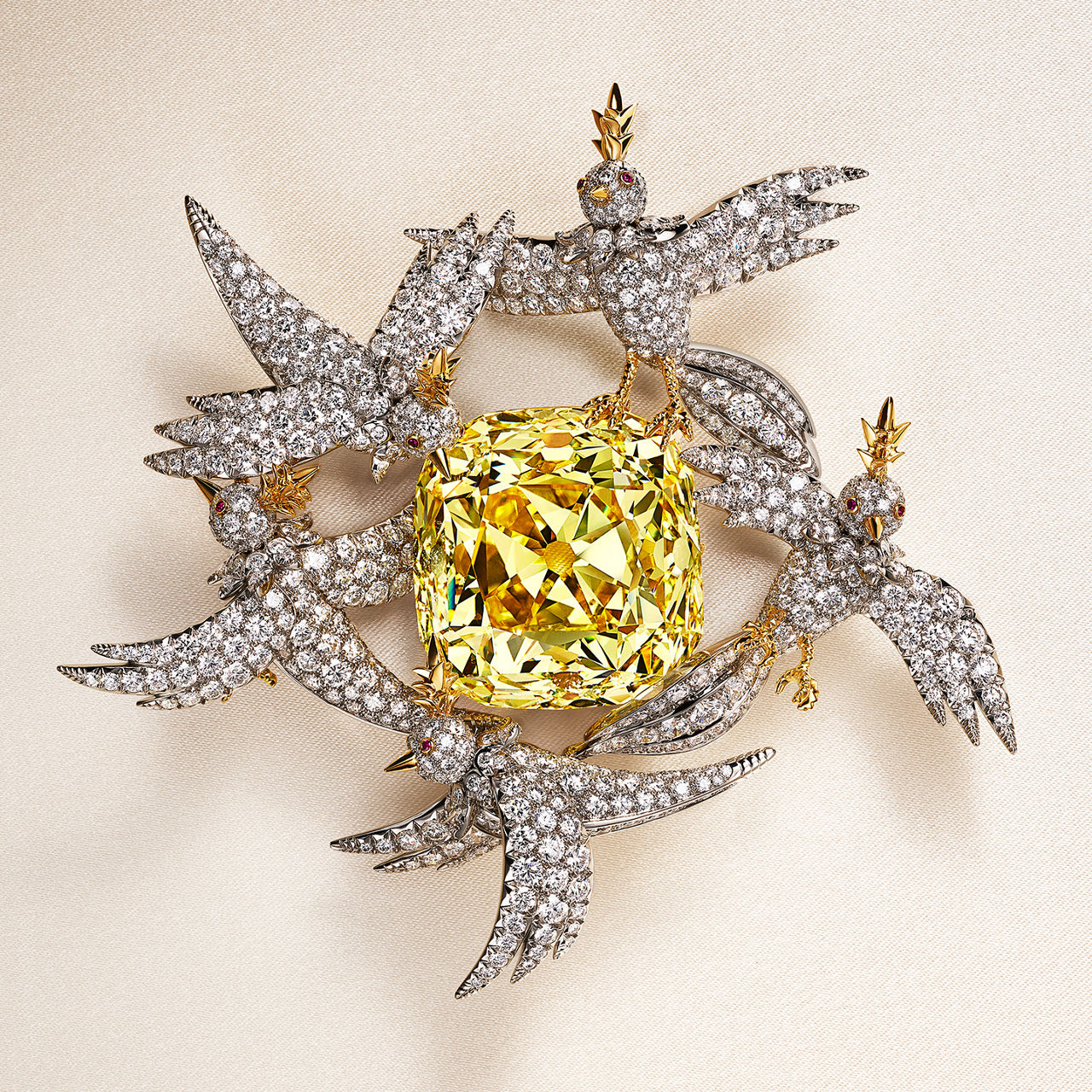
Contemporary launches offer one perspective on innovation; the Tiffany Yellow Diamond shows how an existing gemstone can acquire new cultural meaning. Discovered in South Africa in 1877 and acquired by Charles Lewis Tiffany the following year, the 287.42-carat rough was cut into a 128.54-carat cushion-shaped brilliant.
The diamond’s appearances have contributed to its enduring recognition. Audrey Hepburn wore it for Breakfast at Tiffany’s promotional photographs, Lady Gaga at the 2019 Academy Awards and Beyoncé in the maison’s 2021 About Love campaign.
In 2023, Tiffany unveiled a Bird on a Rock-inspired setting to mark the reopening of its Fifth Avenue flagship, The Landmark. Requiring nearly 2,000 hours of craftsmanship, it allows the diamond to be worn as a pendant or brooch.
The gemstone is not a 2026 launch, but its inclusion provides historical perspective. Successive settings and appearances have kept a nineteenth-century discovery connected to contemporary culture, illustrating a different form of momentum: the renewal of an established legacy.

The Momentum Behind Exceptional Gemstones
These five creations reveal that high jewellery’s progress takes several forms. Rare stones can inspire entirely new designs, while historic motifs and celebrated treasures gain fresh significance through technical ingenuity and reinterpretation.
For collectors, provenance, craftsmanship and cultural context can be as compelling as colour and carat weight. Their importance also demands discernment: each gemstone’s quality and history must be assessed on its own merits, beyond the prominence of the maison presenting it.
High jewellery’s momentum ultimately rests on more than the discovery of remarkable stones. It lies in the ability to transform them into creations whose stories continue to evolve long after their unveiling.Exceptional gemstones are attracting renewed attention within the world of high jewellery, as collectors place growing importance on rarity, provenance and historical significance. According to Christie’s – one of the world’s leading auction houses founded in London, demand for coloured gemstones surged in 2026, particularly for emeralds, rubies and sapphires, with Asia and the Middle East expected to drive further interest in 2026. Alongside this growing demand, historic creations and exceptional stones with distinguished provenance continue to command attention among collectors.
For the world’s most prestigious jewellery houses, this growing interest reinforces the significance of gemstones that have shaped their identities across generations. Their remarkable characteristics, craftsmanship and distinguished provenance have established milestones that continue to influence each maison’s legacy. Through cultural reinterpretations, historic acquisitions and renewed collector attention, these creations continue to acquire further significance.
For more on the latest in luxury jewellery reads, click here.