The New Connoisseur’s Suit Is Made for the Individual
As menswear eases on formality codes and greater individuality, made-to-measure is finding new relevance beyond the traditional business suit.
The suit is returning to menswear at precisely the moment when fewer men are required to wear one. Across 2026 collections, tailoring has moved away from the rigid corporate uniform towards what buyers have described as a “new formality”: relaxed double-breasted jackets, softly structured silhouettes, pleated trousers and fabrics chosen as much for comfort as appearance. The result feels polished without appearing prescribed.
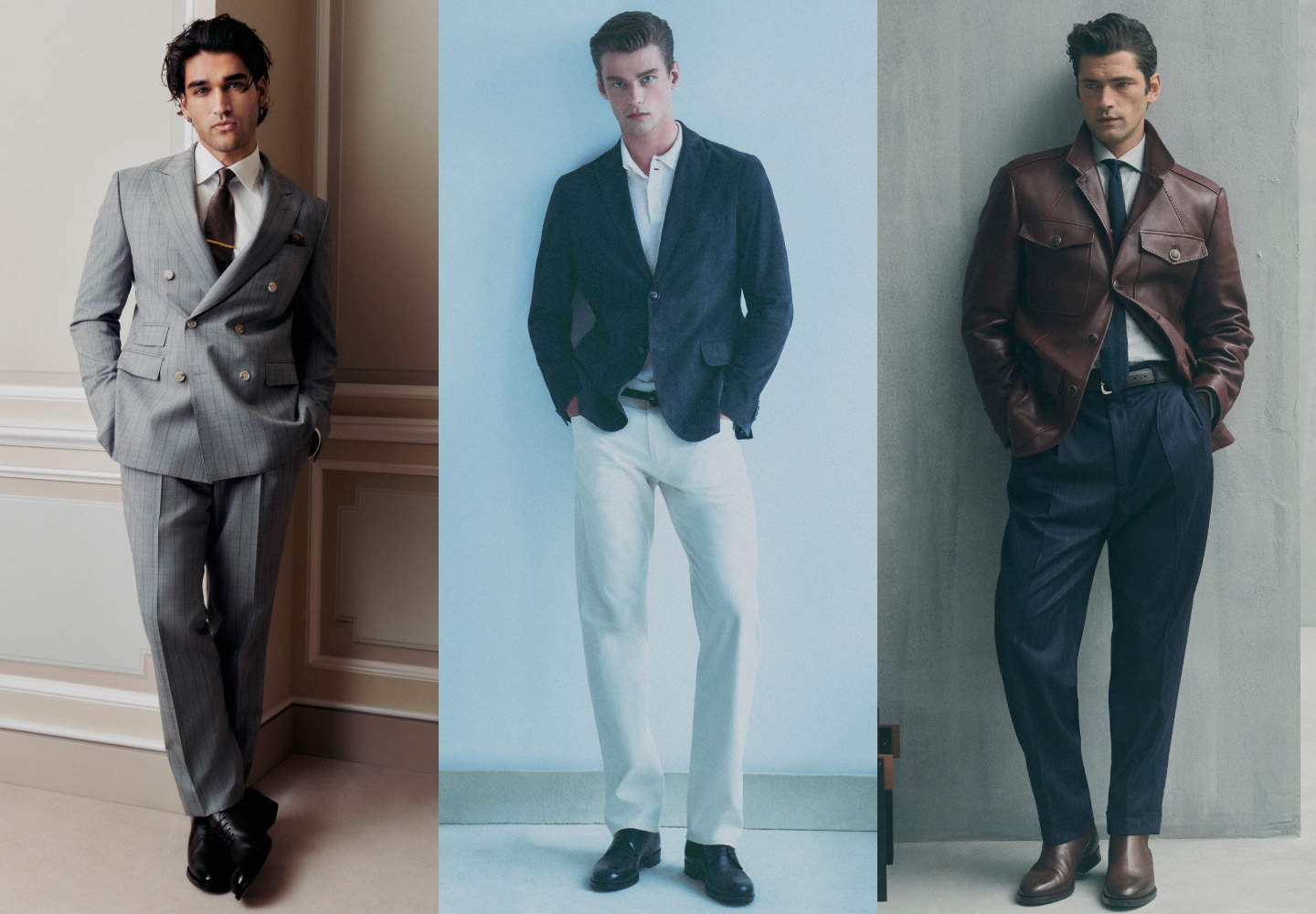
This shift gives made-to-measure renewed relevance. When dress codes dictated how a suit should look, tailoring largely revolved around achieving the correct fit within established conventions. Today, the more interesting question is how tailoring should fit the person wearing it — his proportions, lifestyle, climate and increasingly individual approach to dressing.
BOSS, Giorgio Armani and Brunello Cucinelli approach the answer differently, yet all three point towards a contemporary idea of sartorial connoisseurship. The modern client is choosing more than measurements. He is deciding how formal a jacket should feel, how trousers should fall, which cloth suits his life and where tailoring belongs within the rest of his wardrobe.

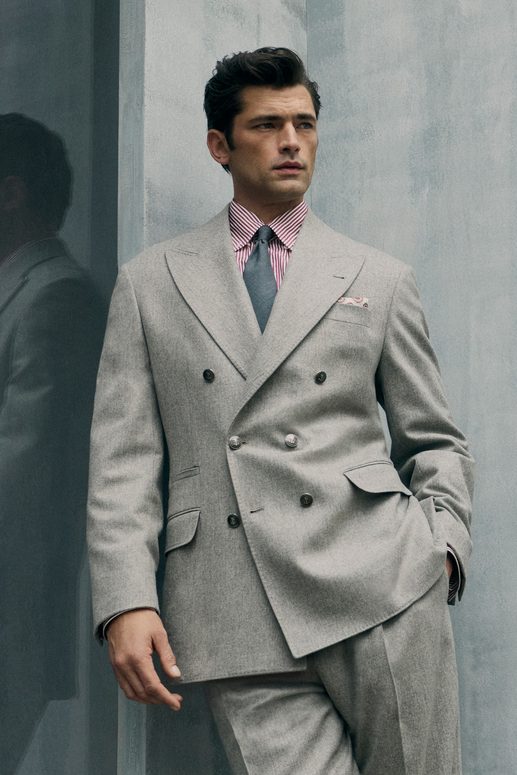
Images courtesy of Giorgio Armani & Brunello Cucinelli.
The Suit After the Dress Code
Made-to-measure traditionally promised something ready-to-wear could struggle to provide: a garment adjusted closely to the individual. Fit remains fundamental, but greater freedom in menswear has made proportion equally important.
A relaxed jacket still needs the right shoulder. Fuller trousers depend on the relationship between rise, volume and length. A double-breasted suit can look authoritative or easy-going depending on its construction, fabric and styling.
This is where personalisation becomes more meaningful than simply selecting a lining or button. BOSS Made to Measure, for example, begins with individual measurements before allowing clients to choose among fabrics, silhouettes and finishing details. The service is explicitly conceived around different occasions and wardrobe needs, from business tailoring to special-event dressing and more versatile everyday pieces. In Singapore, dedicated appointments are offered at its Marina Bay Sands and Takashimaya stores.
The underlying proposition is increasingly relevant: the suit should accommodate the wearer rather than require the wearer to conform to the suit.


Images courtesy of Giorgio Armani.
Giorgio Armani: When Ease Becomes Expertise
Few designers have been as closely associated with dismantling the stiffness of traditional menswear as Giorgio Armani. The house describes its approach as one that redefined modern tailoring around elegance and comfort, while its Made to Measure service translates that philosophy into choices spanning silhouette, lapels, pockets, buttons, trouser construction and fabric.
For a connoisseur, however, the more revealing details are often the least visible. Armani’s made-to-measure jackets can incorporate a natural canvas of horsehair and goat’s hair beneath the surface. Interfacings are stitched to preserve the lightness and fluidity associated with the house, while natural materials help the garment recover after travel or exposure to rain. Fabric options extend from familiar Prince of Wales checks and herringbones to vicuña and exceptionally fine wools, alongside traceable and certified materials.
These choices illustrate why understanding tailoring requires more than recognising a famous cloth. The lightest fabric is not automatically the best, and the most expensive fibre may be inappropriate for the intended use. Construction, climate and movement matter alongside rarity.
Sophistication lies in knowing why something has been chosen.
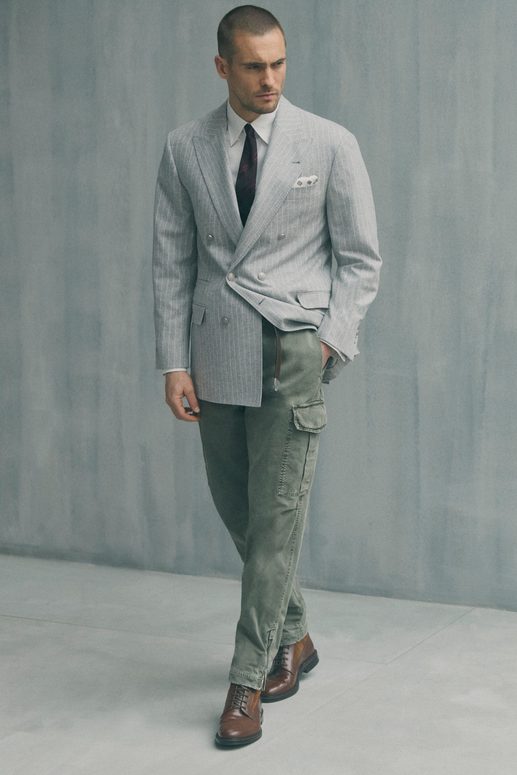
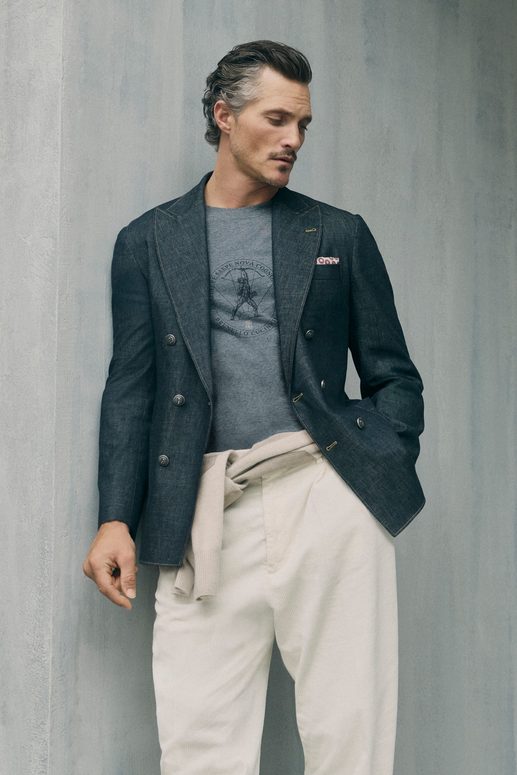
Images courtesy of Brunello Cucinelli.
Brunello Cucinelli: Tailoring Learns to Live Casually
Brunello Cucinelli pushes the same conversation towards an even more relaxed idea of sartorial dressing. Its Sartoria Solomeo service describes the suit as a meeting of traditional tailoring and contemporary personal elegance, with the current collection spanning tailored jackets, leisure suits, Prince of Wales tailoring and eveningwear.
The important word is versatility.
A contemporary tailored jacket may be worn with matching trousers, but it might just as easily sit over fine knitwear or accompany denim and more casual separates. Current menswear has increasingly blurred the line between tailored and informal wardrobes, making the suit less of a uniform and more of a flexible component within a broader wardrobe.
This changes what the client should demand from made-to-measure. A jacket intended only for the boardroom can afford to communicate formality immediately. One expected to work across lunch, travel, dinner and less formal occasions needs subtler construction and a fabric capable of adapting to different combinations.
For the Southeast Asian wearer, climate introduces another layer. Breathable cloth, weight, lining and construction can matter as much as pattern or colour. A beautifully tailored jacket that feels impractical in Singapore’s heat has solved only half the problem.
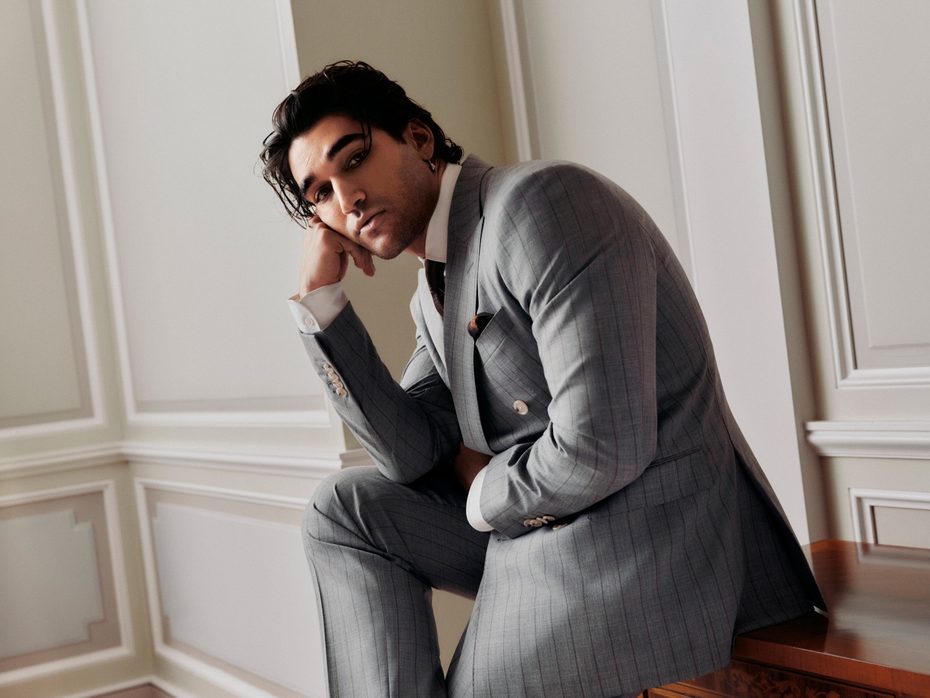
BOSS: Building a Wardrobe Rather Than a Suit
BOSS makes perhaps the most direct case for treating made-to-measure as wardrobe building. Its service extends beyond a single commission, with specialists helping clients consider fit, fabric, construction and finishing alongside how individual pieces will function across their existing wardrobes.
This approach reflects the way many men now dress. A navy jacket need not remain attached permanently to its matching trousers. An evening piece may work with simpler separates, while different weights and textures can create seasonal variation without requiring an entirely new sartorial identity.
Personalisation therefore becomes an exercise in editing. The objective is not to choose every available option simply because it exists. A considered wardrobe depends on knowing which details materially improve fit, versatility or character — and which merely add decoration.

The Connoisseur Knows Proportion
The distinction between customisation and connoisseurship ultimately comes down to judgement. Made-to-measure offers choice; expertise determines which choices are worth making.
A knowledgeable client gradually learns why a higher trouser rise can change the apparent length of the leg, why shoulder construction influences posture, why jacket length affects proportion and why fabric weight can determine whether a garment drapes elegantly or fights the body.
The same principle applies to personal style. More formal does not automatically mean more sophisticated. More expensive cloth does not guarantee a better suit, and greater customisation does not inevitably produce greater elegance. The modern made-to-measure experience works best as a dialogue between the client’s preferences and the specialist’s judgement.
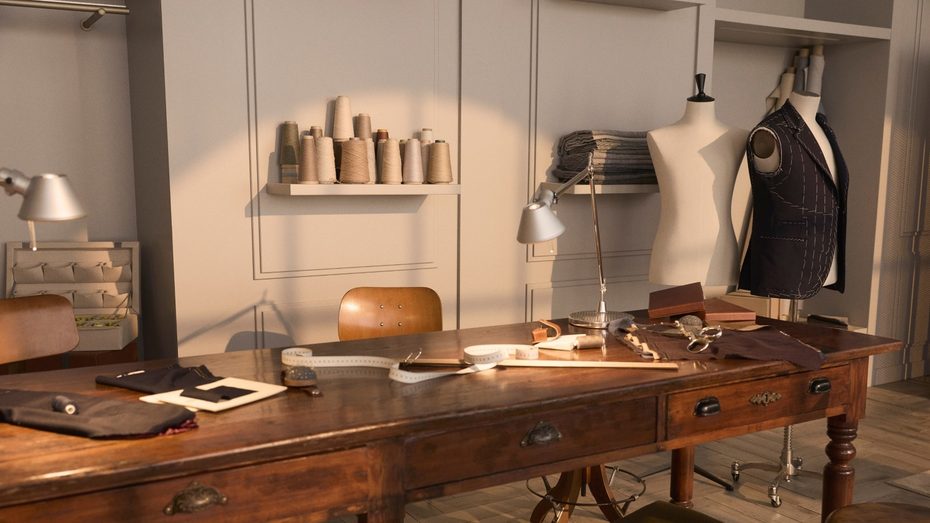
A New Language of Tailoring
The renewed interest in tailoring represents something more interesting than a return to formality. Menswear is dressing up again, but with fewer fixed rules. The suit can be softer, more expressive and more adaptable because its wearer increasingly chooses it rather than submits to it.
For BOSS, Giorgio Armani and Brunello Cucinelli, made-to-measure provides the mechanism for navigating that freedom: measurements establish fit, craftsmanship determines performance and personal judgement decides how the finished garment belongs within a life.
The return of tailoring is not a return to the old uniform. Its appeal lies in understanding the rules well enough to make them personal.
For more on the latest in luxury fashion and style reads, click here.