Buoyant Heavyweights
The ubiquitous use of titanium and carbon fibre does not satisfy a growing number of watch lovers; the indisputable rise of quiet design vexes them. The recent release of hefty and heavy timepieces, especially in the dive watch segment, proves that some just like it big
With decreasing diameters being all the rage, it might be easy to forget there is another sort of watch consumer out there: the very special kind who seems to be swimming against the tide and loving it. Their idea of comfort is not to care about comfort at all. Their notion of relevance is that a watch should be large. Their conception of an everyday-wear timepiece is that it does not matter if it gives them tennis elbow or any other sort of joint pain. They like it big, heavy and obvious. Take that, all of you quiet luxury advocates, classics lovers and stealth wealth proponents. And remember it takes different strokes to move the world.

Not for nothing, the incremental shrinkage of wristwatches goes quite against what one very important market wants. Can you guess which one it is? Well, yes obviously it is Singapore…ok it is actually the United States, which is now back on its throne as the most important market for Swiss watchmakers. With China and Hong Kong offering tepid desire, relative to the formerly insatiable appetite of the 2010s, the purveyors of luxury may well be looking diversify their way out of a growth dilemma.
We think of dive watches as being relevant for serious undersea activity, as seen here with explorer Ghislain Bardout during the Under the Pole III expedition. Where do gold variants fit in?
This might be why there is no such thing anymore as a reigning trend in watches. Ours is a time of niches, micro-segments and of said diversity. One of those is defined by the appreciation of a heavyweight timepiece – one whose price recommends itself to its owner by way of its load. This has long been the attraction of platinum, whose density makes it 40% heavier than 18K gold. As watchmaking keeps enjoying tremendous success in its top 0.1% price points, massive watches with eye-watering sticker prices keep emerging. They contradict the zeitgeist, which celebrates the overinflated technical nature of titanium and praises carbon fibre as a material of the future even though it has been around for decades.
Old Habits
More than a mere reflection of a few models’ intrinsic qualities, the matter of weight and heft sheds light on what makes a timepiece desirable. It may be rarity, as illustrated by the now defunct speculative craze over every single wrist worn item. It may be brand appeal, which is now proving to be a more mixed basket than one might have believed a year ago, when everything just sold.
The only item on a shopping list that does not wax and wane with the times, the wind and financial markets is design, which comprises both appearance and ergonomics. In that respect, heavyweight timepieces have a lot to tell us about what we believe to be relevant. If you listen to the watch world pundits, and especially in Southeast Asia, what you hear is that the right size for a watch is 40mm, on average.
And that the perfect one is 38mm. Obviously, the same experts are likewise disdainful of watches that are more than 12mm thick – although exceptions are surely to be had here, especially when it comes to dive watches. As an aside, fixating on watch diameters betrays a certain shallowness because watches are three-dimensional objects. Besides, how a watch wears depends on all its dimensions as well as the lug-to-lug length and the form of said lugs. Crowing about smaller watch sizes representing a return to rationality is laughable.
Die Hard
The watches in this article are a stark rebuke of the aforementioned prejudiced truths that we neatly skewered above. There is room and appetite and desire for watches that are ostentatiously large or thick or heavy or technical…or some combination of these features.
One of the virtues of the big watch, once talked to death in pages of magazines like this one, is to be visible from 10 meters away, both horizontally, on land and vertically, underwater. Because these are enduring factors of wealth display, an underlying and ever-potent motivation in the purchase of a timepiece.
The fact that some have gained knowledge and culture and have moved to the sleeker and more contemporary kind of luxury that trends designate as relevant does not mean buyers, enthusiasts and collectors have given up on making a splash. Preferably one of cannonball proportions.
Tremendous
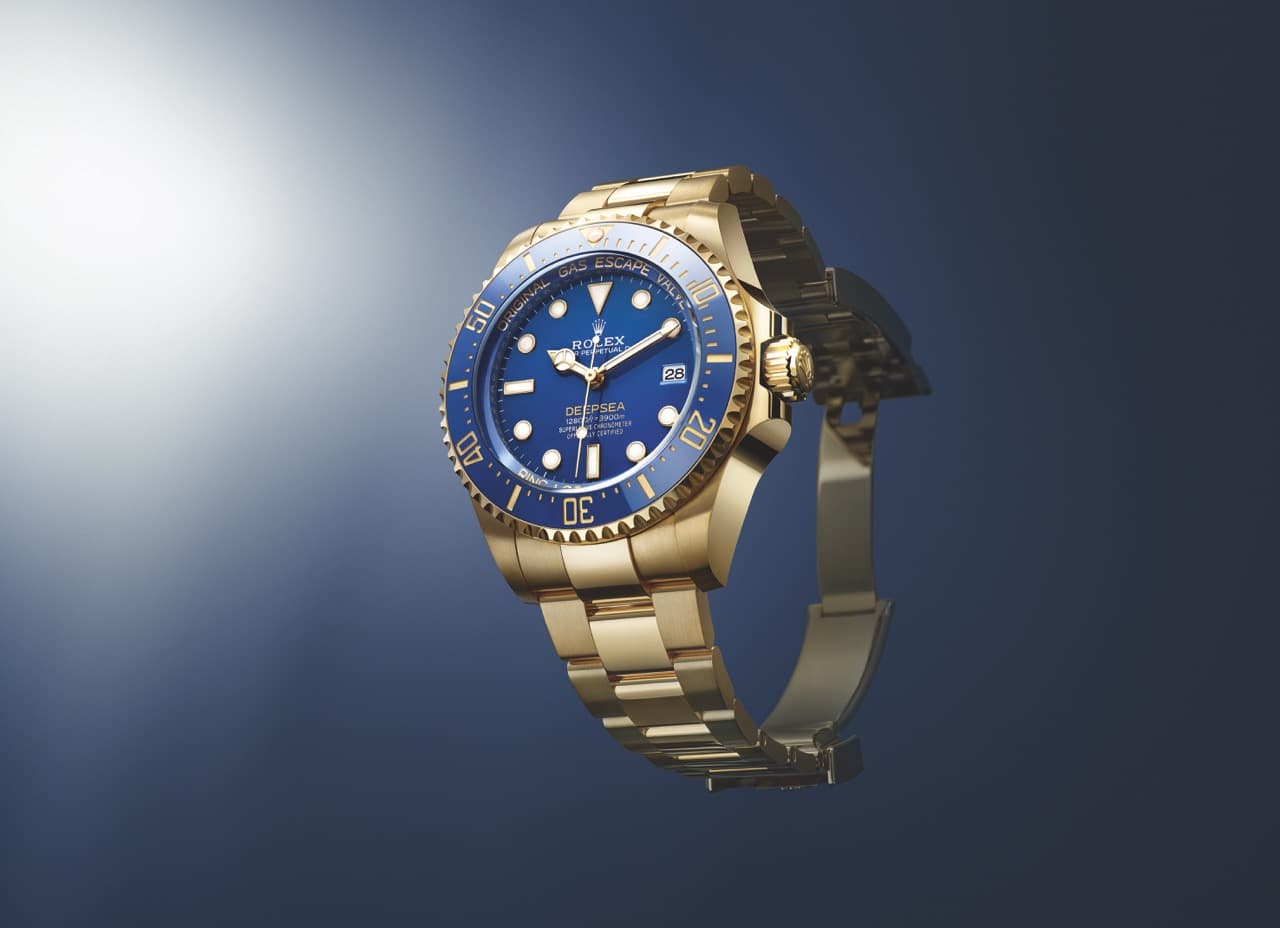
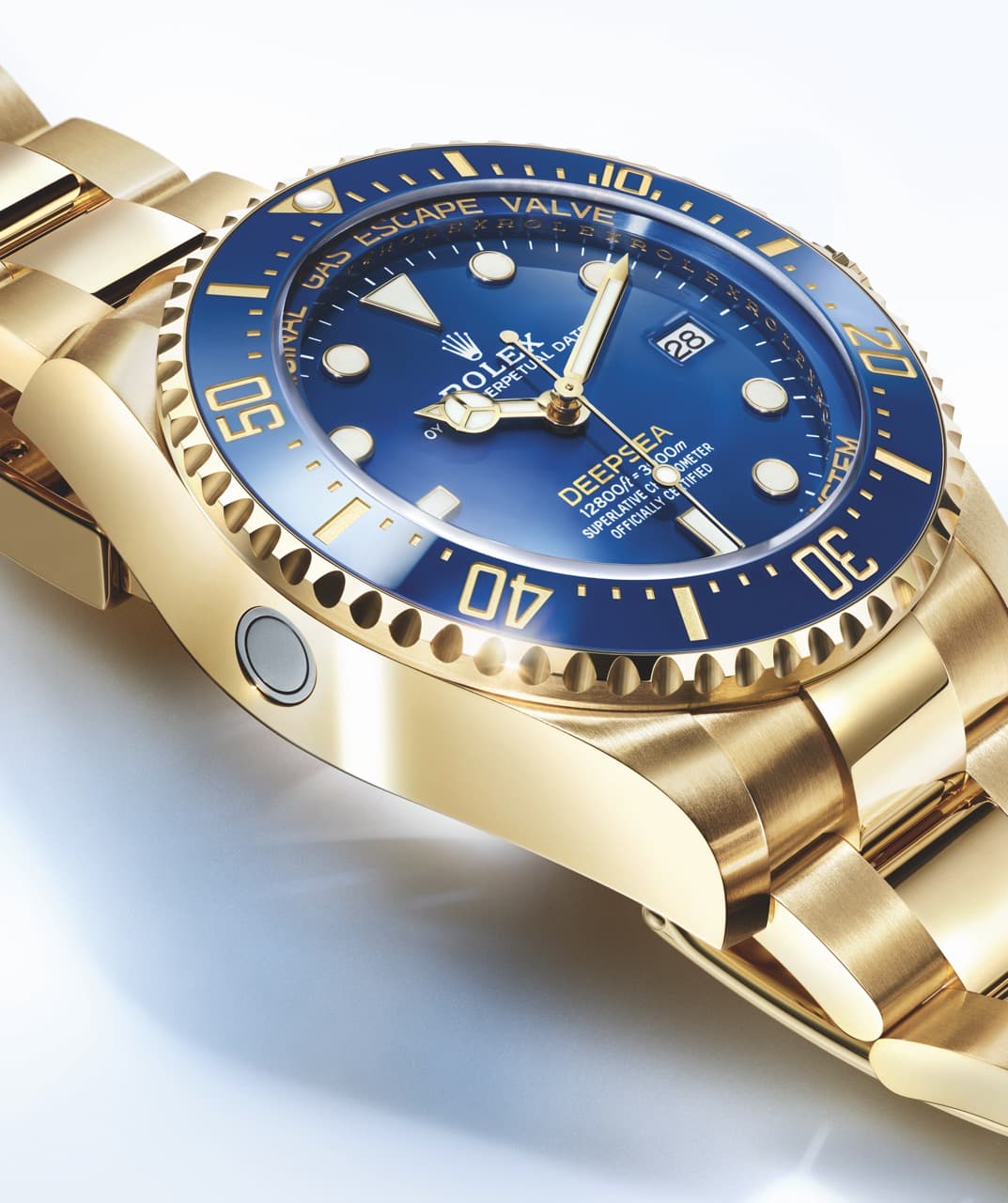
It must have come as a surprise that the cover of The Rolex Magazine Edition 12, the yearly corporate publication of the jolly green Geneva giant, should feature the ref. 136668LB, an Oyster Perpetual Deepsea entirely made of yellow gold. Let us spoil the surprise: it weighs 320 grams, which probably comes as no surprise. It is a tremendous figure and get this, it could have been even more so.
Its caseback is made of titanium as per the Ringlock construction guidelines. A matching yellow gold back would have brought it closer to 350. Bear in mind that a regular 40-something-mm, full steel watch, of which we most likely all own at last one, weighs in the vicinity of 120 grams.
This 44mm wide, 3,900-meter deep diver is almost three times that. It is by any measure a massive watch, even when done in steel or titanium for that matter. In full-yellow-gold-attire, it is beyond measure. But it makes total sense for Rolex to offer it.
The Submariner was done in full gold as early as 1969. Contrary to popular belief, the precious material is very much who Rolex is, across the board and across time. Another historical piece of trivia factors in here: Rolex heavily relies on the aforementioned US market, where big and strong customers are more numerous and prosperous than anywhere else in the world. So if you are 6’5” and weigh 230 pounds, are you going to wear a Calatrava ? Or a 17.7mm thick gold Rolex?

Immense
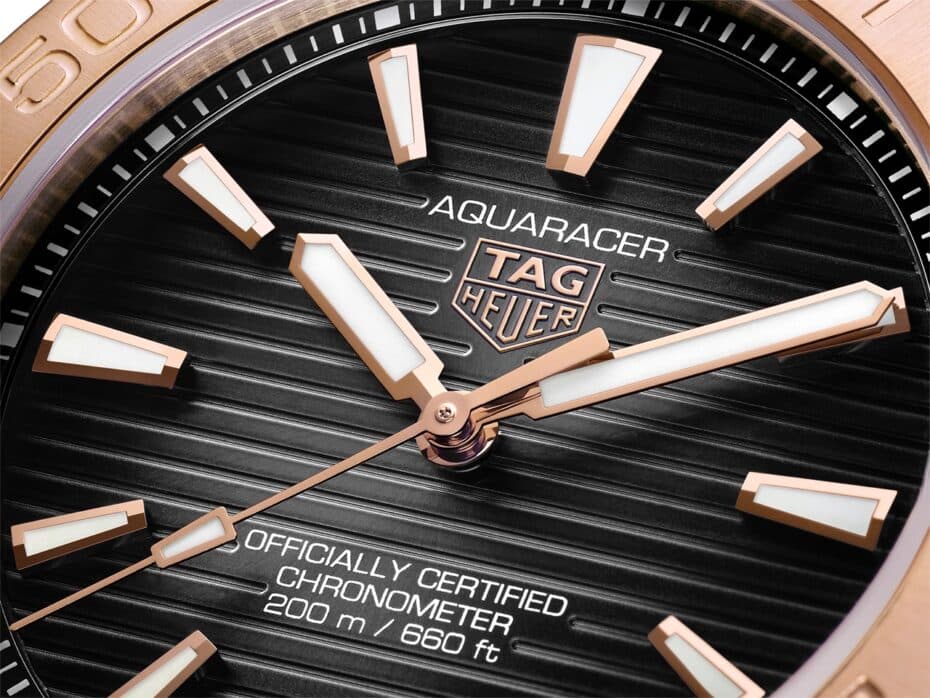
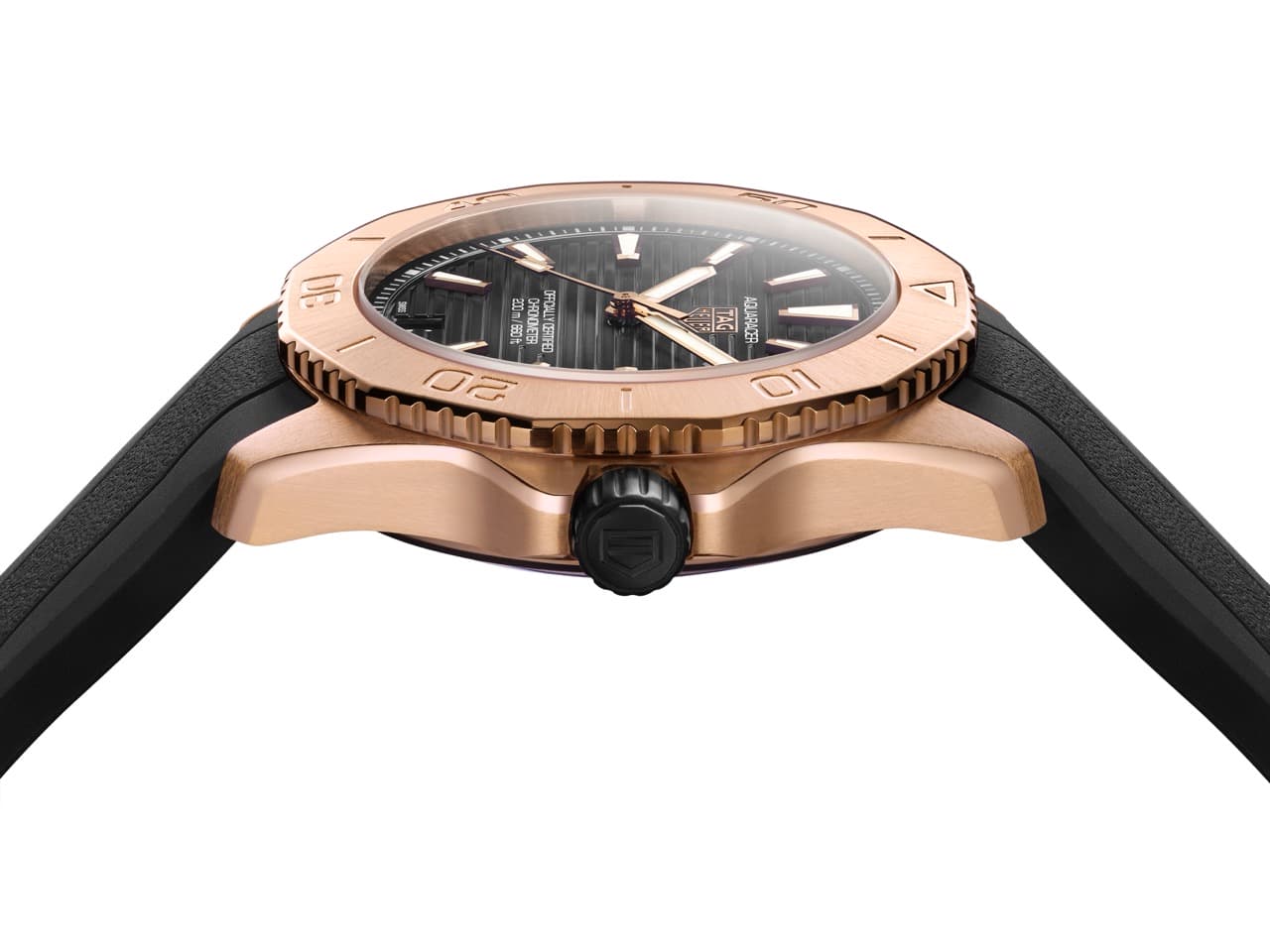
The same could not be said of Breitling. Forever positioned as a tool watch maker, its go-to material is steel, as it should be. For this story, we originally settled on the recently introduced Breitling perpetual calendar, but that watch wound up in a different story. It also felt a bit sly and unfair to Breitling, which does have a proper dive watch range (two in fact) and there are gold options here. Thus, we bring the TAG Heuer Aquaracer in yellow gold into this piece because it is the dive watch that got us looking into heavyweight divers in the first place. This is easily the most diminutive watch here and the absence of a bracelet means it is certainly the lightest – not at all the point.
If only the brand made a full-gold version of its Superdiver. Whatever the case may be, an all-gold TAG Heuer dive watch sends a very specific message, which is some version of what applies throughout this story – or well maybe you are the sort of collector who only buys gold dive watches… This watch debuted last year at Watches and Wonders Geneva but our coverage spread meant that we did not have a space for it before. Even this is a bit of a band aid, which we acknowledge. Having said all that, this bold Aquaracer deserves more appreciation than it has earned thus far because the mass of the watch comes from what it represents.
After all, we never did get into the AMT calibre that powers the watch. TAG Heuer might just be the most collaborative major watch brand, what with its partnerships with Sellita, Kenissi, Seiko and Vaucher, to say nothing of Zenith. Of course, the brand lacks for nothing in its own backyard, with a proper manufacture at La Chaux-de-Fonds under the direction of the gifted Carole Forestier. If the Swiss gave out a gold medal for best collaborative spirit, TAG Heuer would deserve it. And this does not even include the front office collabs with Porsche, Formula 1 and Kith. For the record, and any TAG Heuer executives reading this, we think the world is ready for a gold Superdiver.
Colossial
So why is it you buy one specific timepiece rather than another? It is tempting to think that it is about technical superiority. But in fact, it is more about what type of association a watch generates within the values and desirability ecosystem of a specific individual. For instance, seeing someone wearing a Blancpain Fifty Fathoms Bathyscaphe Chronograph or its sibling, the Bathyscaphe Quantième Complet, in its full red gold versions does not conjure images of neoprene suits and buoyancy vests.
These watches give off a 200-foot sleek superyacht vibe instead; even the oscillating weight of calibre F385 is made of gold. The gold here being of the 22K variety does add a few extra grams and there are proper functional reasons for this. This is where one of the most profound attributes of watchmaking becomes clear as the waters of Hailong Bay: the technical abilities of a watch, however real and advanced, are but a pretext to turn them on their head; to use their design appeal and transmogrify them into items of extremely high luxury.
In other words, effective use of a function is generally besides the point. Think of your 620 BHP, V12 sports car. You will never use the last 420 of those ponies, especially in urban environments. But you simply adore everything they stand for, come with and project. So, if the aforementioned ref. 5200 3640 76S can go as deep as 300 meters, you do not want all of that. You just want to own it and revel in the bragging rights it affords you on dry land.
Gargantuan
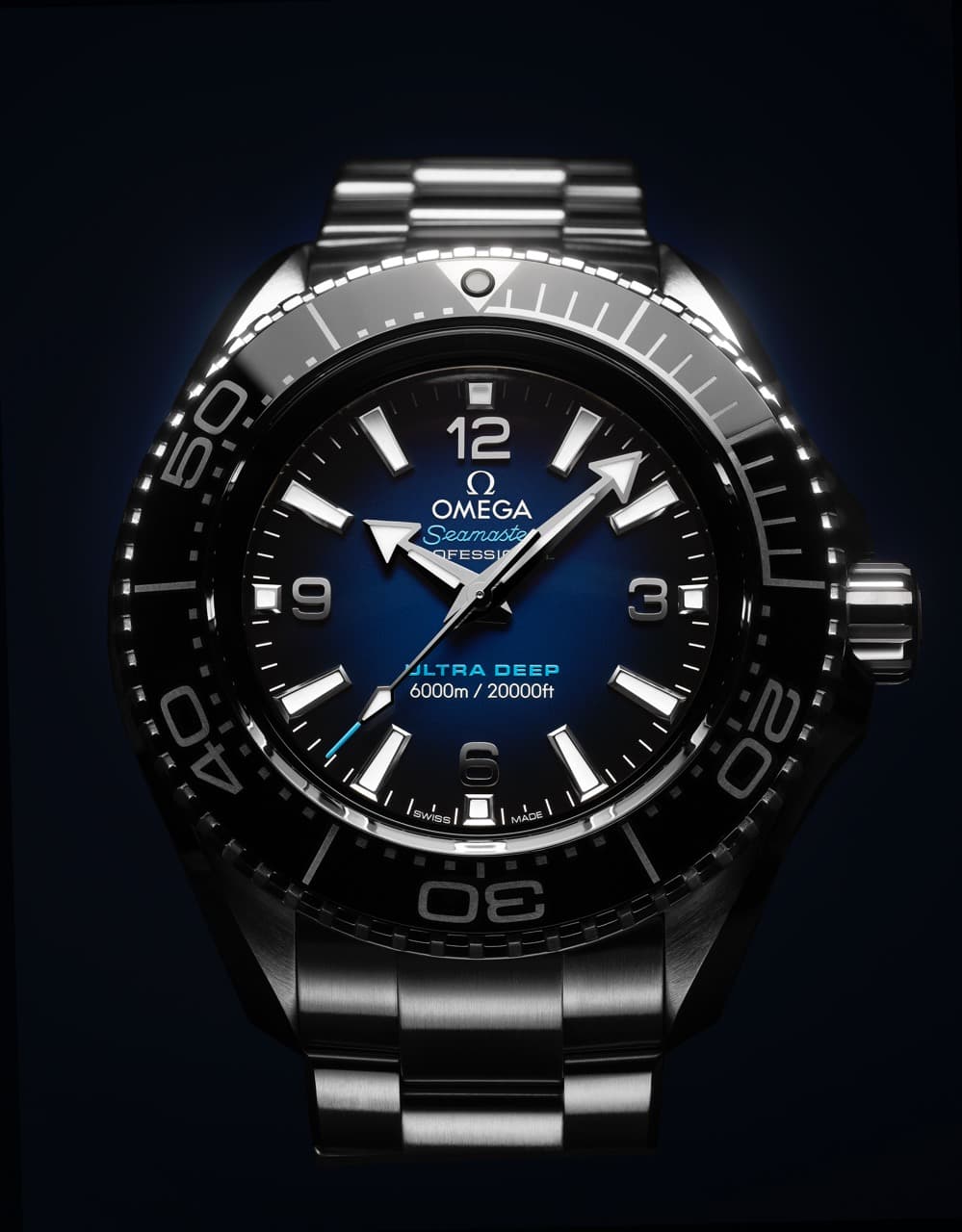
That last point works for virtually every dive watch out there and all the ones listed here. The most obvious illustration of this point lies in the Omega Seamaster Planet Ocean Ultra Deep. If you looked at the picture, you read it right: its dial says it is water-resistant to 20,000 feet. The authors are not sure they can even imagine 20,000 feet of water…
Although the watch is not made of precious material (another exception in this selection) but only steel, it weighs a pretty massive 254 grams. But who goes to such a depth – or even a fraction thereof? This feels like the question a total ignoramus to all things watches would ask but it has merit. Relevance comes from conforming to a standard, however unfathomably useful.
In this case, the technical requirements of a dive watch become obvious. If the idea is to counteract extreme pressure, then the answer is to offer extreme thickness. Use more steel to reach more abyssal depths; fit in a thicker sapphire crystal to match the case’s water-resistance.
Basically, make it tough, also because it will make the watch look tough and toughness is, let us not be coy here, still a valued attribute. Put it on the wrist of a man who is not deterred, but rather excited, by a 18.1mm thick watch. Then gift him a voucher for a session at the best chiropractor you know or advise him on the best insurance to get in the event that this behemoth of a watch damages public or private property.
This story was first seen as part of the WOW Legacy 2025 Issue
For more on the latest in luxury watch reads, click here.


