Opinion: The Paraguayan Central Bank Warning
Paraguay’s Banco Ueno collapse exposes the cost of collusion between politicians, central bankers and lenders — a warning for Europe.
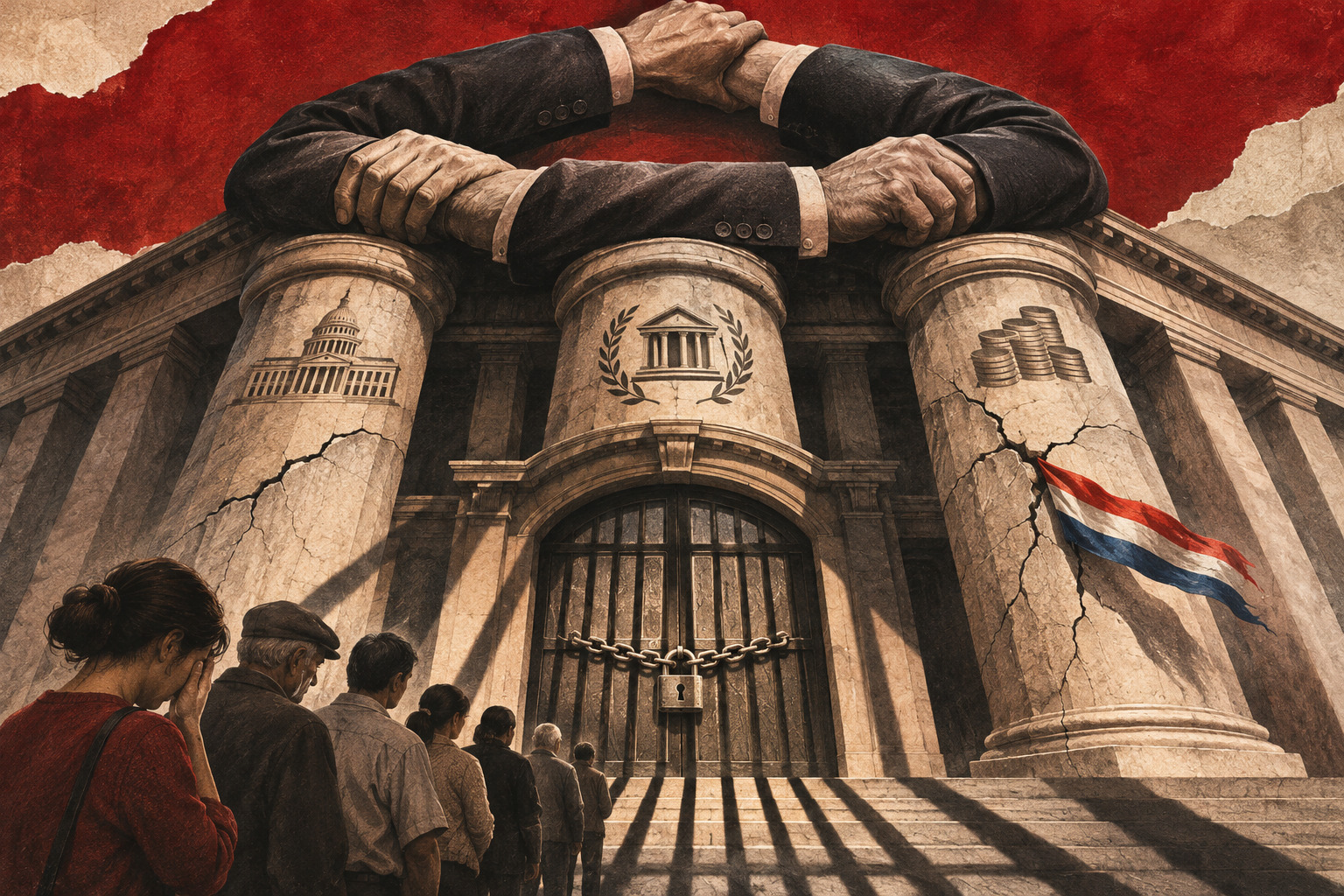
For the past thirty years, it has been considered good form for central banks to be independent of governments. They are less frequently asked to be independent of banks. Paraguay has just demonstrated – in four days – the combined cost of these two dependencies.
Until recently, the country’s main stadium was named after a bank: Ueno. This institution sponsored the national football team and claimed 2.9 million customers, or six out of ten adults in the country.

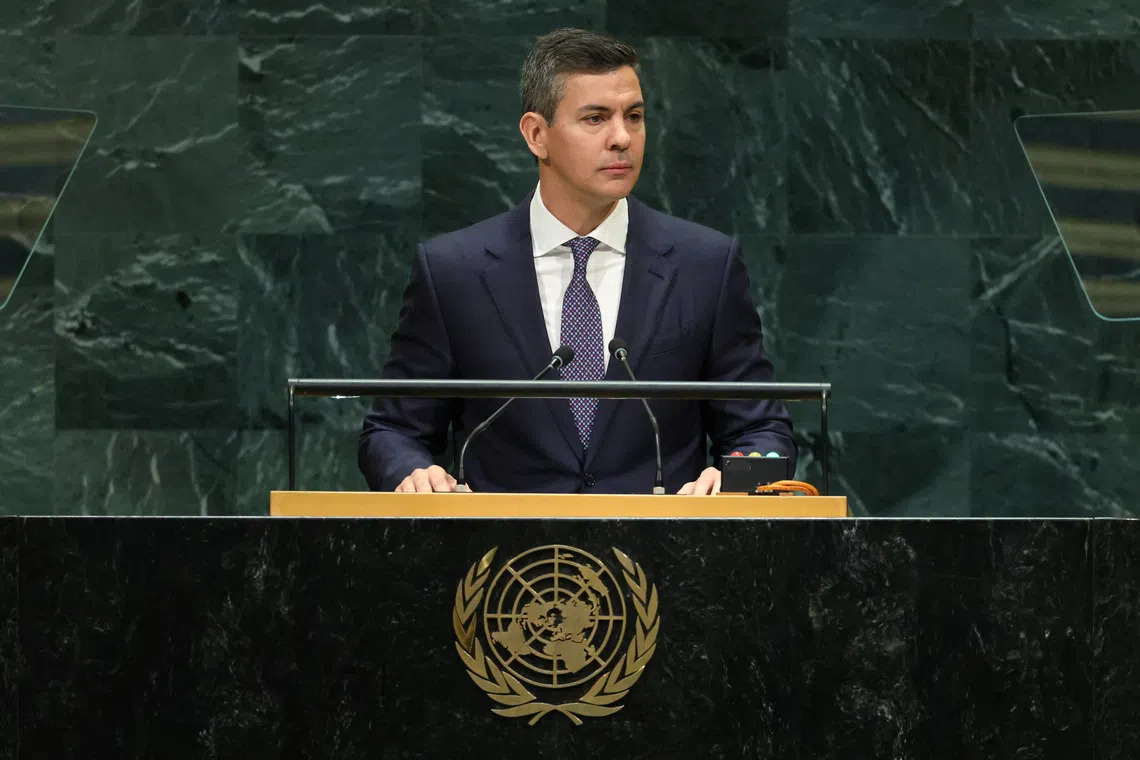
On Tuesday, November 3, the central bank seized Ueno, whose application, bank cards, and transfers were simultaneously taken offline. That same day, the central bank governor, Carlos Carvallo, resigned, before the country’s president, Santiago Peña, also submitted his resignation on Thursday — a resignation that Congress rejected. Having resigned, like any former president, he would have become a senator for life, had he not been impeached by the deputies within the hour.
On Friday, in his absence, the Senate unanimously impeached him. That same evening, the public prosecutor’s office, suspecting the two men of breach of trust, among other things, ordered their detention. The former governor surrendered to the police; the former president spent the night at the Presidential Escort regiment, as his safety could no longer be guaranteed at home in the face of the protesters.
Four days were enough to go from the palace to the barracks.
A Line from a Resume
The bankruptcy itself is hardly mysterious, as Ueno had been lending to its owners’ companies far beyond legal limits and without sufficient guarantees. Once the accounts were rectified, the solvency ratio fell to 5.56%, compared to the regulatory minimum of 12%. The mystery lies elsewhere: how could Ueno have lent on such a scale for a year?
Carlos Carvallo chaired the financial company from which Ueno originated until August 2023, before taking the helm of the central bank, appointed by Mr. Peña – himself a shareholder in Ueno’s holding company until spring 2025. While the central bank maintains that its chairman abstained from matters concerning his former employer, the loans themselves continued.

Public money eventually followed: Ueno held over $800 million in public funds, equivalent to about one-eighth of the country’s annual tax revenue. More than $350 million came from the pension and health fund, whose investment rules had been relaxed twice, in 2023 and then in 2024. According to the complaint filed by the public prosecutor’s office, the fund’s deposits with Ueno increased more than twenty-fivefold. In October 2024, Mr. Peña defended these investments—while he was still a shareholder in the bank.
Europe Would Be Wrong to Smile
On Friday, before the Senate and citing Credit Suisse, one of the president’s lawyers argued that “banks are failing everywhere.” He’s not wrong. However, everywhere, too, public bodies are looking the wrong way. In 2019, the German supervisor filed a lawsuit against two Financial Times journalists who were exposing Wirecard… which went bankrupt the following year: €1.9 billion was missing. The situation is hardly better when it comes to the CVs: from 2002 to 2019, the German institute IWH tracked 185 banking supervisory leaders in ten major European countries. Its verdict? Nearly four out of ten came from the banking sector. Paraguay, therefore, suffered from both forms of dependence: a governor from within the industry, appointed by a president who was also a shareholder.

The markets didn’t look any further. In March, JP Morgan and Bank of America placed $350 million in five-year bonds for Ueno at a rate of 6.7%. S&P had rated them BB a week earlier, and they were slated to be listed in Luxembourg. Demand reached one and a half times the amount. The bank even had a European shareholder: OTP, Hungary’s largest bank, held 9.99% of its parent company. Eight months later, Ueno was closed, and Fitch rated it as defaulting. The banks that placed the bond and the rating agencies that rated it were paid to watch. None of them raised the alarm. They all trusted, ultimately, the regulator. That’s precisely why it can’t come from within.
Five Years, In Both Directions
Safeguards exist, but they are fragile. The ECB’s code of conduct stipulates up to a one-year waiting period for its executives — and a public reprimand as the most severe sanction. In 2020, the executive director of the European Banking Authority left to head the European lobby for major banks. The European Ombudsman later ruled that this departure should never have been allowed. Too late.

The useful rule can be summed up in one line: a five-year waiting period, in both directions. No one watches over the house they’ve just left, and no one returns to the one they’ve just been watching over. It will be objected that the expertise lies in the banks. Yes, but it’s still there after five years. Paraguay dictates a second rule: not a single cent of public money in a bank where the one who governs has a stake.
I grew up in Lebanon; I witnessed and endured what happens to a country’s savings when the central bank governor, the bankers, and the ministers all belong to the same inner circle, if not indistinguishable. It took nearly five years to arrest the former central bank governor there. In Paraguay, four days. The country failed to provide warning; it didn’t wait to demand accountability. Europe, however, still lacks the regulations that would prevent such situations from arising.
This article was written by Michel Santi and was first seen on michelsanti.fr.
For more on the latest in business and finance reads, click here.