
Indulge in the Treasure Trove of Curiosities That is Insolita
Roughly translated as rare, uncommon or unusual in Italian, Insolita (pronounced “in-soul-ee-ta”) offers a spectacular curation of artifacts.

Emperor Qianlong’s Chinese imperial seal from the 18th century sells for 21 million euros at auction
A Chinese imperial seal that once belonged to the nation’s longest serving emperor, fetches a staggering amount at an auction by Drouot auction house
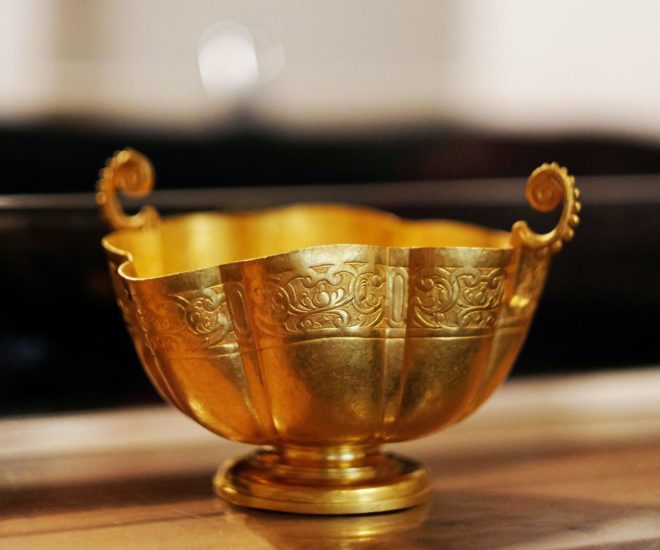
Spanish treasure from 17th century on sale in New York
Part of the treasure of the Spanish galleon Nuestra Señora de Atocha, which sank off the Florida coast in 1622, will be auctioned off in New York on Aug. 5.

Treasure worth £150m found in Atlantic shipwreck
When the SS Gairsoppa was torpedoed by a German U-boat 70 years ago, it took its huge silver cargo to a watery grave. Florida-based Odyssey Marine Exploration’s divers are working to recover what may be the biggest shipwreck haul ever, valued at some $210 million. The British ship was carrying some 219 tons of silver […]

Levi’s Brand Buries $100,000 Somewhere in America
Levi’s “Go Forth” campaign is sending denim lovers and treasure seekers alike on a nationwide scavenger hunt with a grand prize of $100,000. The game’s narrative revolves around a character named Grayson Ozias IV who has left wax cylinder voice recordings hidden across America. The challenge for players is to find these recordings and, ultimately, […]

German treasure-hunter plunders pirate booty
A sunken pirate ship off the coast of Borneo has brought a German treasure-hunter a haul of booty worth at least €7 million ($10-million). Martin Wenzels, 42, a property developer in Dresden, and business partner Klaus Keppler, 71, located the wreck of The Forbes, which sank in 1806. What at first sight looked to be […]


